TIE BREAK: SUDDEN DEATH
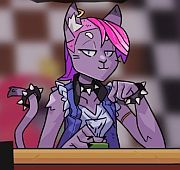
 Lavinia and Mariette have received the same number of votes. Next vote, in either thread, decides.
Decided over on SA. Lavinia wins!
 TIE BREAK: SUDDEN DEATH
  Luckily for all my fellow nerds, there's a good bit to discuss this update.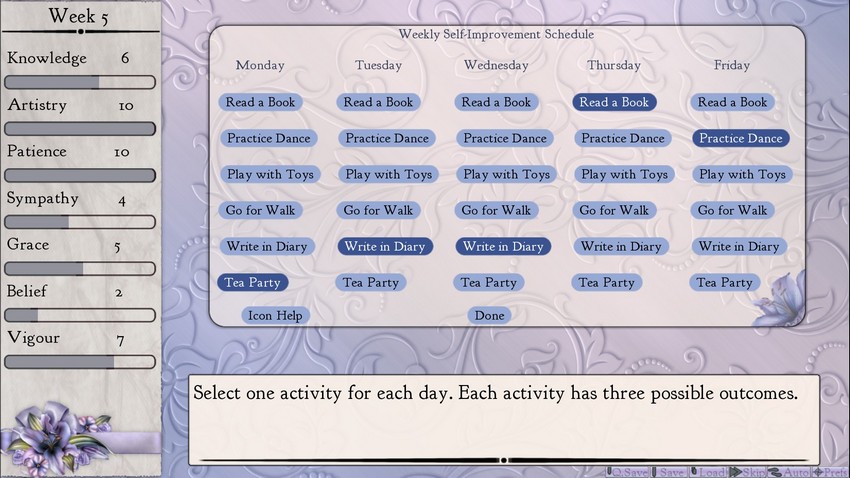
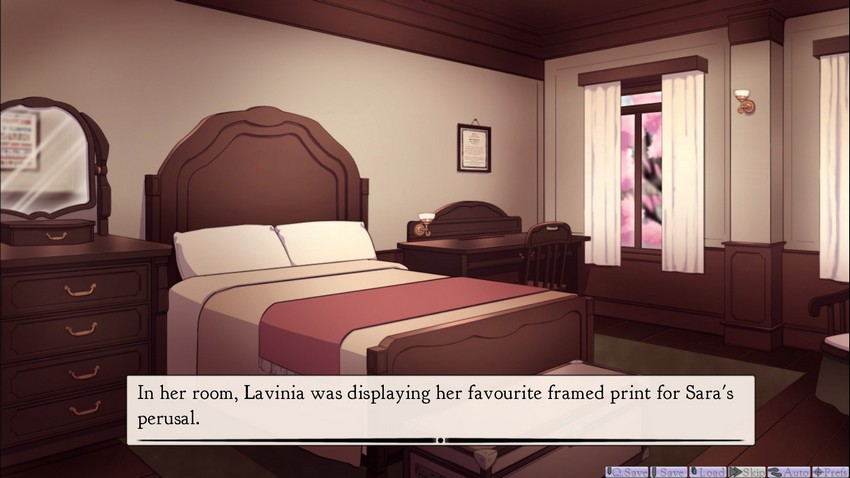
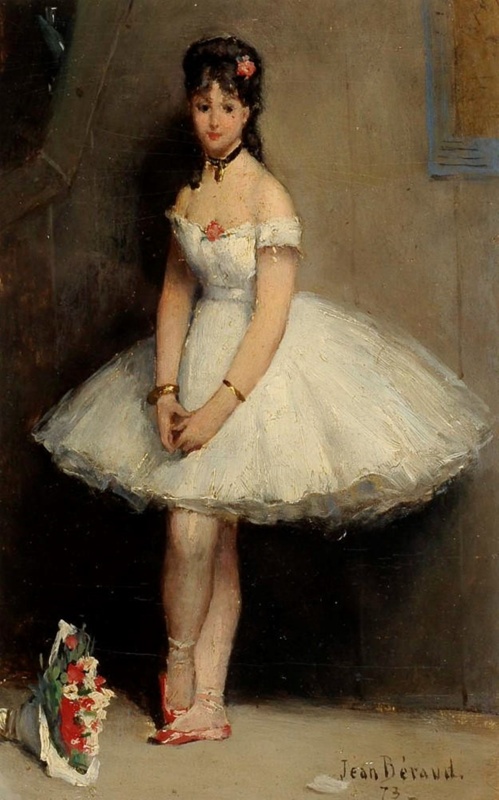
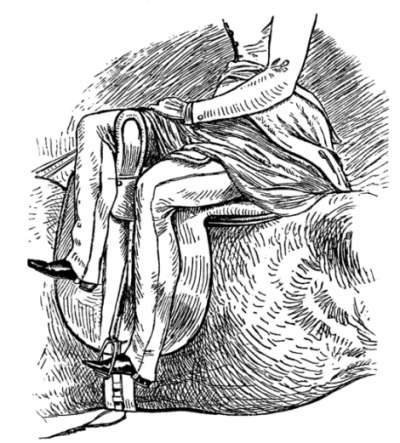
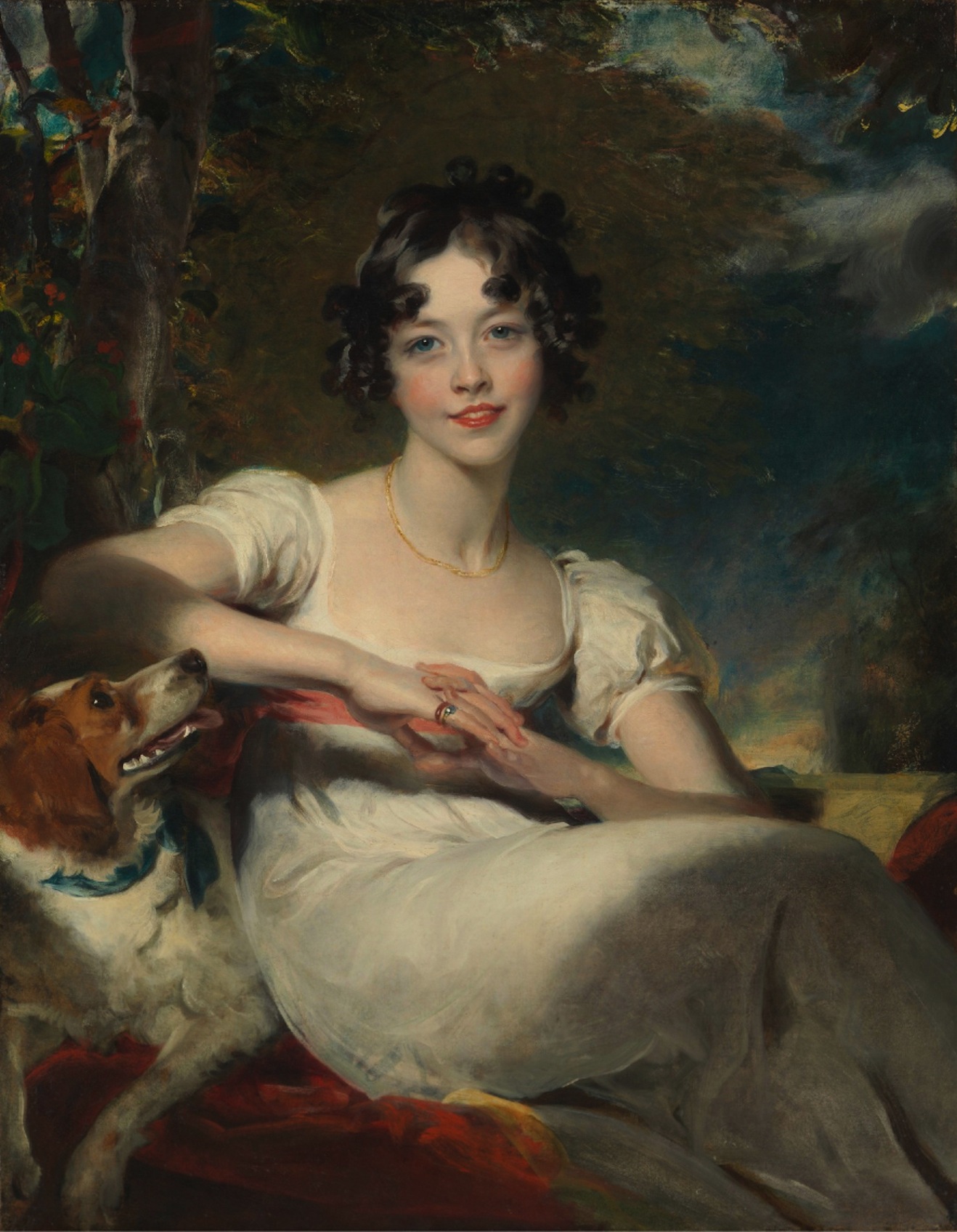
 Even though it is only a print and not an original painting, I keep her on my wall to serve as my inspiration.
 She is the quintessential English rose, you see. Not the daring and fashionable Gibson Girl, but a more traditional beauty, delicate and fair.
 You see how white her skin is, with only the faintest touch of rose at her cheeks and lips? And her hair, that light ash, brown, so unassuming and untouched by artifice? Do you see how she reclines, how she sighs, modest and tender as a petal? That is true beauty.
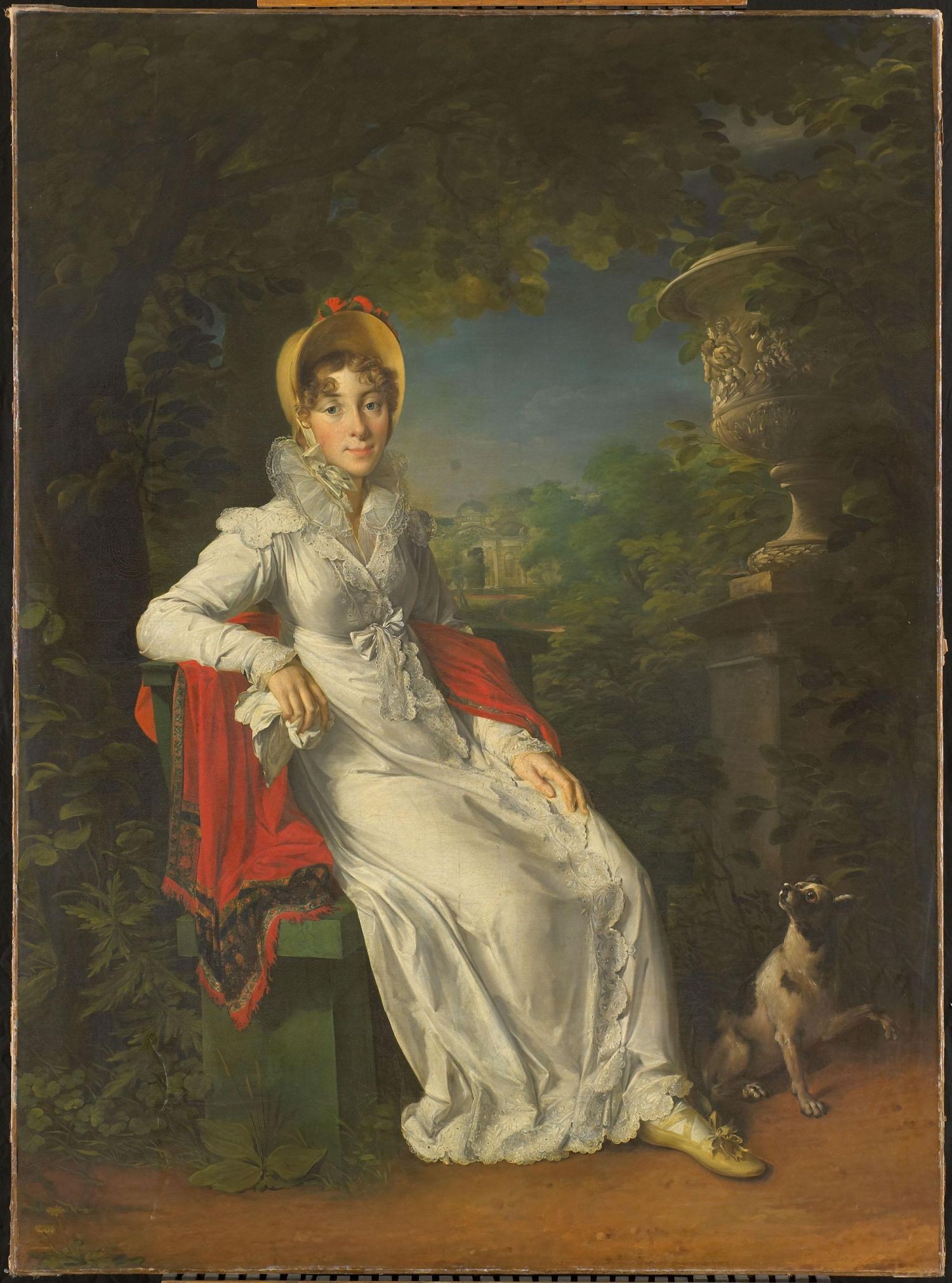

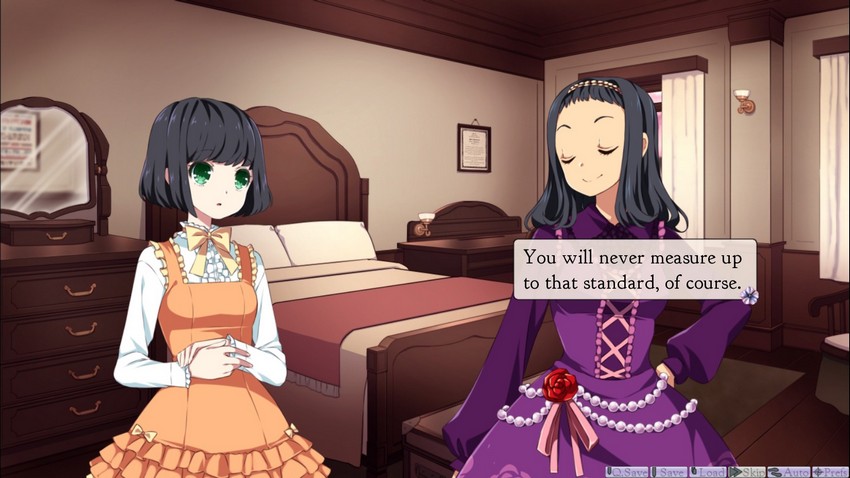
 I know. (Neither will you. I am not fair-haired or soft or rosy-cheeked, but your hair is as straight and black as mine, and your skin is darker.) However, you could certainly make some improvements. Your clothing is so queer and old-fashioned.
 What makes the difference between ’old’fashioned’ and ’traditional'?
 One is better than the other. (That's not an answer!)
 My mother is dead.
 Oh.
Oh. Very little ever seemed to make Lavinia uncomfortable; this subject, however, shook her composure. I'm sorry. I didn't mean to be... I didn’t know.
 It's all right. I never knew her, so it doesn’t make me sad. She died when I was born. Well, anyway, it's just not done to talk about the... departed. And especially not to criticise them. That is a piece of English manners which you should learn. So — I ask that you forgive me for what I said. Of course I forgive you.
 (I wonder if her mother is dead, too? But if she says it's rude to talk about it, she would probably be upset if I asked.)
 Perhaps you will develop your own style when you are older. What do you think, Miss Crewe — will you become a 'New Woman'? I do not know what a New Woman is. Is there an Old Woman? What is the difference? I suppose every woman will become an old woman, eventually... but every girl must become a new woman at some point, first. How you do tie yourself in knots! If you aren't careful, you will become known as a bluestocking. Sara looked down at her stockings, which were quite clearly white with blue embroidery. Lavinia sighed noisily.
 An overly intellectual woman. She turned back to regard her 'inspirational' print. The ideal English lady is accomplished and well-read, but only enough to make polite conversation. Not enough to be challenging. (I think Lavinia will always be a challenge.)
 , and straining too much in those areas was believed to be bad for a woman's health.
 Still, there will always be a benefit in looking one's best. That Lottie, with her little golden curls, is likely to become something of a beauty when she is older.
 If she ever ceases to be an irritatingly spoiled brat.
 Hmm. (I suppose none of us see ourselves as we see others. I am sure I have quite obvious flaws that I completely overlook.) Is it all right, then, to call her 'Lottie' and not ’Miss Leigh’? Hmm? Oh. Yes. She's a child. And really, it is tiresome being so formal all the time. We are all practically family here, aren't we? We live under the same roof. We share with each other, like sisters. Therefore, you may call me Lavinia.
 Thank you, Lavinia.
 Lavinia nodded earnestly. Yes, that's just so. Failing to reciprocate would be impolite. If you want to show more enthusiasm, you can be more insistent. 'You must call me Sara.’ However, too much enthusiasm seems clumsy, fawning. It cloys. I will remember that. (She does put a good deal of thought into how a lady should behave. But if she must play a part, why not choose a more enjoyable one to play?)

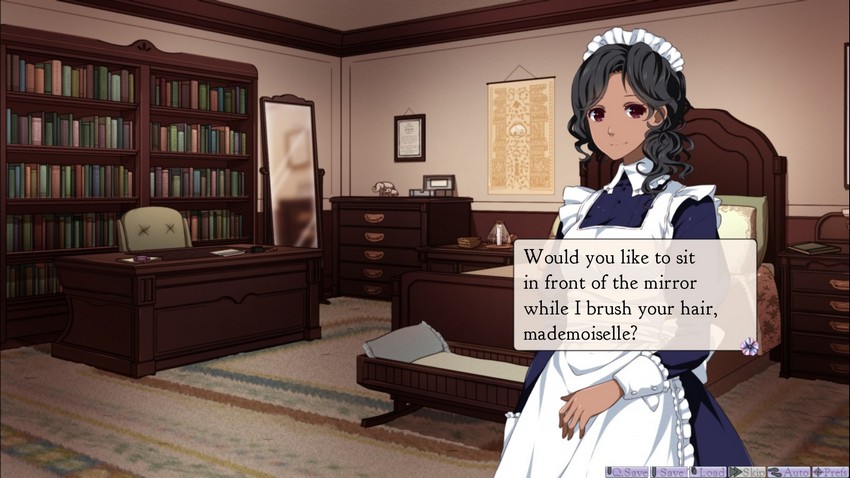 Oh, I don't think so. Not by the mirror.
 You see, it is nice to sit and think while you run the brush through my hair. Sometimes, I remember But if I were looking into the mirror, then the Sara in the mirror would be looking back at me, and we should have to pay attention to each other or else we might be thought impolite. Mariette laughed in the back of her throat.
 That is as you wish. I had thought of doing something different with your hair, and if you could see, then you would know more quickly if you thought yes or no, and I could change it if you did not like it. Well, I think that it's better to look at it when it's finished. If you stop reading a book in the middle, you might have the wrong idea of what it's all about. Then I will show you when I am done.
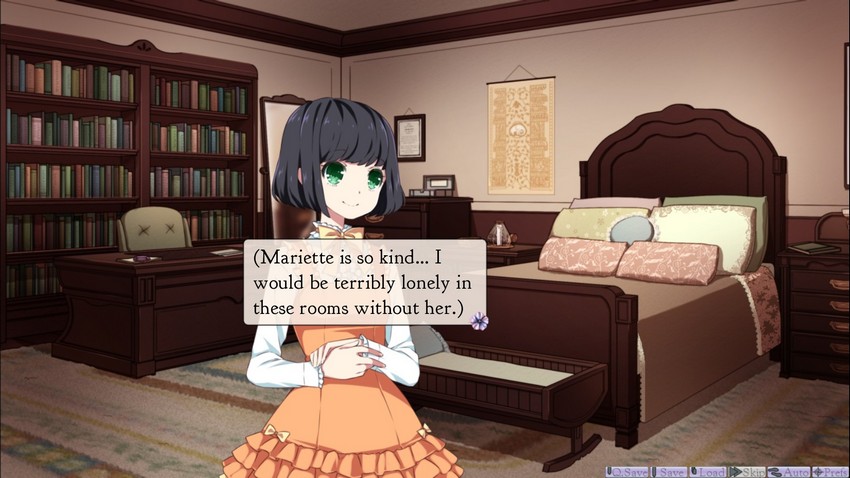 (This school is full of other girls, but they are, like me, guests of Miss Minchin. We live in the same house, but they are not part of my household. Mariette is the only person who belongs to me.)
 (It is nice to sit and think while she brushes my hair, and she has a better way with it than my old Ayah did, but... I do miss my Papa so!) (If he were here, if he were coming to visit me as some girls' parents do, how happy my life would be!) I wonder where my Papa is now...
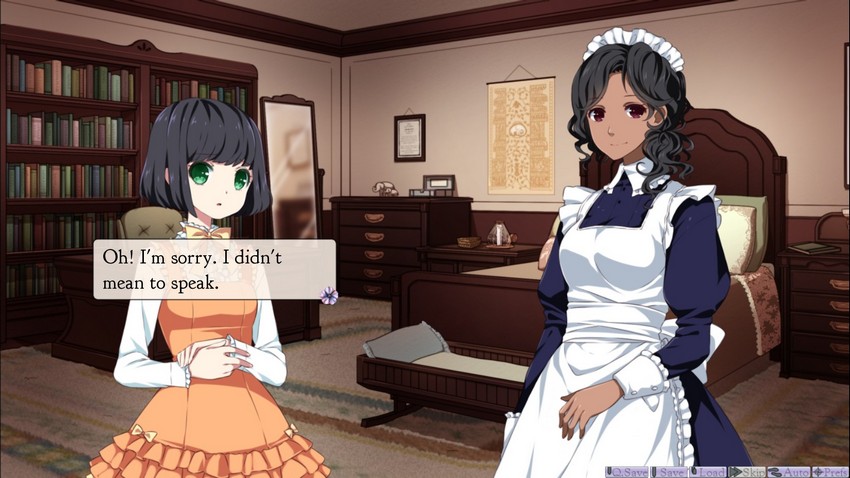 No, it is good, mademoiselle, you should speak your thoughts. Your father sailed many weeks ago. By now, he is in India, yes? Home and safe, and thinking how different the house seems without your footsteps. Oh, I don't want to think of him sad and lonely... It is right that he misses you, and that you miss him. That is how things should be. But that does not mean your life is nothing but sadness, does it? No — I do not think I am 'melancholy'. I would not wish to be. I enjoy my books and my friends. So, you see? Your papa, he will be lonely, but he will also feel other things. He will live his life, but he will also think of you. I believe you will hear from him soon. Oh, I hope you are right! No, you must be right. My papa will write me letters, as soon as the ships can carry them, and I will treasure his words. (And I hope — I do hope — that my papa has a friend to care for him, as Mariette cares for me.)
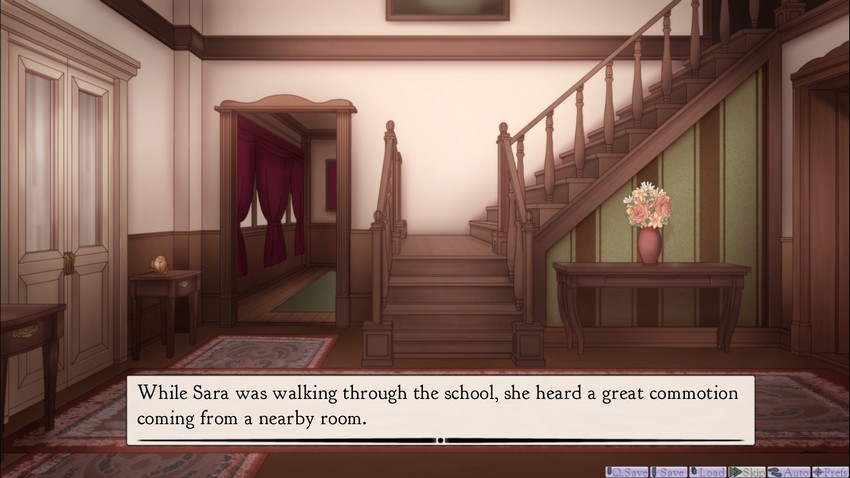 The first high-pitched shriek made her startle, concerned that one of the younger girls might have injured herself. Sara was a quiet and solemn girl herself, but made no judgment against those whose temperaments led them to cry out loudly when they were in pain. However, the wailing went on and on, more angry than miserable, and the voice was recognisably Lottie's. Sara came closer, and began to make out the accompaniment of frustrated adult that had been drowned out by childish tantrum.
 What ARE you crying for? There is nothing wrong with you!
 Oh — oh — oh!! I haven't got any mam—maaa! Stop crying, for heaven’s sake. Uwaaaaahahaaa-aaa! Haven't — got — any — maa—maaaa!
 You ought to be whipped. You SHALL be whipped if you do not hush, you naughty child! Lottie wailed more loudly than ever.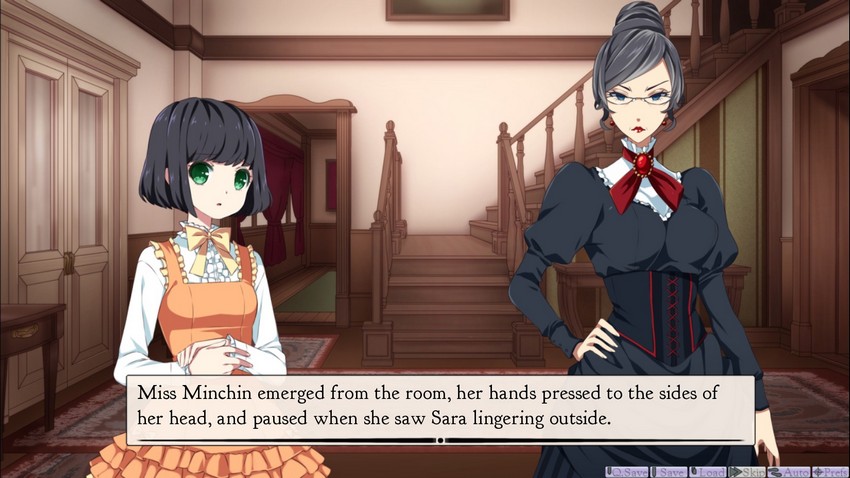
 Oh! Dear Sara. Miss Minchin's attempt at producing a friendly smile was not at all convincing. Lottie's roars continued unabated, and each burst of sound made Miss Minchin's shoulders twitch. I stopped because I knew it was Lottie — and I thought, perhaps — just perhaps, I could make her be quiet. May I try, Miss Minchin? If you can quiet that, you are a clever child. Dreadful thing — we may not be able to keep her. I... But you are clever in everything, my dear. I dare say you can manage her. Go in.
 Uuwwaaaaahaahaahaaa-aaaa! Ah! Ah! Hnaaaaaaaah! Sara stood by the howling furious child for a few moments, and looked down at her without saying anything. Then she sat down flat on the floor beside her and waited. Except for Lottie's angry screams, the room was quite quiet. This was a new state of affairs for Lottie, who was accustomed to hearing other people protest and implore and command and coax her by turns. To find that the only person near her did not seem to mind in the least how she kicked and screamed was unusual, and made it necessary for her to pause her sobbing in order to see what was going on. She opened her tight-shut streaming eyes to see who this person was, and found that it was only another little girl — but it was the one who owned Emily and all the nice things. Sara looked at Lottie quite curiously, but said nothing. Lottie sucked in a gulp of air, but the noise she made sounded rather half-hearted.
 I — I haven't any maa-maaa!
 Lottie blinked rapidly at this unexpected answer. Her legs and arms ceased their kicking and lay flat against the floor.
 Where — where is your mamma? She went to heaven. But I am sure she comes out sometimes to see me — though I don't see her. So does yours. Perhaps
 Here! Lottie sat bolt upright and looked around. Seeing nothing, her face began to scrunch up again. We can't see the people who live in heaven, even when they come to visit us.
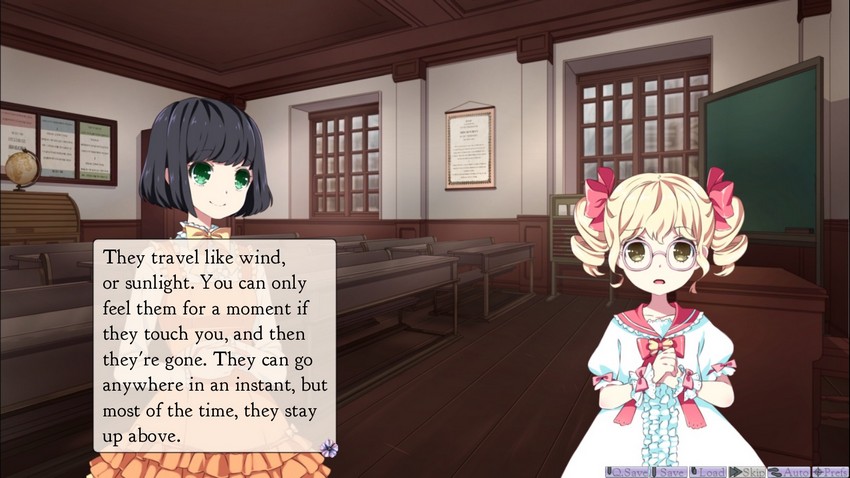 Their land is full of lilies, fields and fields of lilies — and when the soft wind blows over them, it wafts the scent of them into the air.
  And everybody always breathes it, because that soft wind is always blowing. Wind, and sunlight, and the streets are always shining. And little children run about in the lily fields and gather armfuls of them, and laugh and make little wreaths to wear on their heads, or spin cloaks and dresses of soft lily petals. The petals never go dry or brown, but when the children grow tired of them they toss the petals into the air and they turn into clouds. Lottie had by now quite forgotten to cry, and was leaning forward, hanging on every word that Sara spoke. In that shining city, people are never tired, however far they walk. They can float anywhere they like. And there are walls made of pearl and gold all round the city, but they are low enough for the people to go and lean on them, and look down onto the earth and smile. From those walls, sometimes, they dance down to visit us. Other times, they whisper beautiful messages into the wind and hope that someday we will hear them.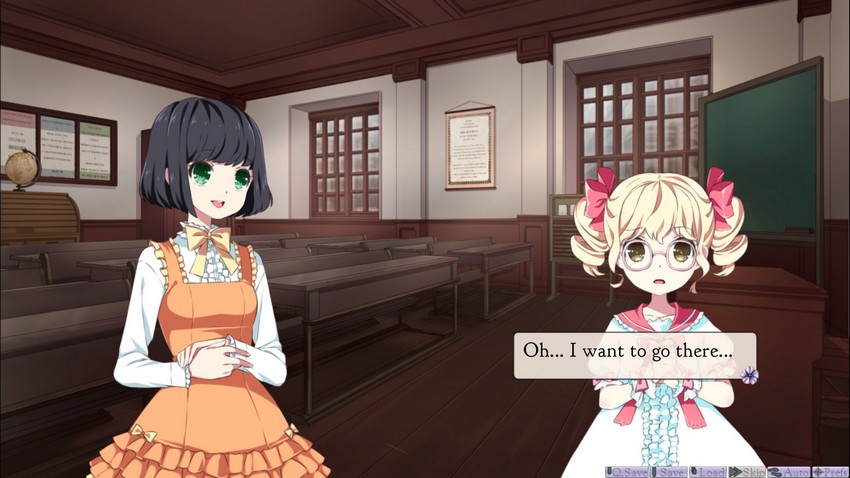
 I — I haven't any mamma here. Sara saw the danger signal, and took hold of Lottie's hand with a coaxing little laugh. I will be your mamma in this school. We will play that you are my little girl. And Emily shall be your sister.
 Shall she? Yes. Let us go and tell her. And then I will wash your face and brush your hair, and both of us shall have — a little bit more family. Sara seems to have found herself a single mother at the tender age of 10(?). It's sweet, though, and Lottie could use someone looking after her other than Miss Minchin, whose first response to most things seems to be yelling.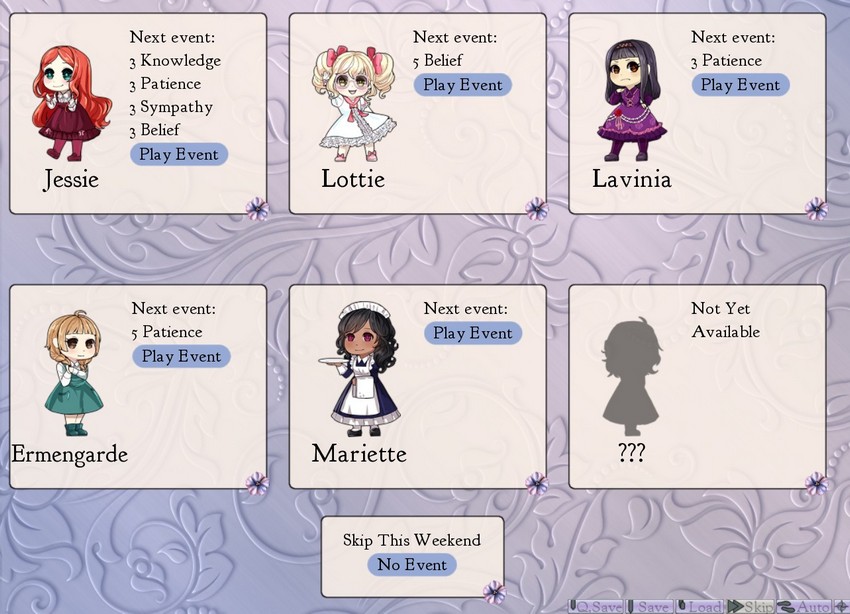
 all around. Well, except for Miss Minchin, but that's to be expected by this point.
Though the first one is almost in-characteryamiaainferno wrote: ↑Fri Aug 14, 2020 7:12 am
[...]


That's a good idea, probably. Though if I'm linking it there's not much point in keeping it under the OP. I can just keep the gallery there, I suppose. Also...The Flying Twybil wrote: ↑Fri Aug 14, 2020 3:20 pmAs an aside, it may help to link a test post like this at the end of each update now since the stats and are back on the first page.
TIE BREAK 2: SUDDENER, DEATHIER 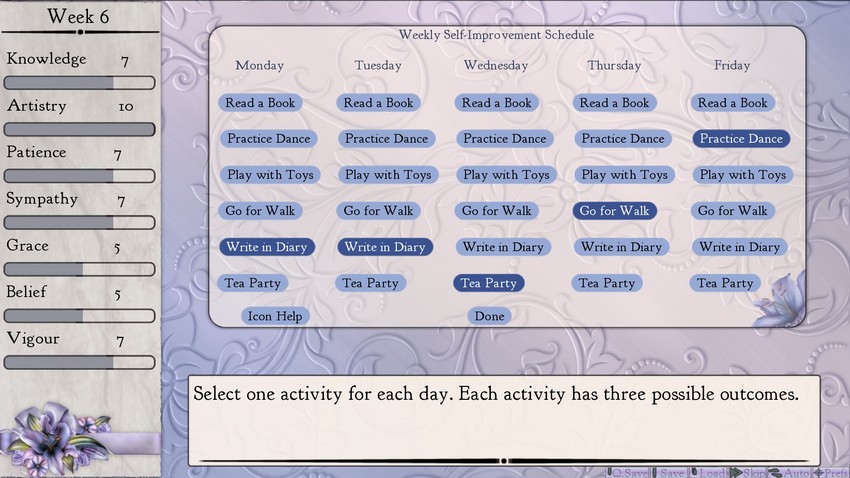
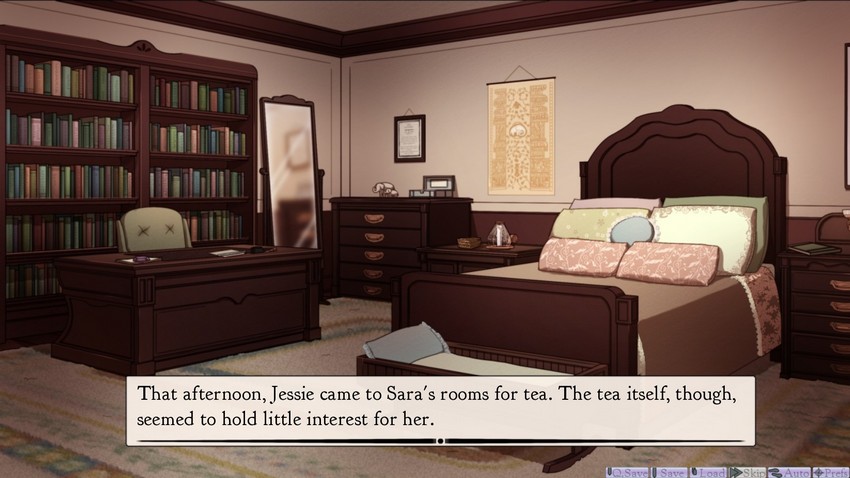
 I was hoping you could tell me more about your life in India. It all sounds very interesting and different to me. I am only learning the ways that it was different by being here. My papa and I lived in a bungalow that was as large as this school, but wide rather than tall. There was a veranda where we could sit in the breeze and watch the sun set. The summers are so hot that many children of British parents become ill, so we are taken away to the 'hill stations', which are towns in the mountains near lakes, where it is cooler. I had many toys and pets and servants that would salaam to me and call me 'Miss Sahib'. I suppose that is because we are 'rich', but it is all the life that I knew.
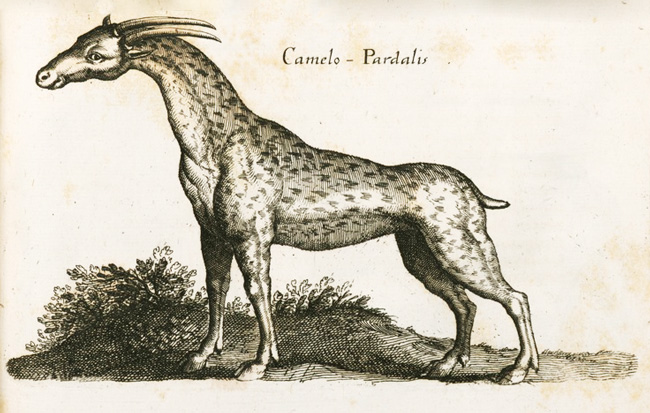
 Did you ride elephants and camelopards and tigers? I have never seen a camelopard!
 You certainly tried, LLP. You certainly did try.
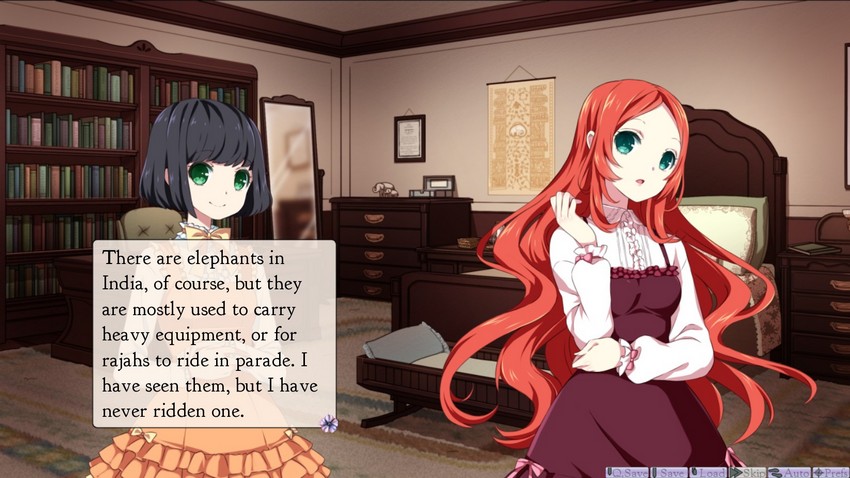 And tigers are too dangerous to see up close. Anyone who tried to ride one would be clawed and eaten. They attack villages sometimes and carry off the native children, you know. It's terrible. One even attacked the outpost my Papa was stationed at, and he had to shoot it to defend the citizens.
 How exciting!
 He is very brave. (I miss him so! I hope he does not do anything too brave while I am not there to look after him.)
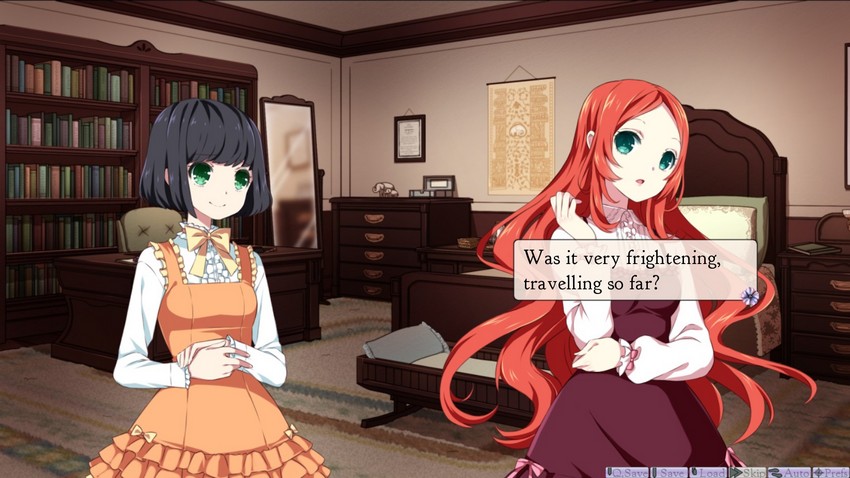 No, there were many other people on the ship with us. It was strange, and not so comfortable as this room, but it did not feel dangerous. It would have been much harder if my Papa were not with me. When young boys are sent back to England, they are sometimes made to travel with the regiments, and no family at all. A pleasant companion makes a great deal of difference. You should always have one. Jessie pressed her hands together in her lap, the motion giving a shy lift to her shoulders.
 I would very much like to travel the world when I am older... but I don't know if I will ever have the chance. Do you think you will travel, Sara? Well, I do want to return to India as soon as I am old enough. And I think I should like to visit France, someday. I haven’t thought of it beyond that. It is a very big world. I suppose it would be a shame to live one's entire life in only a small part of it.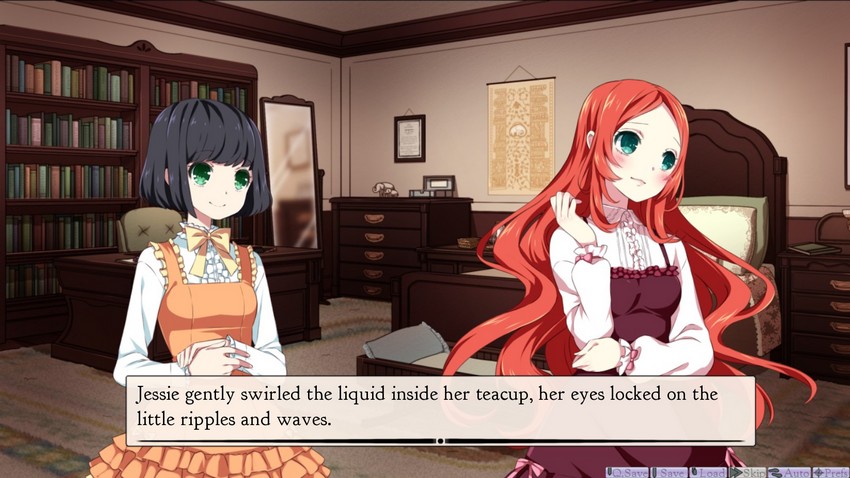
 Some people feel that London is the centre of the world, and that once you're here, there is nowhere better in all the world for you to go. Why would you want more than perfection? I... I'm sure London is very nice, but... The cup trembled in Jessie's hands. Oh! I’m sorry, I've spilled a bit of tea. How silly of me.
 Please... tell me more stories about India? All right.
 Jessie's...probably fine. Let's not worry about it too much.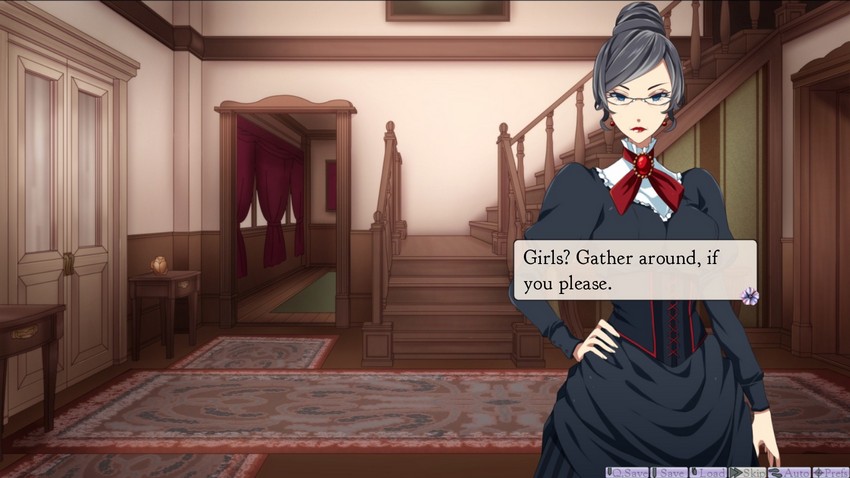
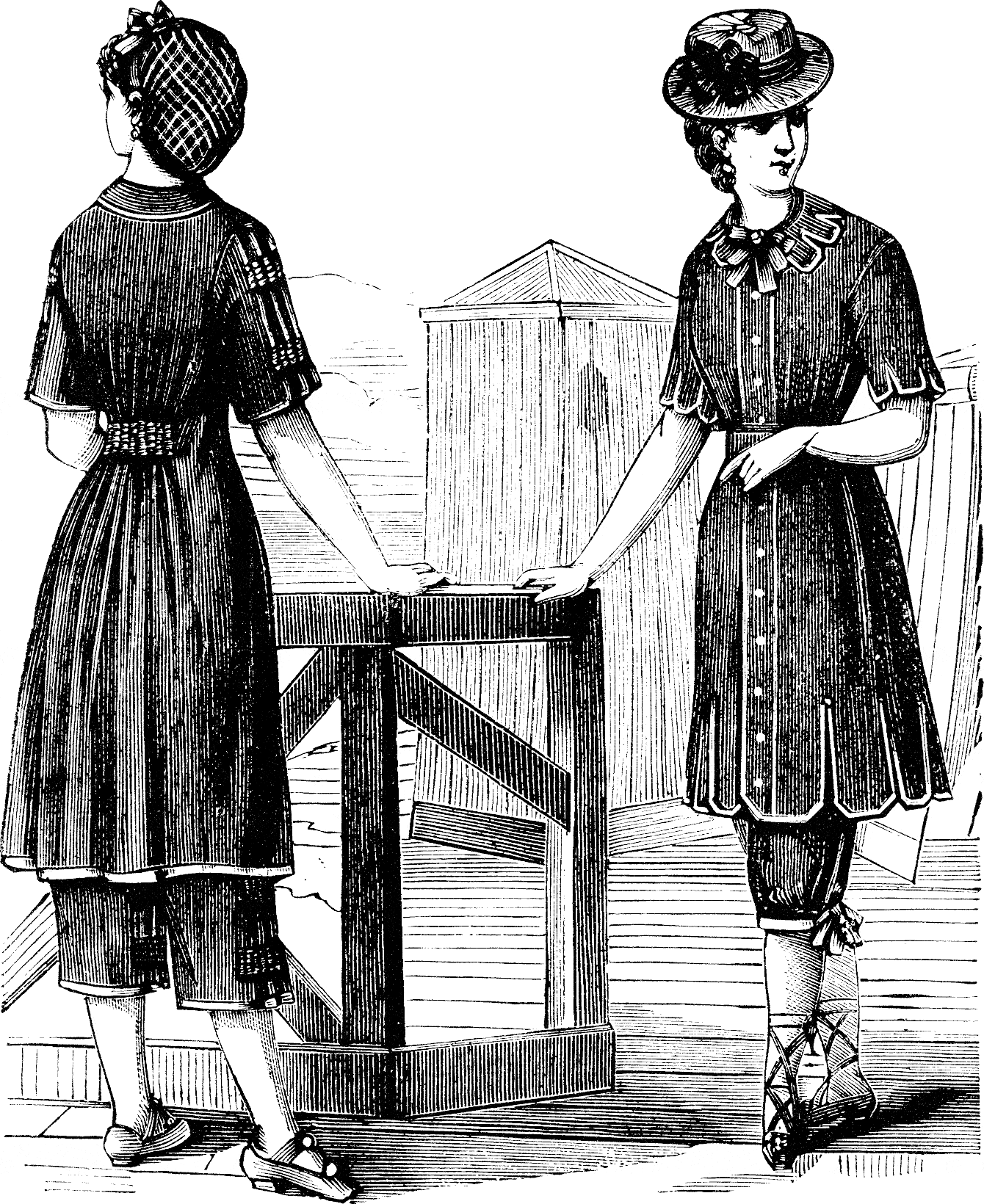
 We will be welcoming a special dance instructor today who is visiting us from France. She will be leading you in exercises to increase your grace and posture. Go and change into your Léotard-style dancing costumes. She swept off to her office, and the girls clustered eagerly together. A special dance instructor! Do you suppose she might be from the Ballet de l'Opéra de Paris?
 The... ballet of opperee? The Paris Opera Ballet, of course. The absolute birthplace of Romantic ballet, and they go all the way back to the Court of the Sun King!
 Oh.
Oh. ... I am not so fond of ballet as you are.
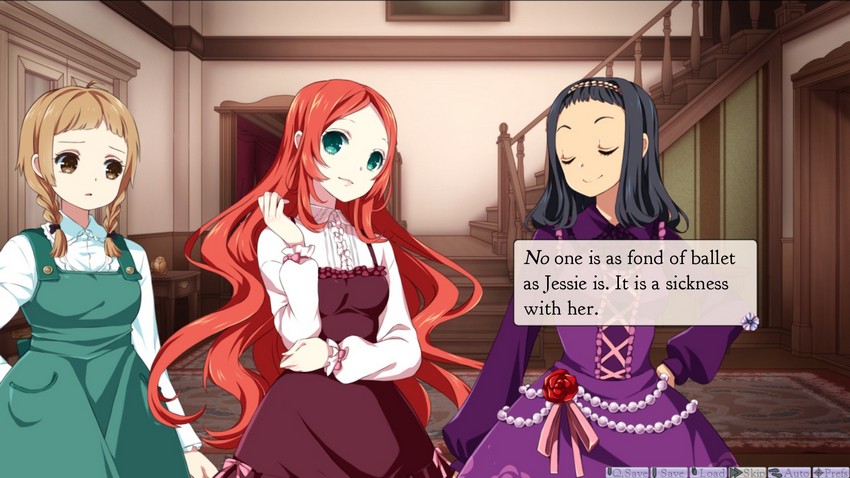 ... I wonder if there really is a sickness that could make you like one thing or one person more than another. And if there were, would anyone wish to be cured? ... Such things you imagine! In any event, it might not be ballet. She is a special instructor, after all. Perhaps we will be permitted to practice social dances — perhaps even the waltz. My father says the waltz is 'shocking'. Watching you attempt to perform it no doubt would be!
 Ah well. We can't expect her to change in a day, I suppose.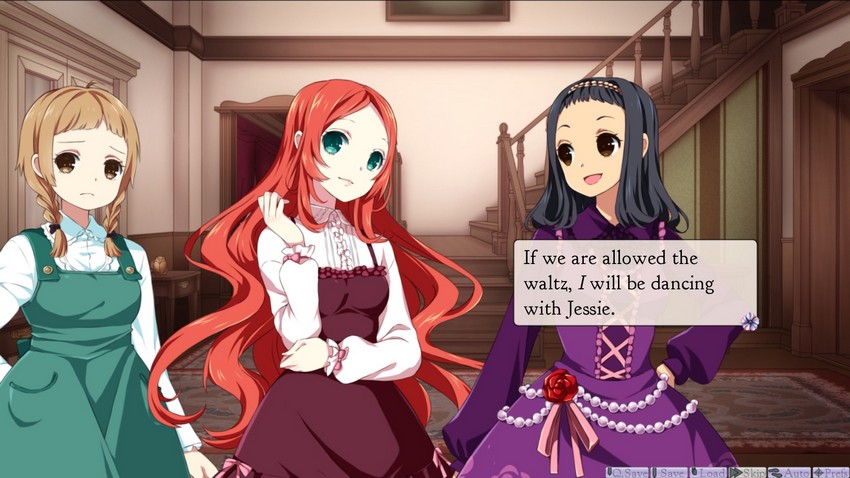
 Oh. Perhaps — perhaps we had better go and get our costumes? Ermengarde is very sensible. It took only as little praise as that to make poor Miss St. John look pleased.
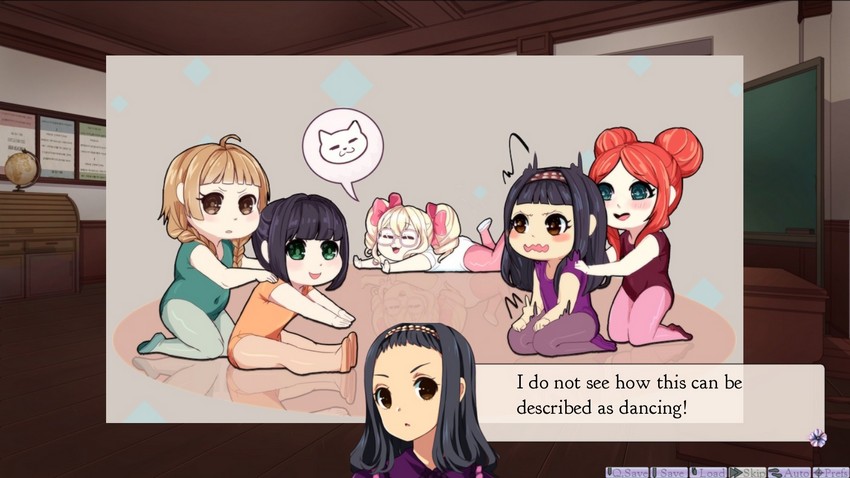 It is preparation for dancing. We are learning to stretch and relax our bodies, so that we may move more beautifully. It's French! Sara? Is this the way things are usually done in France? I have never asked Mariette whether she took dancing lessons. I want to walk on my hands! Leave your hands on the floor long enough and Ermengarde will trod on them for you. Ah! Jessie, be careful! You are tickling me. The — the instructor said it was imperative that we rub deeply, to warm our muscles.
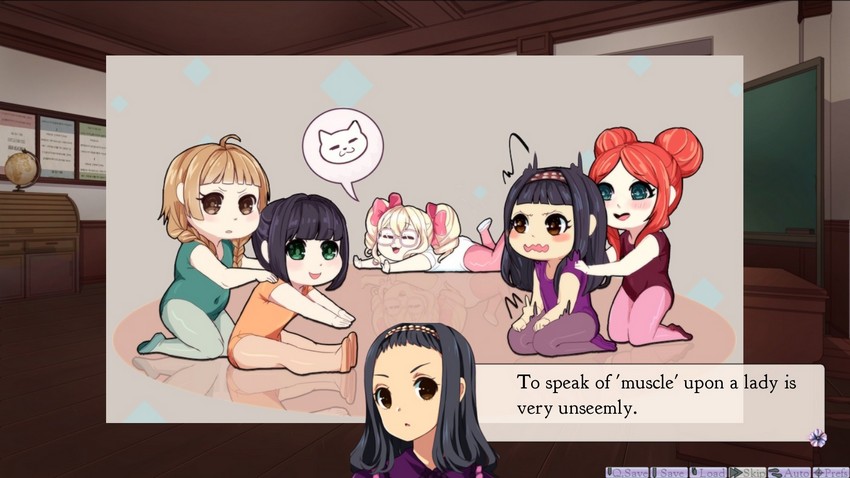 Your hands are very strong, Ermengarde. Oh — did I hurt you? No, not a bit. It feels nice. It is a little like having my hair brushed. It makes me feel like a cat, being petted. I want to be a cat! I want to dance like a cat! Cats don't dance. They dance — at the court of the King of Cats. How do they dance, Sara? Do they stand on their hind legs? Well — Girls! Cease chattering and get ready for your lessons!
 Yes, Miss Minchin!
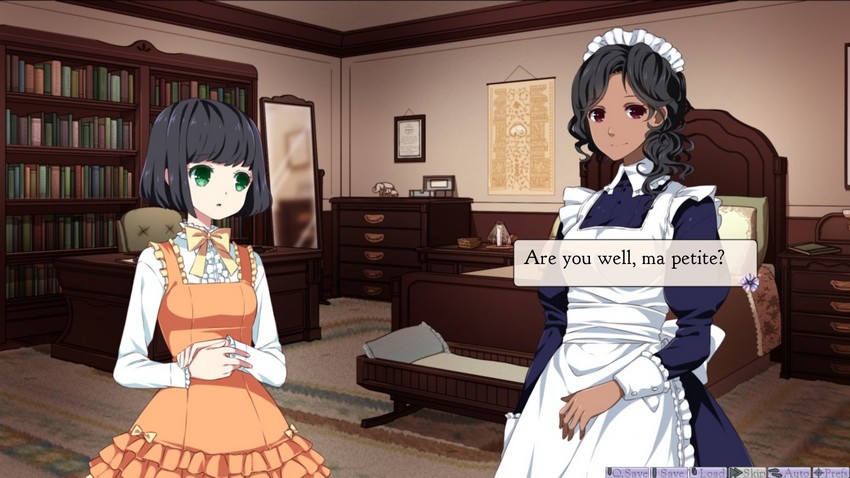 Yes, I am only feeling a little tired. The days have been growing warmer, but the air never feels the same way that it did in India. I suppose Ermengarde is right, and it is the smell of London. Even if I cannot distinguish one scent above the others that would mean 'London', it must always be there. As I am.
 Bon courage, mademoiselle. I have something here which will brighten your day.
 A letter from Papa! Oh, merci, Mariette, merci beaucoup! She did not open it at once, but pressed the envelope to her chest.
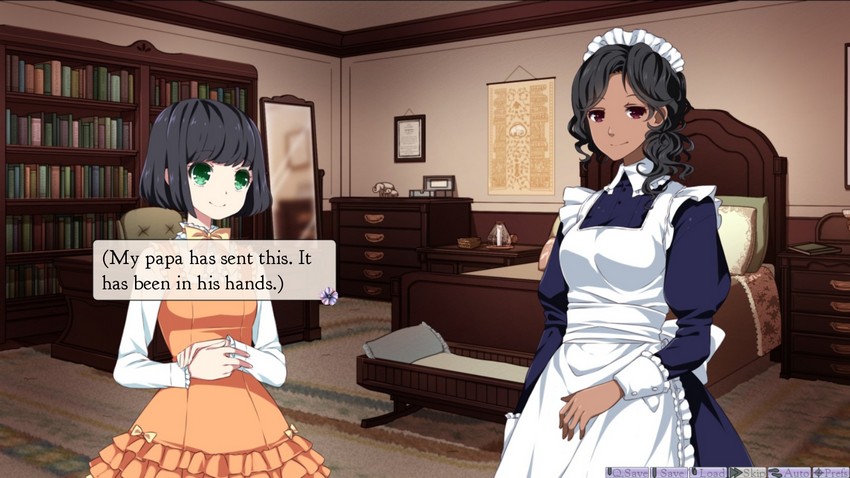 (If a letter can come from his hands into mine, then we are never so far apart.) At last, she took out the paper and began to read.
Papa's Letter wrote:My dear Little Missus,
Here I am, once again, in Bombay. I have little to tell you of my adventures, for no sooner did I reach my home than I began thinking of you and putting pen to paper. Therefore, I have seen little since I left you other than ships, and you remember those.
Sara closed her eyes and let herself remember the voyage from India, the big ship, the Lascars passing silently to and fro on it, the children playing about on the hot deck. There had been women on board, the wives of some young officers, who had invited Sara to take tea with them and delighted in making her speak her unusual thoughts. But most importantly, there had been her Papa.Papa's Letter, Cont wrote:I felt it important to write to you at once so that you would not worry about your poor old papa, all alone on the ocean. All is well; I am returned, and life here is remarkably unchanged in my absence.
Now, it is your duty to let me know all that has happened since I left you, all the new friends you have made, the books you have read, and the sights you have seen in London. Do you remember Colonel Grange, and his little girl Isobel? In a year she will be old enough that she must leave for England as well. I am relying on your advice to tell her what to expect in her schooling.
Give my regards to Emily and any companions she may have acquired.
Yours always, your loving Papa.
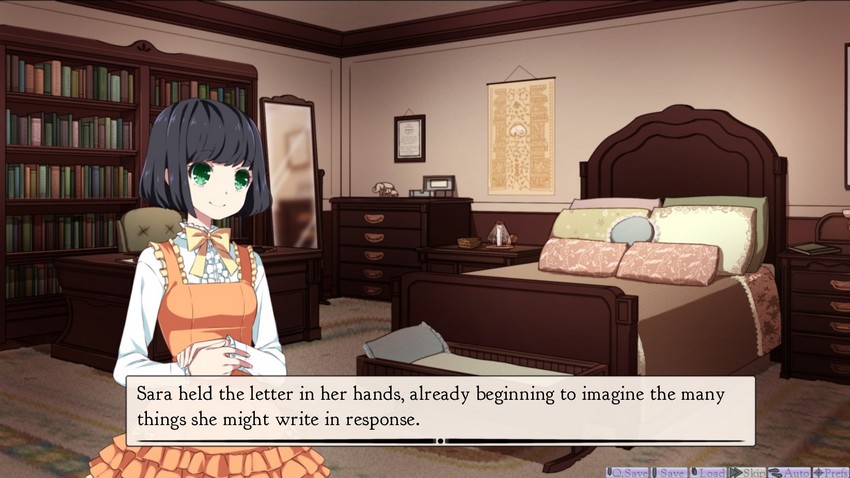 (I love you too, Papa.)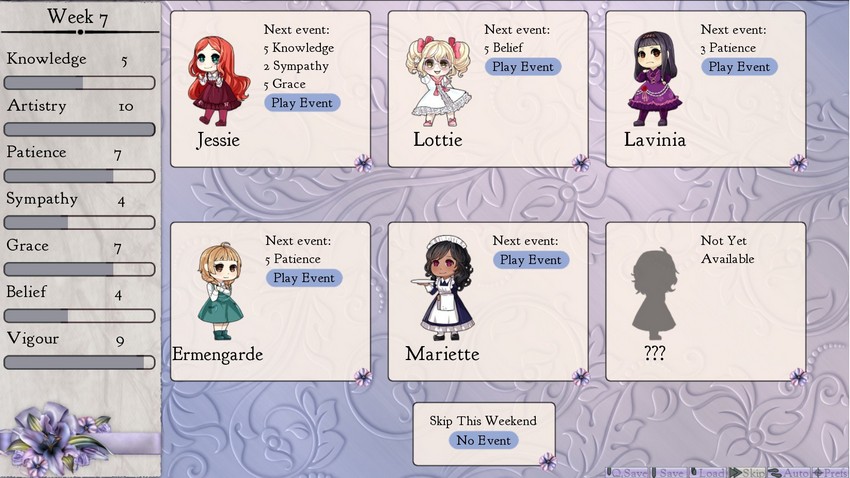
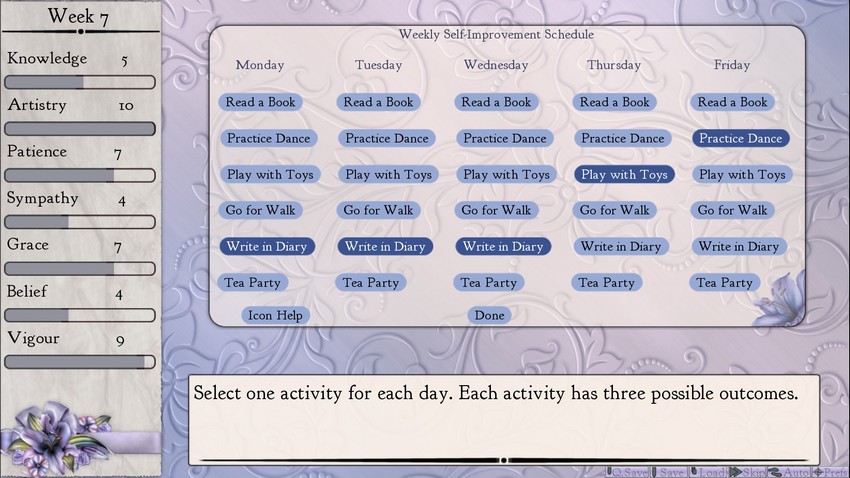
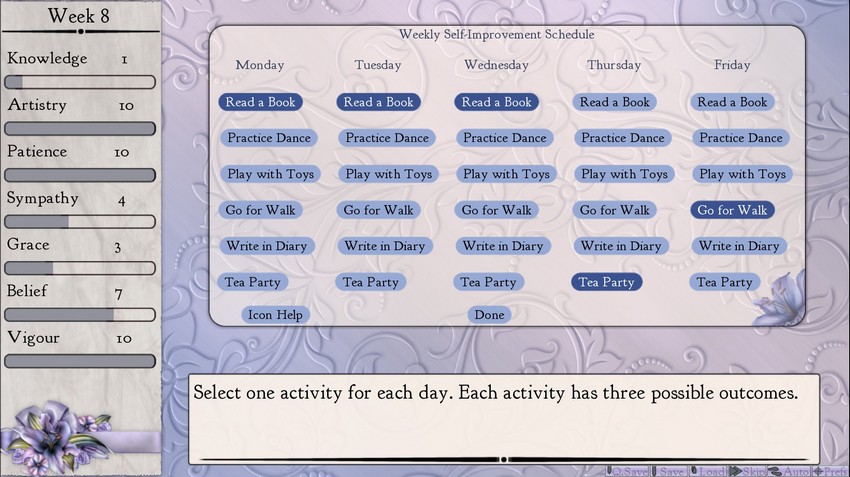
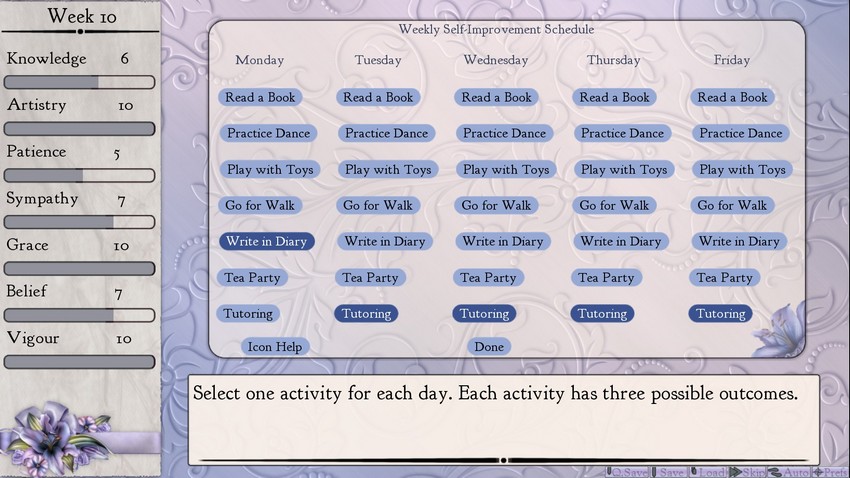
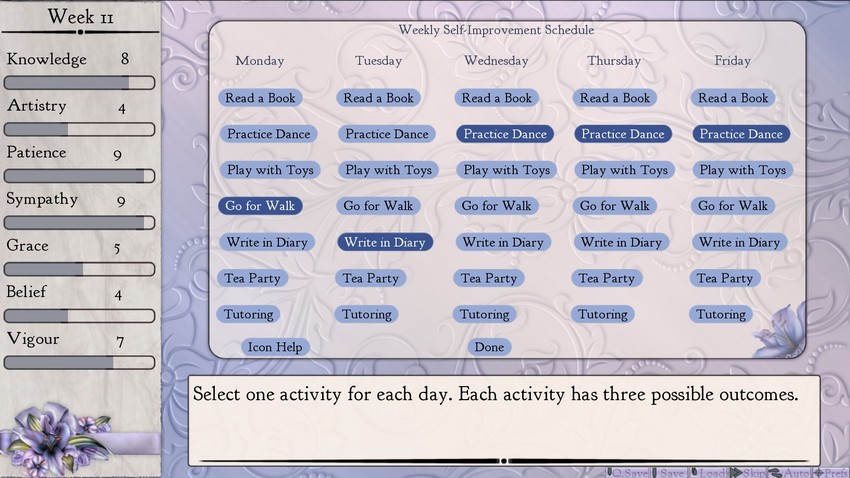
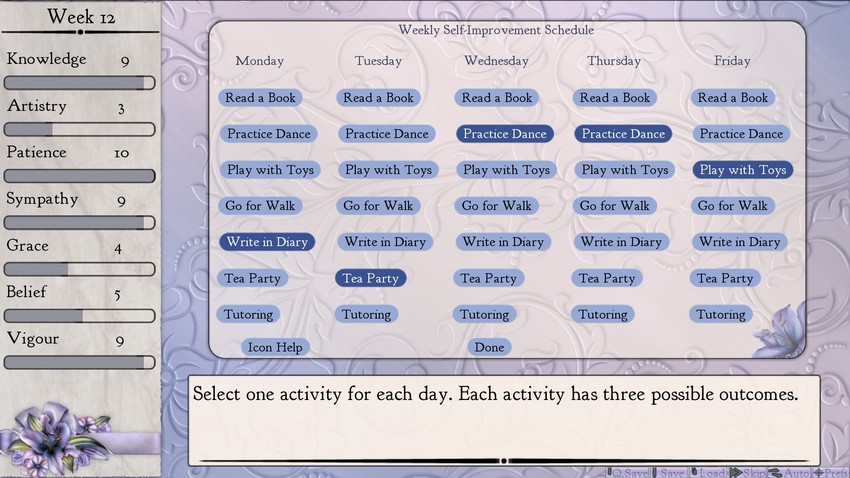
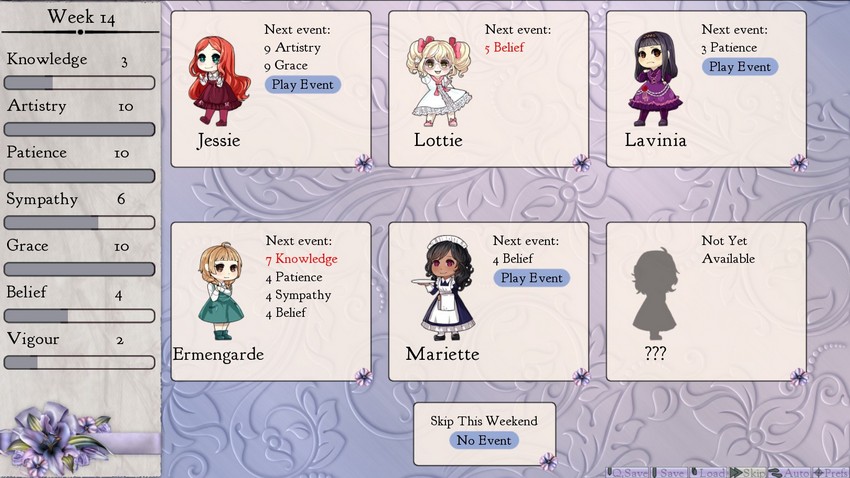
You know, I'll second this. Jessie's evidently got something to say, and she'll help trim out our stats some more.Jessie's seeming rather interesting, so I'll opt for her. Activities ought to try to replenish what we spend visiting her, so Play with Toys, Practice Dance, and Write in Diary.
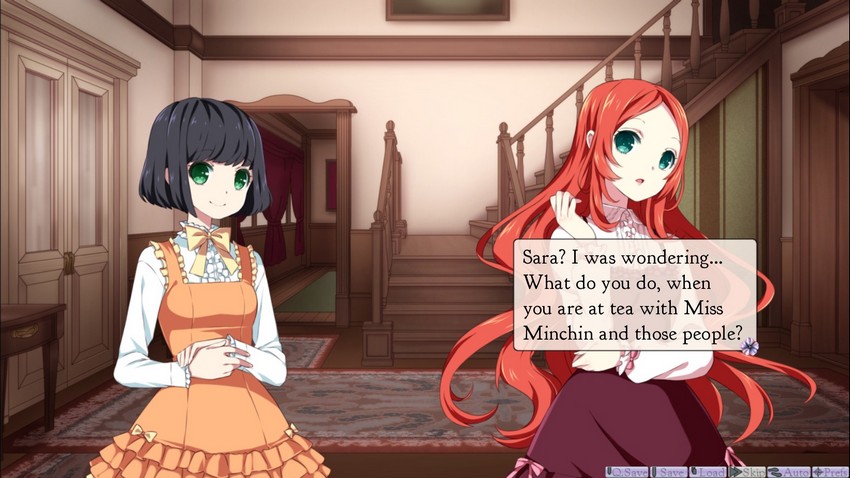 Does she have you recite a party piece, or dance, or pose? Are there men present? Not commonly, and only if their wives are in attendance. I do not think so many men would care for tea with a schoolmistress. I have never been asked to dance or recite. Sometimes she asks me about my lessons, and if I like the classes and the other pupils, which I always say that I do.
 Sometimes they ask me about books that I have read, which I don't mind, and then Miss Minchin says how clever I am, which makes me uncomfortable.
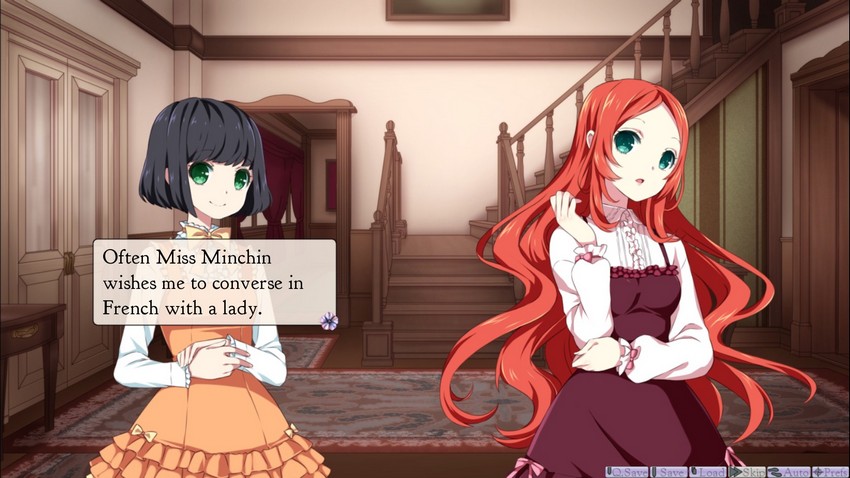 They are not usually Frenchwomen themselves, but they see the language as a 'charming accomplishment.' All of a sudden, Jessie's tone sharpened.
 Do they actually converse with you, as a person, or only as Miss Minchin's pretty toy? Do they ever call on you instead of Miss Minchin? Do you ever see them again? Sara blinked rapidly.
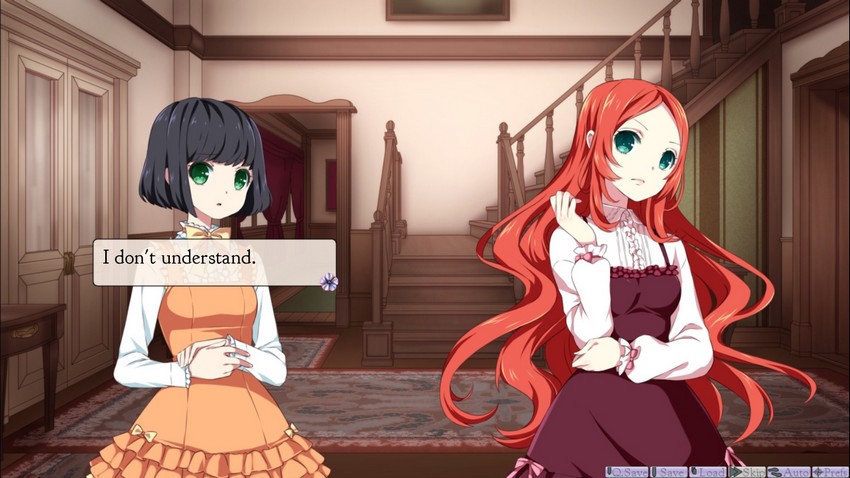 Doesn't it make you angry, being used like a trinket for Miss Minchin to display? There does not seem any reason for me to be angry. Having tea with visitors is not such a difficult thing. It is like a kind of performance, with attention instead of applause. A performance... I never thought that tea and books and French could be like being on the stage.
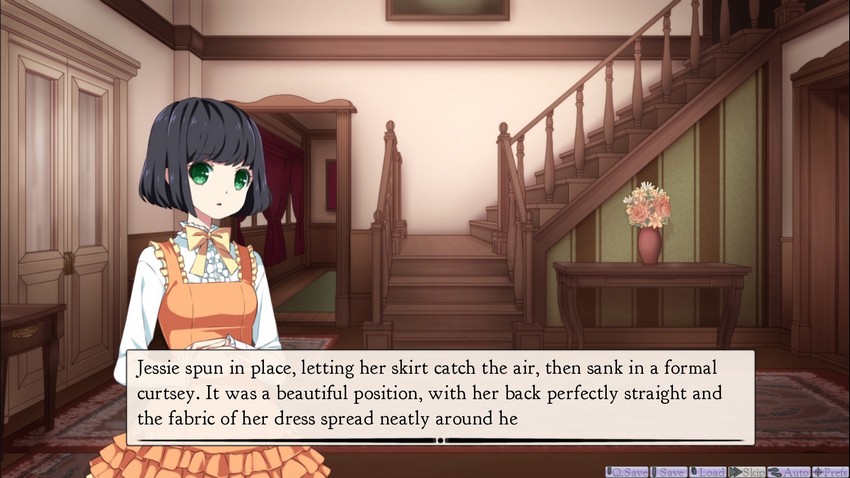 Oui, oui, merci, madame. Please, pour again. Not quite like that. Jessie straightened, patting her skirts down to ensure that every ruffle was in place. Will you speak French to me, Sara? I — I hardly know what to say, when you ask it like that. Say something pleasant. Say that it is a beautiful day, or that your breakfast was delicious, or that I am clever and charming. Vous étes une jeune fille charmante, mais je ne vous comprends pas toujours.
 You are a charming young girl, but I don't always understand you.
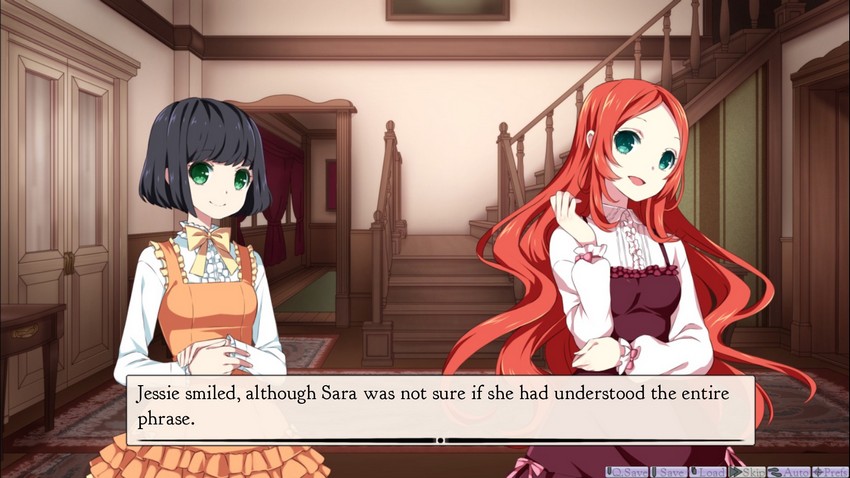 The language sounds much lovelier from your lips than from those of Monsieur Dufarge. It always sounds beautiful to me. It reminds me of my mother. Oh. Did you —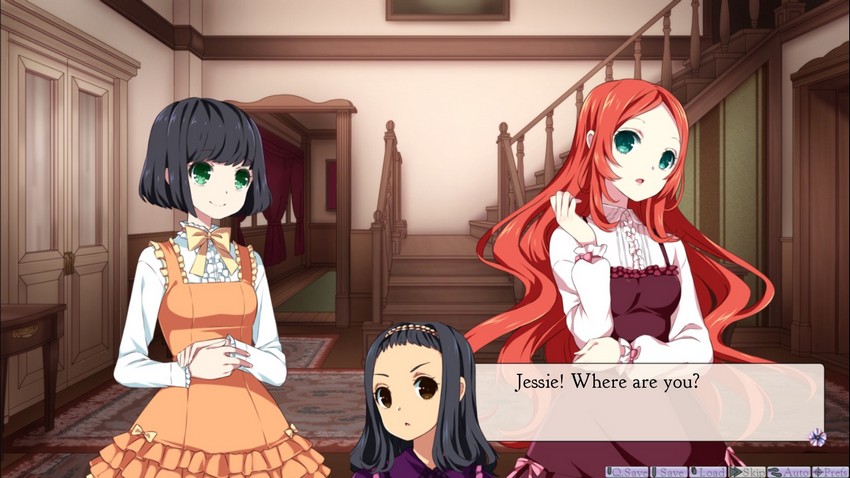
 Oh! I have to go. I'll visit you later, all right? And she hurried off to answer her best friend's summons.
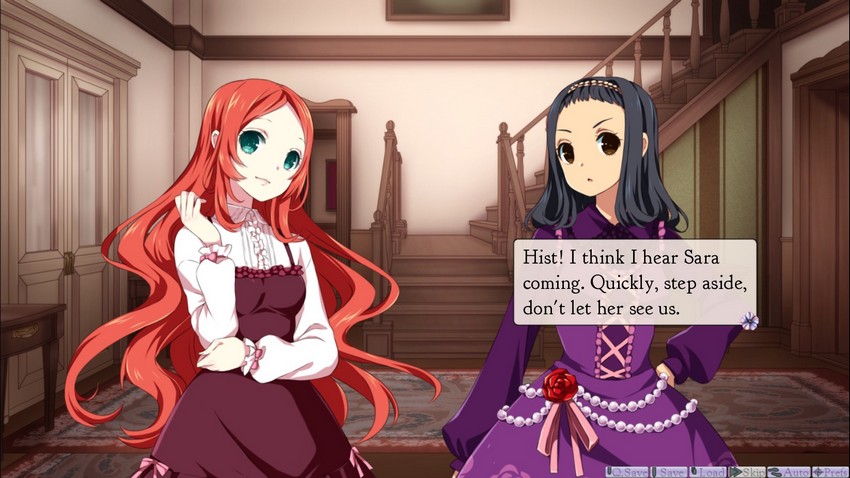 But why — Shh! Lavinia took hold of her friend’s shoulders and pushed her back against the wall. ...
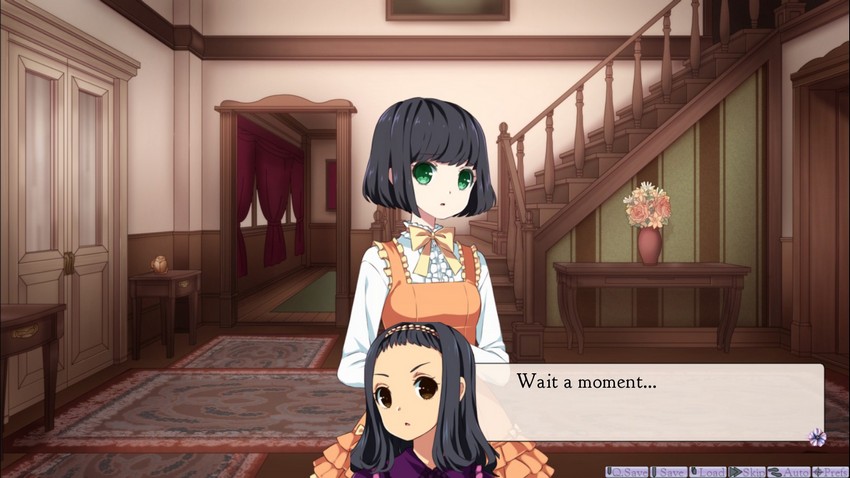 There, she's gone. Why are we avoiding Sara? Ever since she got that letter, it's been nothing but India-this and India-that. If I have to hear her say that word again, I am afraid the hair will fly right off my head. I like her stories. Do you know, her father has faced down a tiger? He shot the one whose skin Sara has in her room. That's why she likes it so. She lies on it and strokes its head, and talks to it as if it were a cat. That is simply disgusting. If it were a cat, it would be one that he had killed. What next, will she drown Tybalt and then have him stuffed for a pillow?
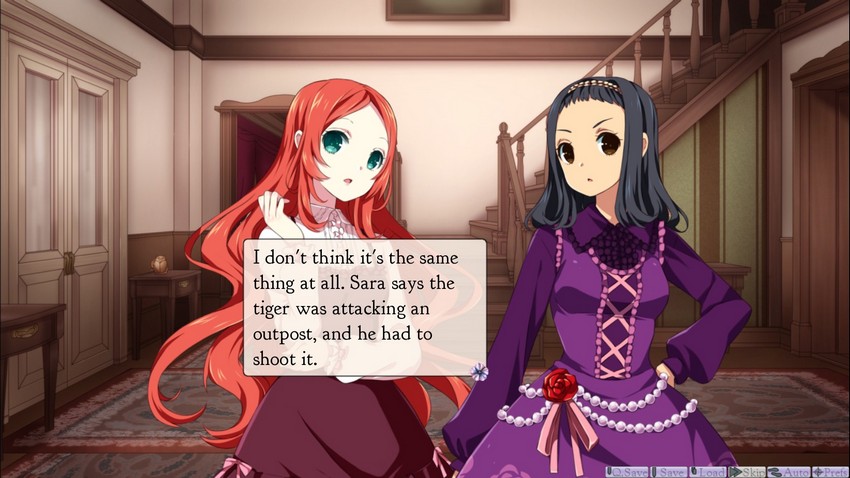 Sara tells stories. You know that. Well, I think her father sounds very interesting, and so does India. It's a filthy, disgusting place, rank with foul humours, and don't you forget it. Come along now. All right... Lavinia led, and Jessie followed.
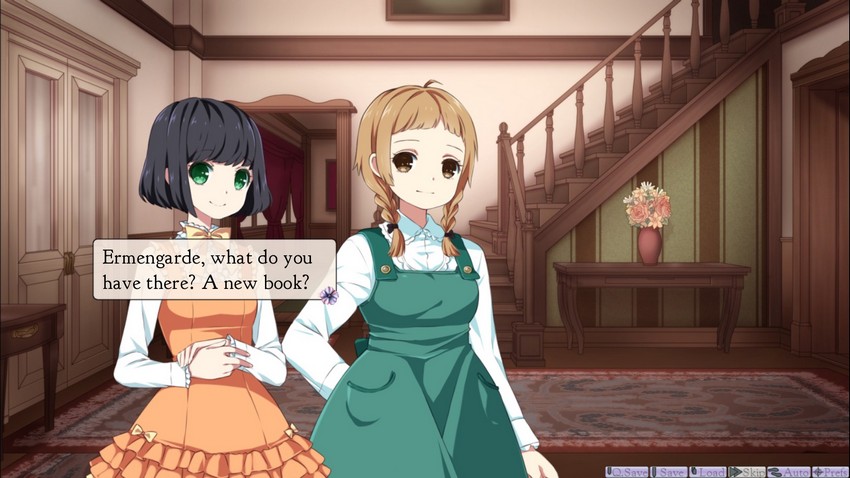 The plump girl sighed, showing none of the delight Sara would have found in such a possession.
 My father sent it to me, to be 'enriching’. I don't see how books have made me any richer so far. May I see it? She took the volume from Ermengarde's hands and examined the gold lettering on the cover. Poèmes antiques by Leconte de Lisle — a book of French poetry! Sara's excitement only deepened the other girl's dismay. Would — would you like me to read it with you? I’m certain that if — What's this? This will go great, I'm sure.
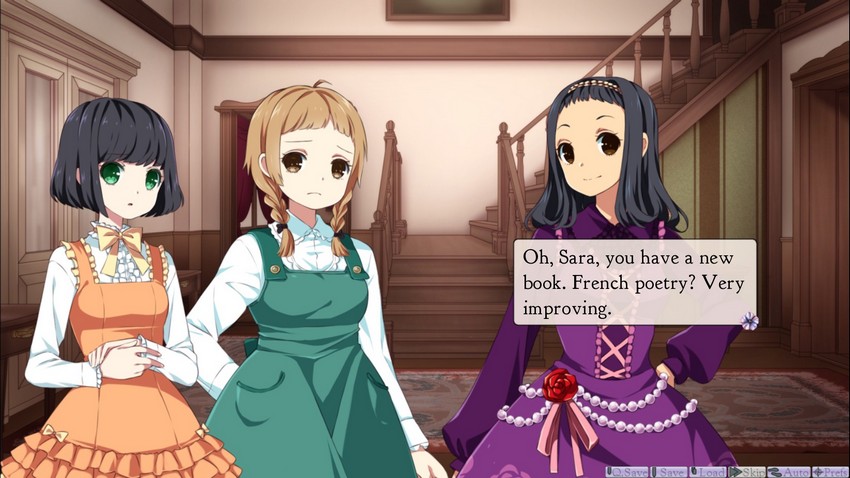 As long as it isn't one of those shocking new decadent poets. A proper lady should not read such works. I — I'm sure it’s nothing of the sort. What would you know about it? I was speaking to Sara. Actually, the book belongs to Ermengarde. What? Don't be silly. She can't even read it.
 It's mine. She turned and walked away.
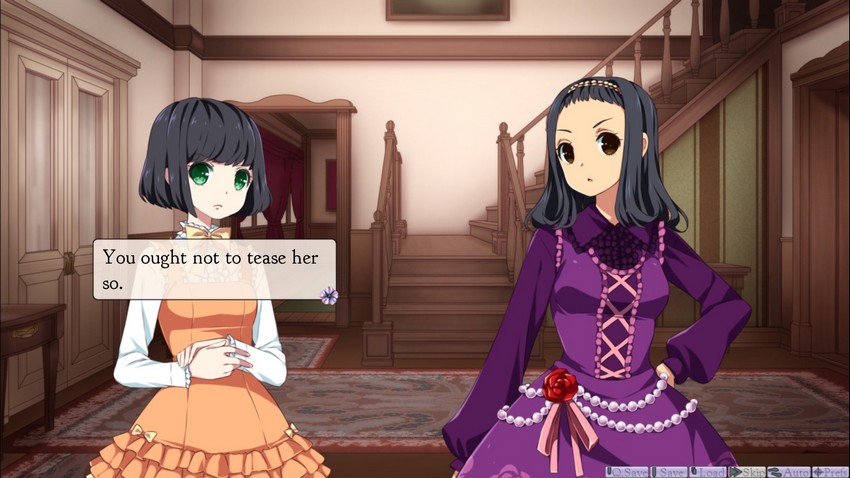 I didn't say anything that isn't true. What good is a book of French poetry to someone like her? Such a waste. She'll probably never even open it. She should have simply given it to you. Admit it — you know that I am right. You may be right, but it was a gift from her father. I'm sure she will treasure it. Not every girl is as devoted to her father as you seem to be, Sara Crewe.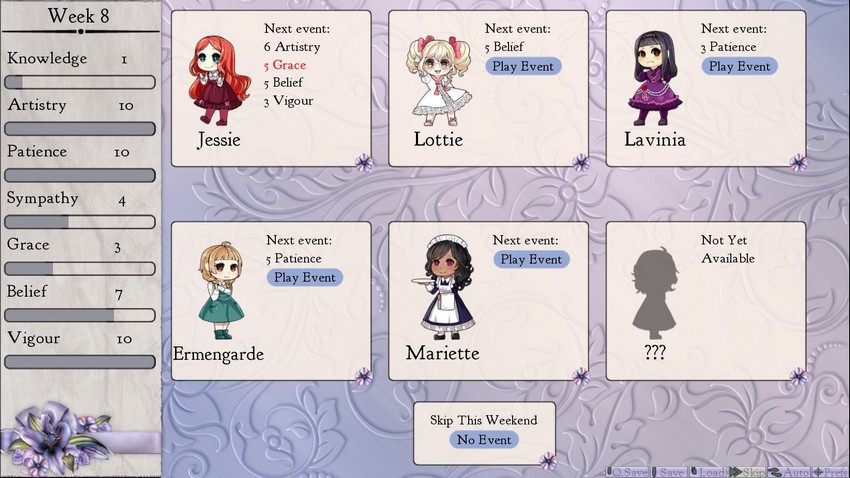
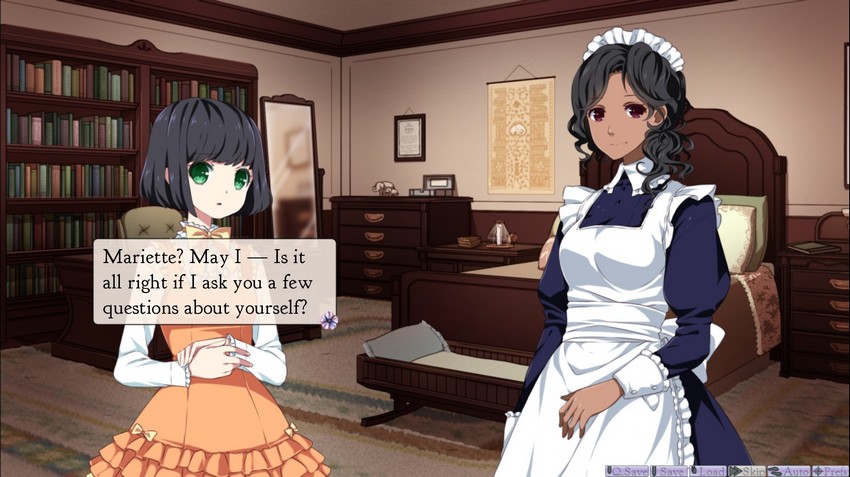 Bien sûr, mademoiselle. What do you wish to know? What is your family name? Miss Minchin did not say. Dumas, mademoiselle. Oh! Are you a relative of the great French writer, the author of The Three Musketeers? Mariette chuckled kindly. Non, mademoiselle. Ah — well, not in a close way, I am not. There are many with the name of Dumas, and I cannot know what connections there are between all people. Do you know all of your cousins, and your cousins' cousins, and all who bear the name of Crewe? I don't know anyone else named Crewe except for myself and my Papa. So, you see. I cannot say who my relatives might be at some distance. Sara nodded.
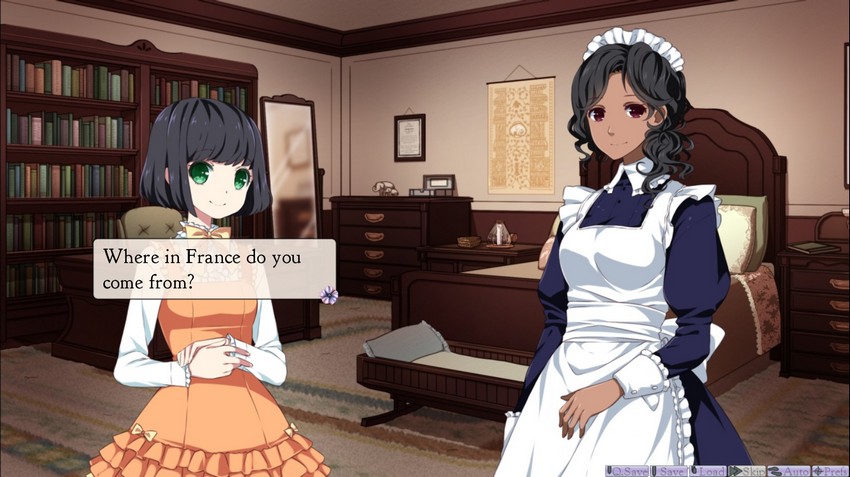 I grew up in Limoges. You may have heard of the Limoges Box, the porcelain? Sara shook her head. Ah, well. They were famous once. Perhaps they will be again. For now, like much of Limoges, they have faded.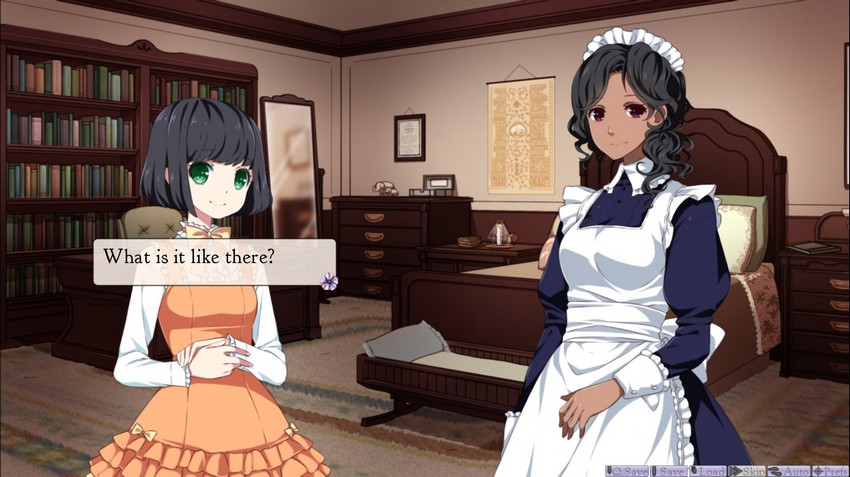
 Ah... what is it like anywhere? It is a city. Not so large as Paris or London, no. Is it near Paris? Non, pas très proche. It is in the south. You must rely on the railways to travel between them. All trains lead to Paris. No, not very close.
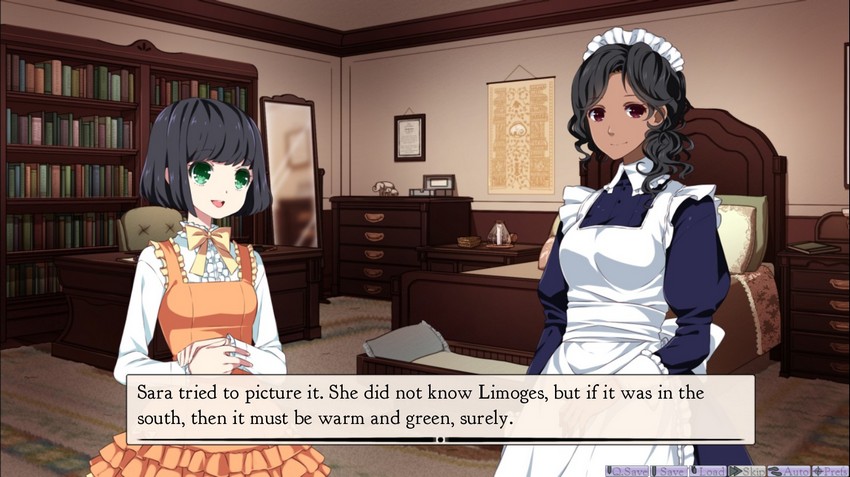 She had seen paintings of France: stone houses, arches, and bridges, rolling green hills, hanging vines. And sunlight, always sunlight, not the fogs of London! It must be lovely. As you say, mademoiselle.
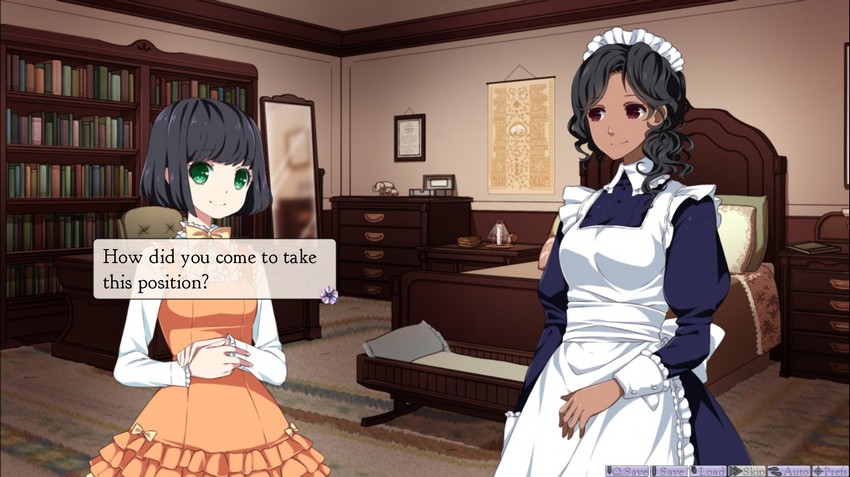 What I mean to say is — my Papa and I did not have time to visit France, and I did not meet you until you came here. Did you meet my Papa somewhere else? Non. We have never met in flesh and blood. Your papa, he is a gentleman and knows many other gentlemen in fine cities, like Paris. When it happened that he wished to appoint a maid, he wrote to this Paris gentleman to describe you. And I, I have a cousin who works for this Paris gentleman, and he thought of me, and so the arrangements were made. And I am glad that they were.
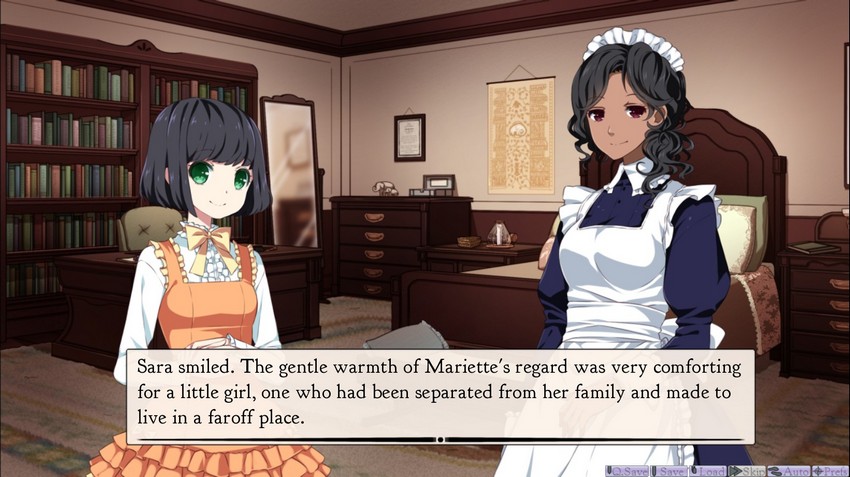 It was true that Mariette was, for the most part, only another stranger, like any other in Miss Minchin's seminary. They were only just beginning to know each other. And yet, Mariette was not simply a stranger who might come and go, like the students. She was Sara's maid, the beginnings of her very own household. She might, in time, be the closest thing to family. (I wonder about the friend my Papa has in Paris... I wonder if he ever knew my mother.)
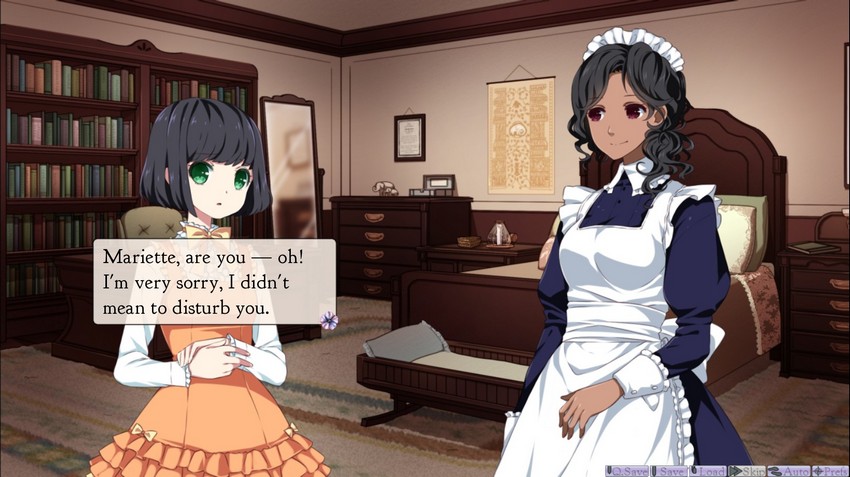 It's quite all right. Are you reading? Wait. That book — I’ve seen it before. It was the same familiar copy of Poèmes antiques.
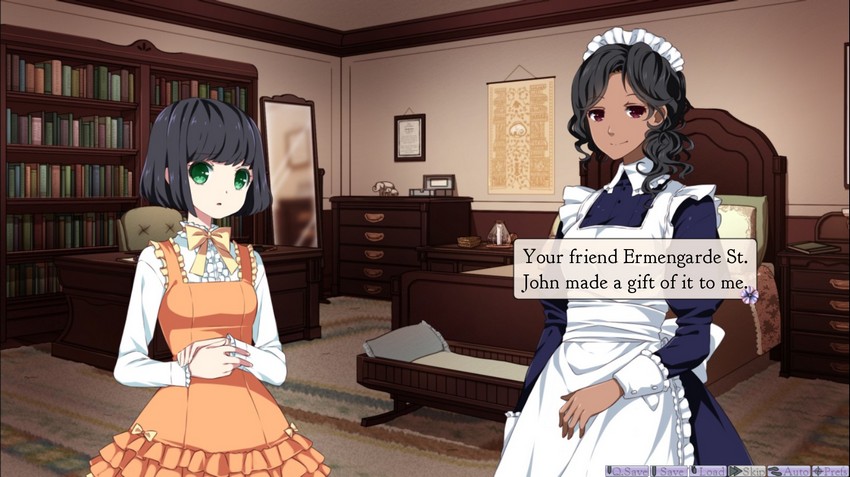 She thought I might appreciate a volume de poésie française, to feel more at home. Oh! I’m sorry — I didn't think of it. Would you like me to buy you more books in French? I don't mind. Non, mademoiselle. I am content.
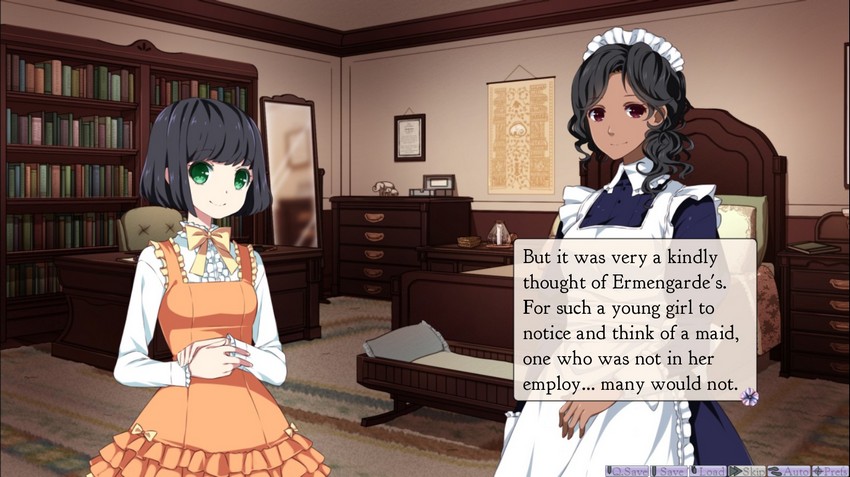 Ermengarde is very nice.
 (I did not even consider Mariette! I wanted that book for myself, but Ermengarde has seen the person who would benefit from it most.)
 Sara-mamma? What is it, Lottie? Have you come for tea? Mariette has promised us a special treat: apricot sandwiches! Oh, yes! ... No. Sara-mamma, you like school, don't you? I don't know.
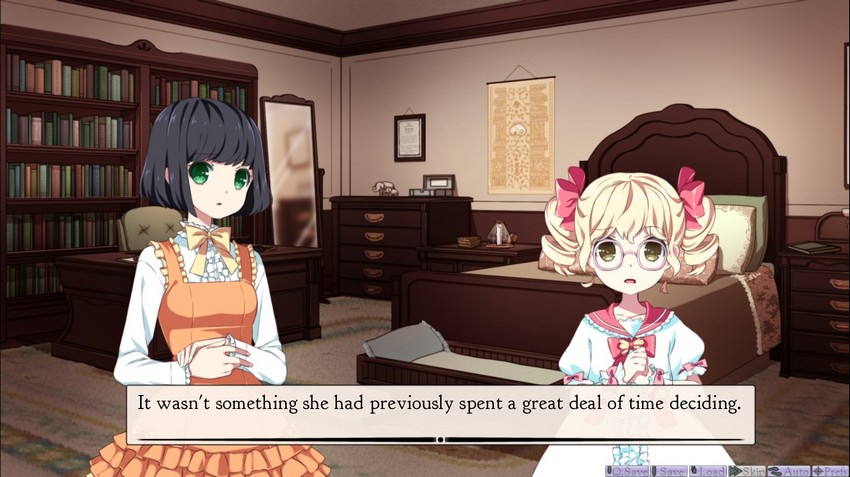 (After all, whether I like it or not, I am here now.) I don't think I could say that I don’t like it. Everyone is kind to me, and my rooms are pleasant —
 No! I meant school. With books and numbers and remembering things. Oh. Yes, I like books very much.
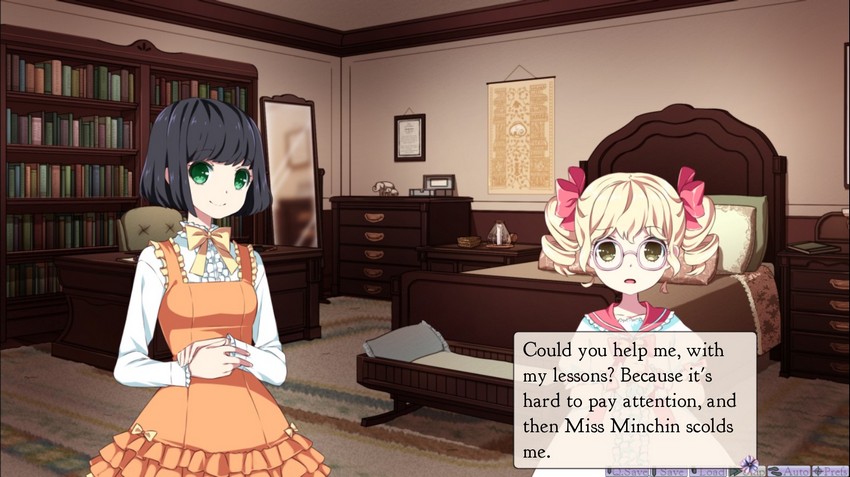 I don't like it when she says my name like that, 'Miss Leigh'! I don’t like it. But you make everything interesting. Of course I’ll help you with your schoolwork — but you still have to learn it. All right. all around this update, I suppose. It's nice to see a more mature side of Lottie, for once. Maybe Sara's making a difference in her behavior.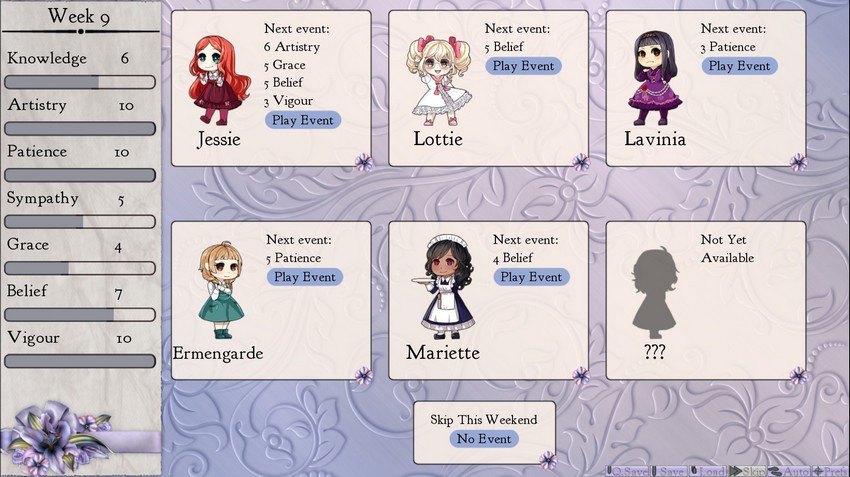
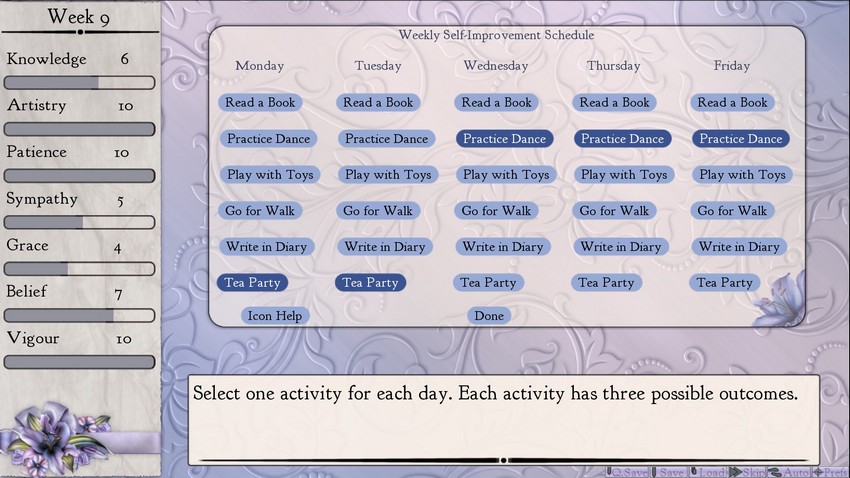
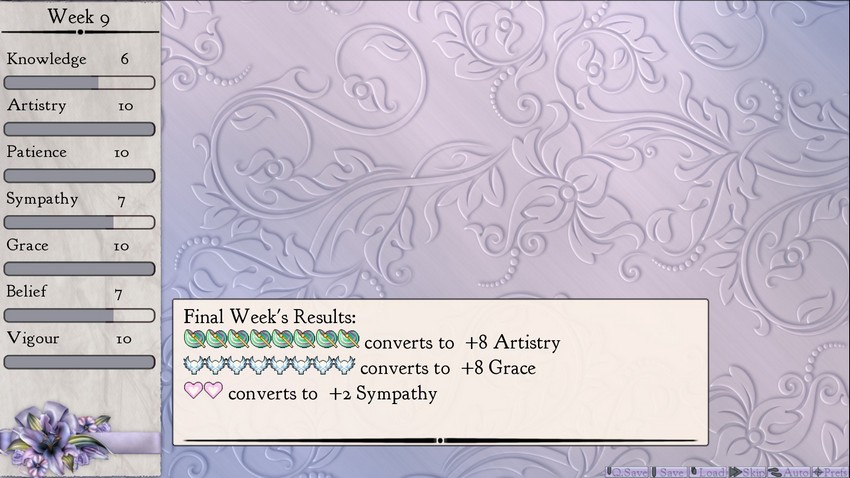
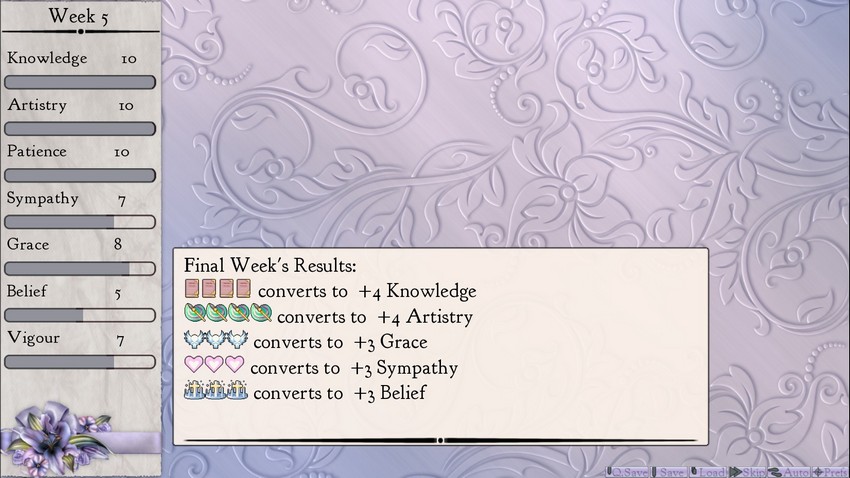
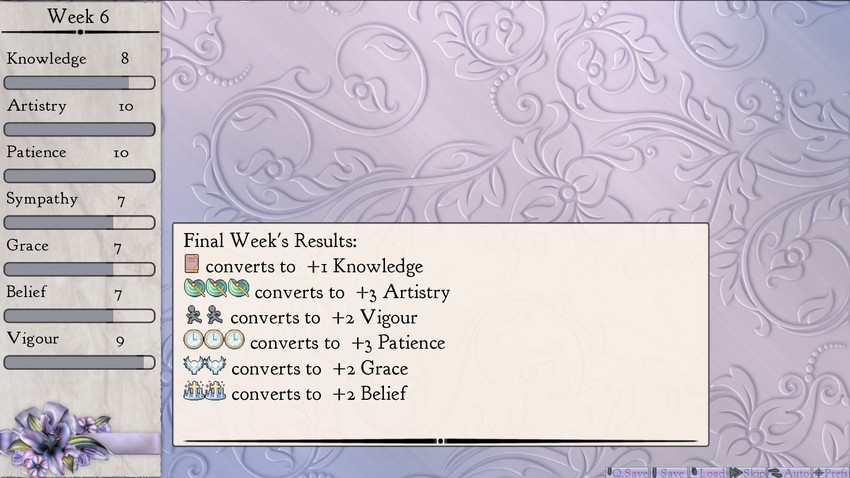
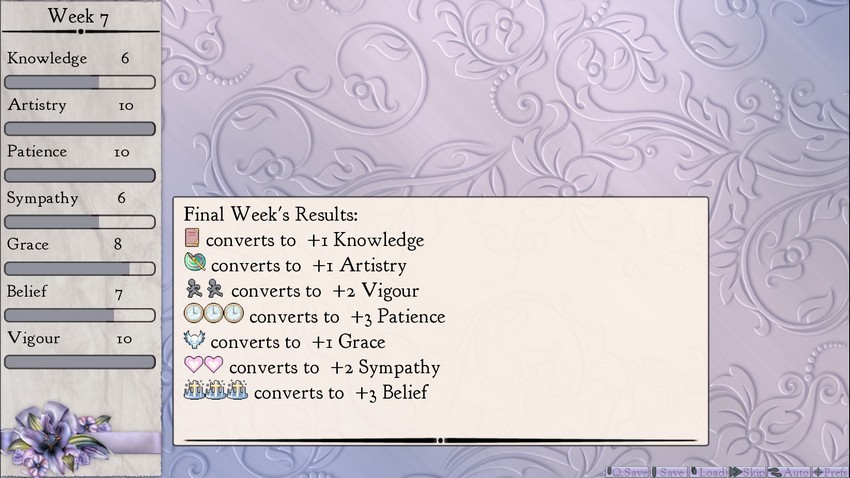
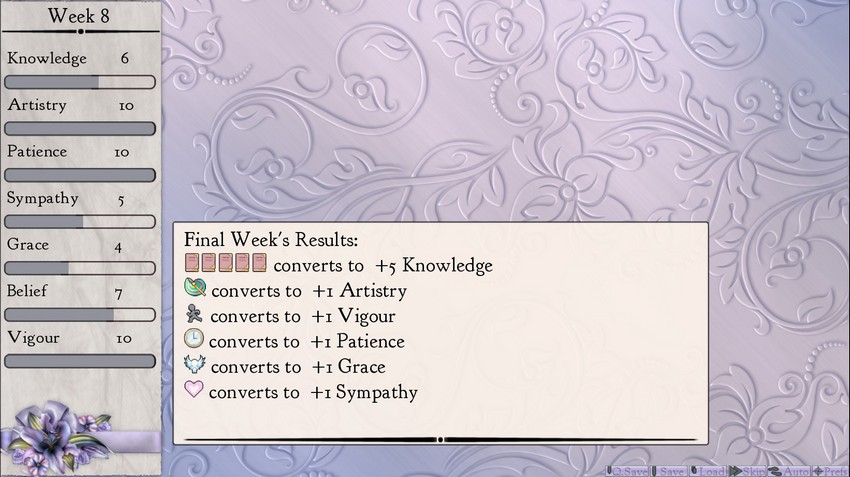
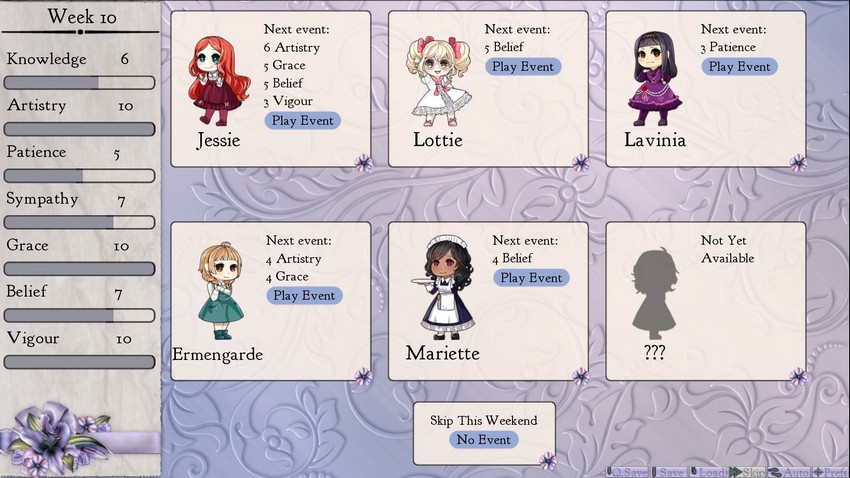
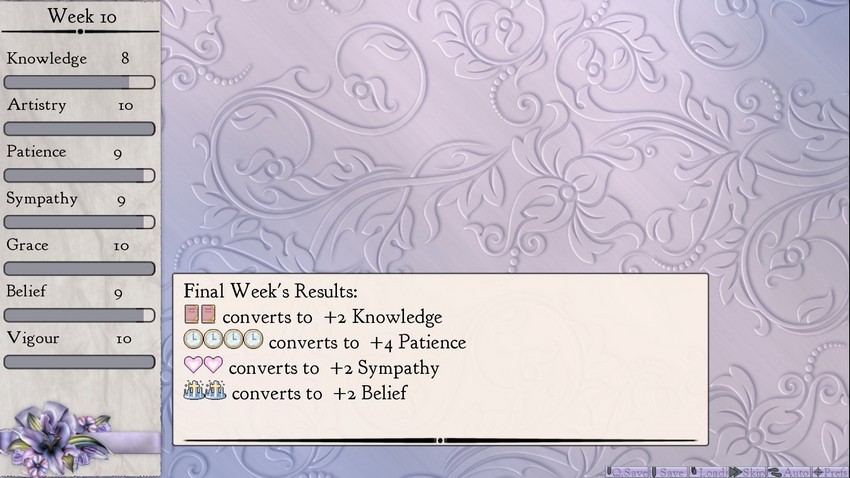
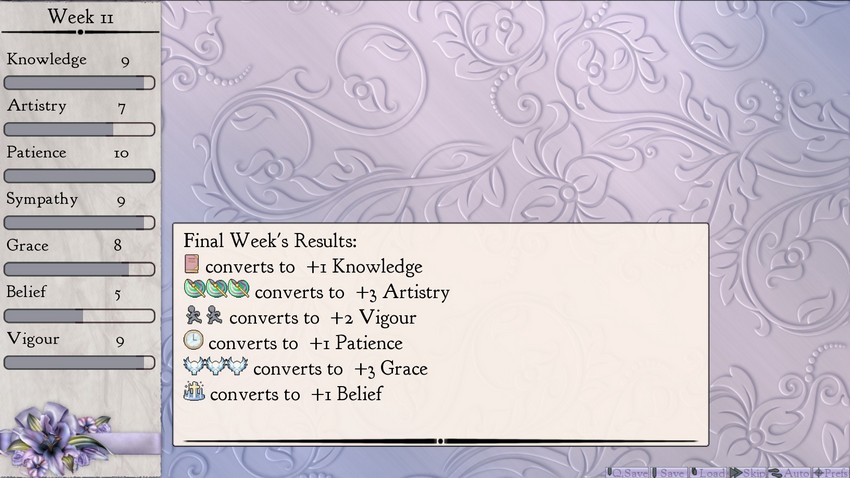
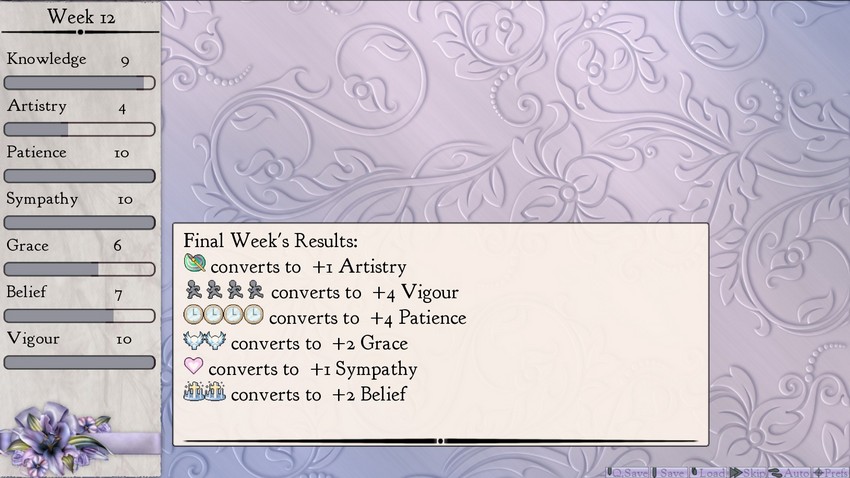
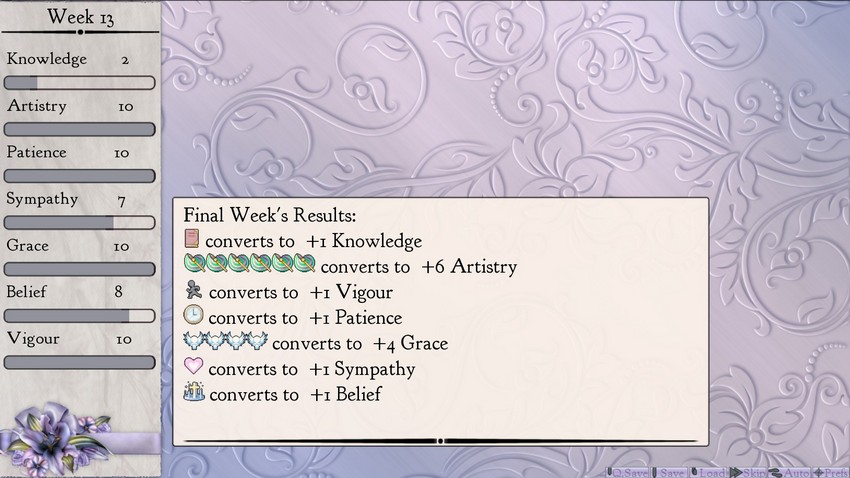
 Well that was certainly some...concentrated stat gain. If you get lucky with your rolls, you can really clean house.
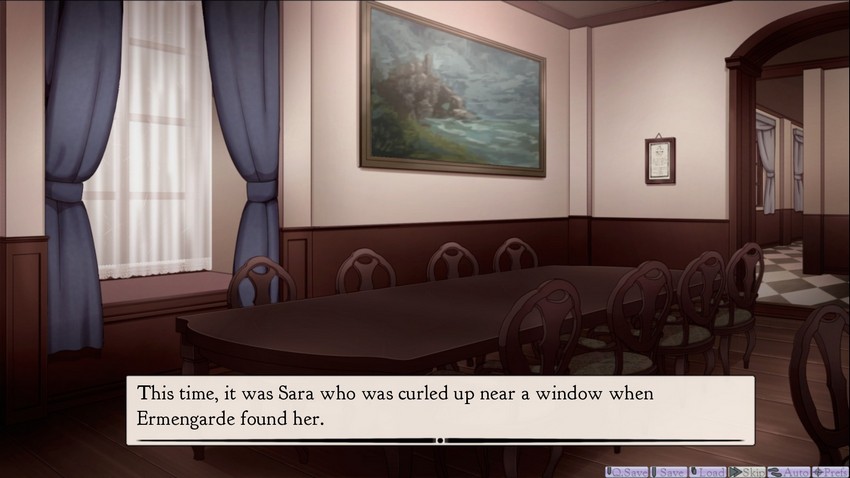 Sara? I — I wanted to ask you something. If you're not busy. Sara raised her head and smiled. (Only Ermengarde would realise that I might be 'busy' when I am sitting and thinking.) You can always ask me things. She paused, then added. I can't always answer, though. I might not know.
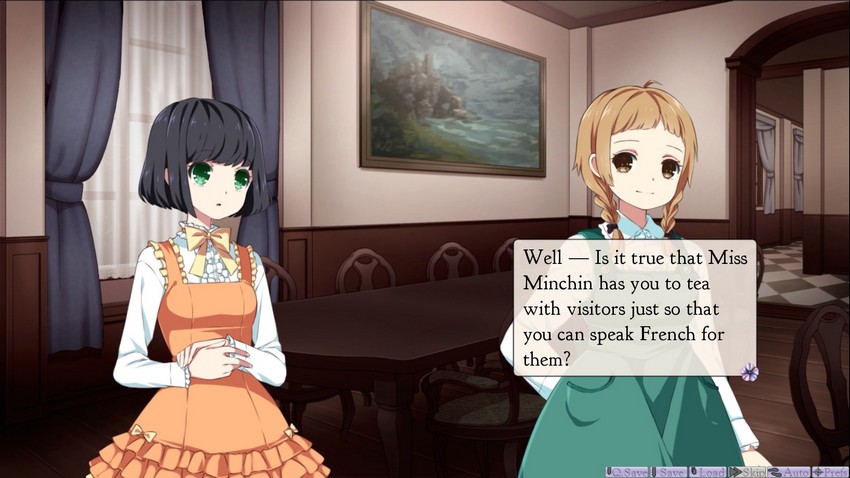 Oh. Well, I don't know if that is the only reason. I often do not say very much, and she still keeps me there for the rest of it. Some of her visitors are not very interested in French at all. Some of them prefer poetry, or want to tell me how they themselves saw India once upon a time. But sometimes, yes, Miss Minchin has guests who speak French and wishes me to converse with them.
 You really can speak it, then. Not just a few words or a sentence you memorise. Ermengarde's respectful tone made Sara feel a bit off’balance. She tucked up her feet, sat with her hands clasped round her knees.
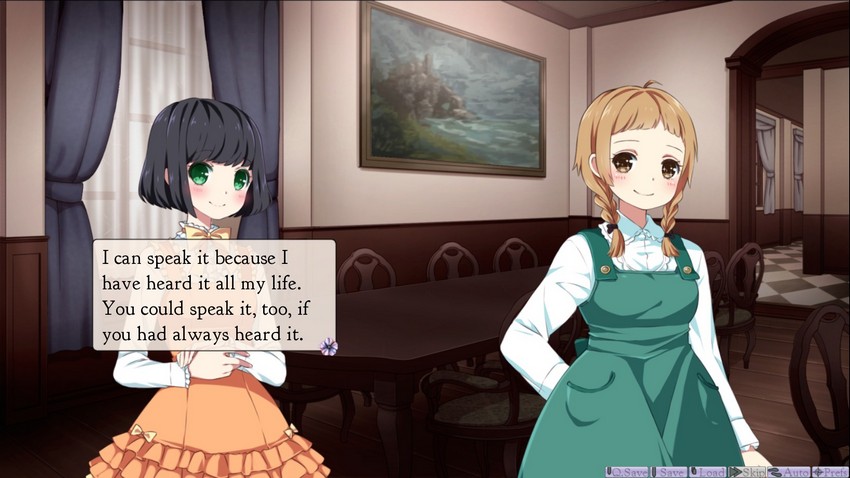 Oh, no, I couldn’t. I could never speak it. Why not? Ermengarde shook her head so that the pigtails wobbled.
 You have heard me before. I'm always like that. I just can't say the words. They're so queer. I dare say that little French girls think the same things about English, if they try to learn the language for the first time. But if you had heard it as a child —
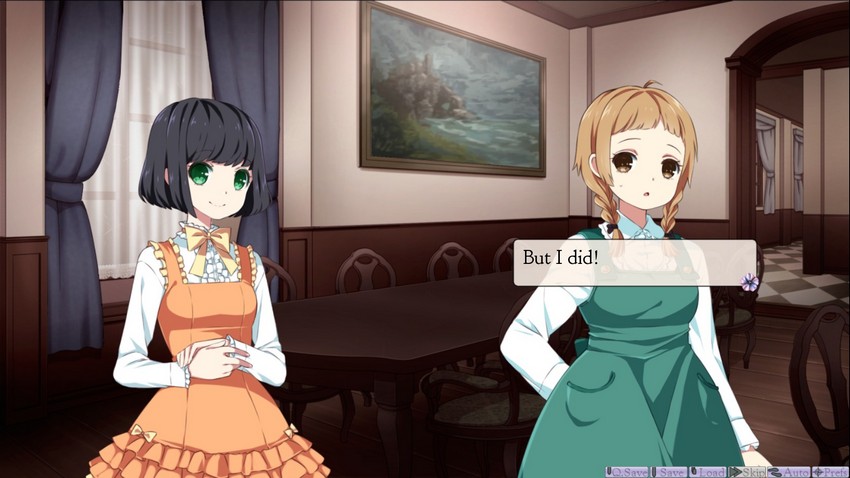 My father, he speaks seven languages — or maybe eight. I forget. I forget everything. I always have. My father never forgets. He has libraries with thousands of volumes in them, and he knows every one of them by heart. He says that when I was very young, he used to speak to me in different languages every day because he hoped that I would learn them all. But it only made me cry. My nurse made him stop because she was afraid that he would confuse me so much I would give up on talking altogether.
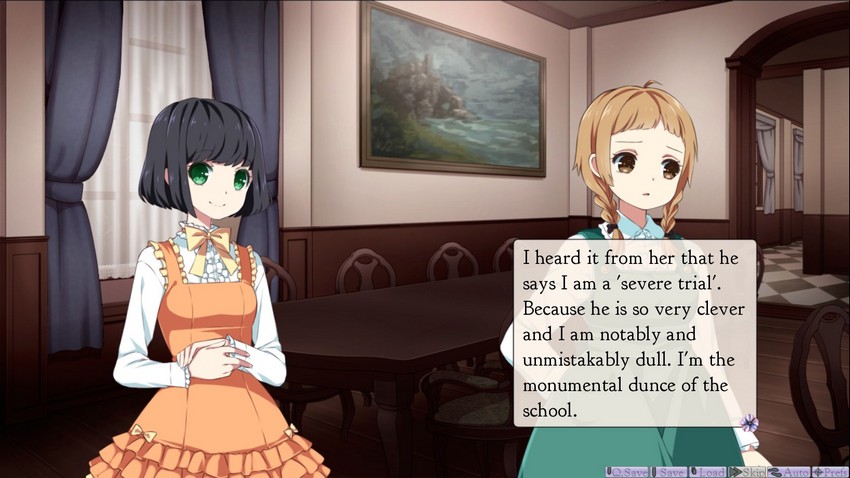 I can't speak French, I can't recite poems without flubbing the words, my handwriting is too big and lumpy, I can't calculate quickly, I can't keep my kings straight... I'm not good at anything. But you are. You are clever, aren't you, Sara? Oh, Ermen.
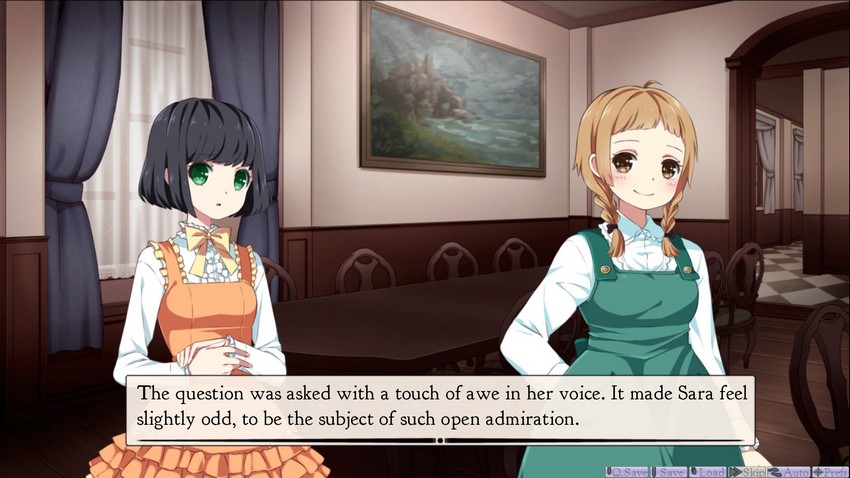 Sara looked out of the window into the dingy square, where the sparrows were hopping and twittering on the wet, iron railings and the sooty branches of the trees, and reflected a few moments. (People have often said that I am clever. But am I? And if I am, then how did I come to be that way?) I don’t know. I can't tell. I think that you are. I think you're wonderful. Ermengarde did not know why a lump came into her throat and her eyes felt as if tears were in them.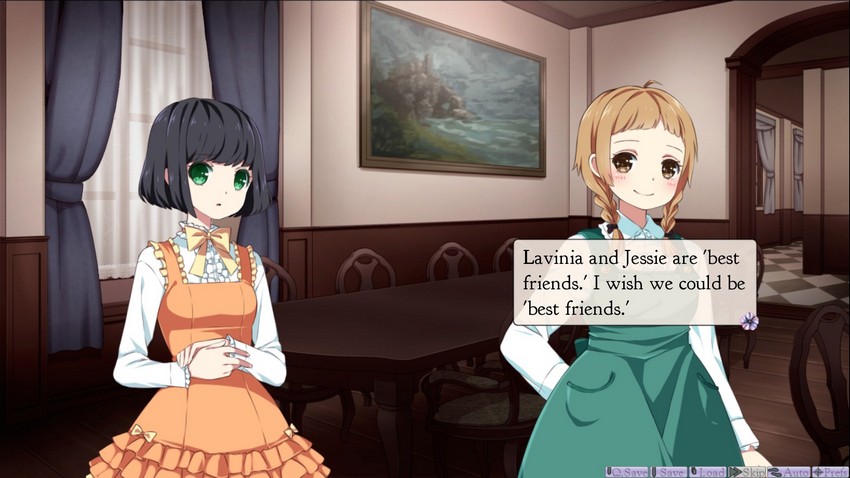
 You’re clever, and I’m the stupidest child in the school, but I... oh, I do so like you!
 I'm glad of that. It makes you thankful when you are liked. She stood up from the window and took Ermengarde's hands in hers. Yes. We will be friends. The very best of friends. And I’ll tell you what else: A sudden gleam lit her face. I can help you with your French lessons. You can try...
 L'Opération: Étudiez Français est en cours.
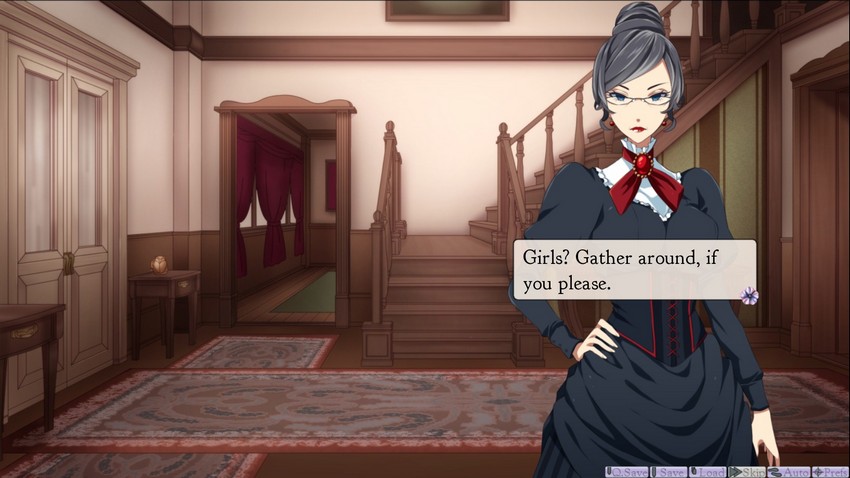 As the weather is particularly pleasant today, we will be taking carriages to the park for extended riding lessons. Please dress accordingly.
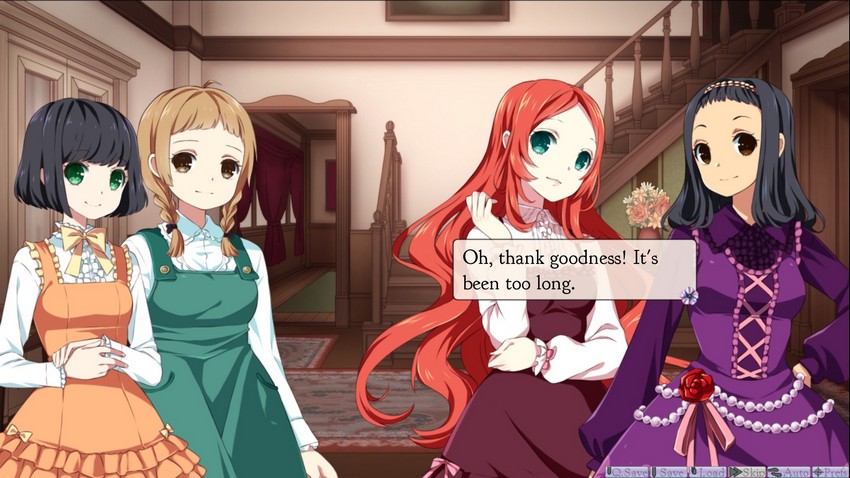 I have never greatly cared for horses. It is fashionable, and a lady should know at least the basics, but it is simply not comfortable. Do you ride, Sara? I would not truly say that I ride, but I have met horses, and been in the saddle once or twice. Well, I'm sure you'll learn. You learn everything, after all. I do try.
 Hardly the best of your backhanded compliments, Lavinia. 2/10.
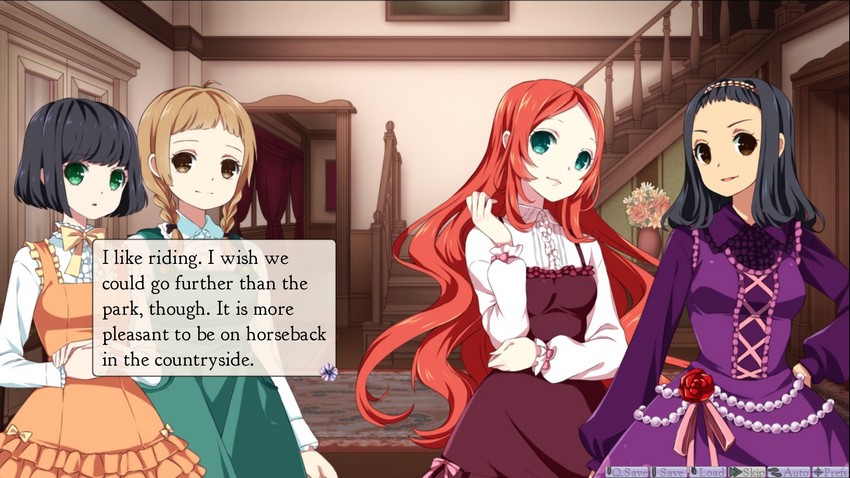 Oh, I agree, it is much lovelier. Imagine being on horseback, galloping across the wild moors, long hair streaming behind you like a warrior-queen of old... Riding astride like some hoyden? Even Boadicea rode in a chariot.
 I think I should like a chariot.

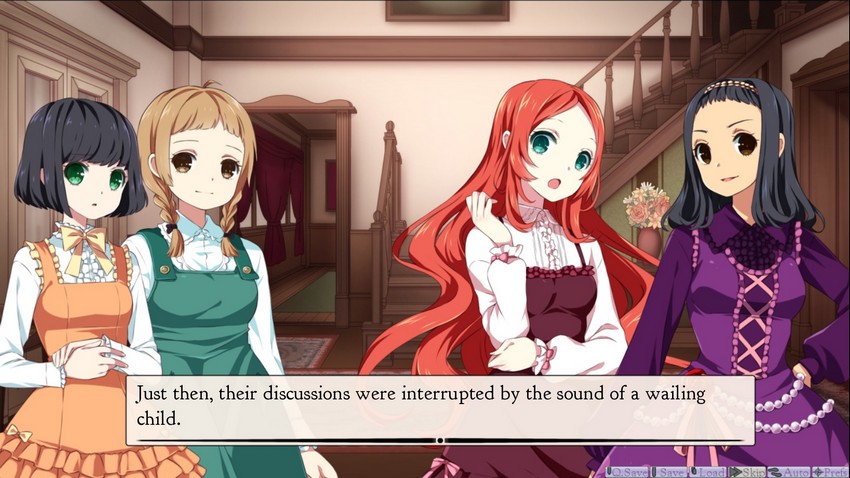 Miss Minchin was attempting to bring little Lottie together with the older girls, much to her displeasure. I won't go. I won’t, I won't! What a ridiculous noise you are making. Stop that at once! Shan’t! You are more than old enough to begin learning. Every student at this school is expected to — I hate horses! I won't, I wo-oh-oh-oh!
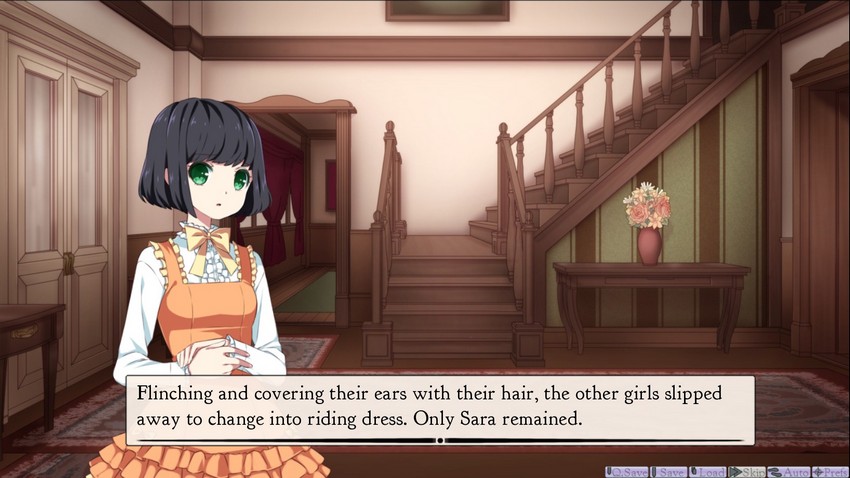 If you don’t behave, you shall be whipped, just as a horse would be. No! To Sara's surprise, Lottie suddenly broke free of Miss Minchin and rushed to Sara, cowering behind her and pressing her wet face into the fabric of Sara's dress. (Is this more than just a tantrum?) Miss Minchin, please, could you let me talk to her alone? Dear Sara, you are very kind, but we simply do not have time for these... shenanigans. If you can make her mind swiftly, then do so, but it must be done. Shaking her head, she walked away.
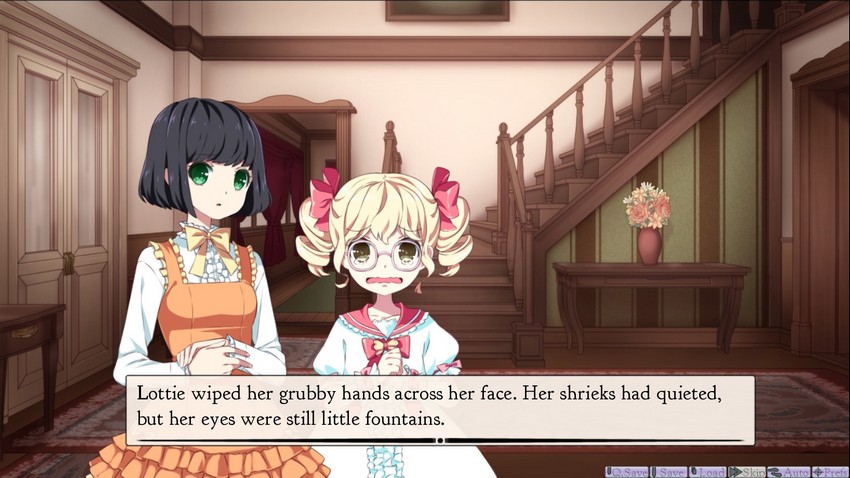 Lottie — are you afraid of horses? ... yes. Well, then, no wonder that you are upset! This cheerful justification startled Lottie enough to leave her frozen in mid-sniffle, mouth hanging open. Sara nodded, and continued: It is normal to be upset about things that frighten you. Only — I think it is also normal to try and make yourself less frightened, if you can. You wouldn't want to be afraid forever. Horses are very large, but they can also be kind and sweet. They like apples and carrots, and being petted, just like cats do. Lottie now seemed more confused than distraught.
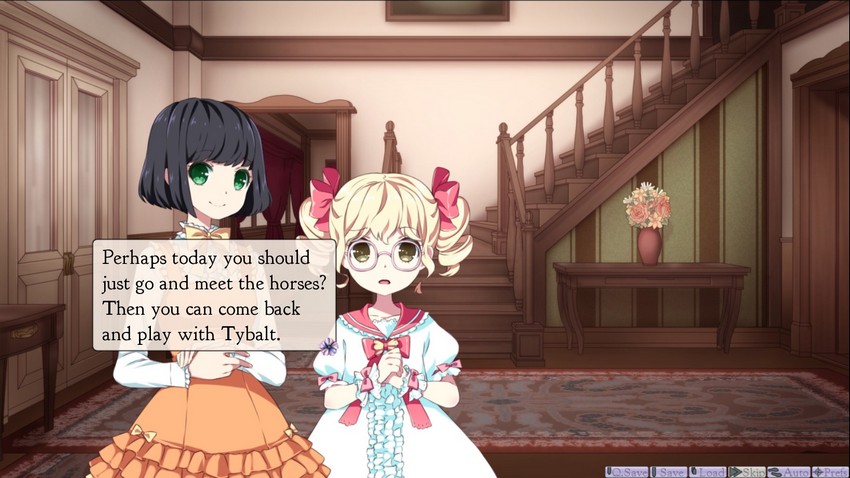 What — what if Lavinia won't let me? Then we shall wait until she is not looking, and while we wait, I will tell you about the horse who rescued a lost prince. She held out her hand, and after a moment, Lottie took it. I think that one day, when Sara becomes a real mother, she will be very good at it.
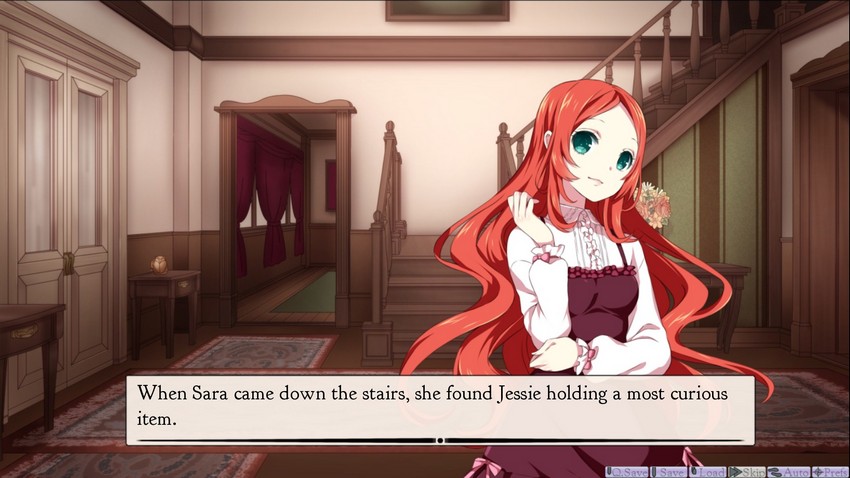 It resembled a long wooden spoon, though somewhat thicker in the shaft, and with a solid round end instead of a bowl. What — what are you doing with that? Jessie turned the object over in her hands. Oh, Sara! Isn't it interesting? It’s from India. I know. I’ve heard there are societies for gentlemen and ladies — separate, of course — where they all have wooden clubs like these and swing them to strengthen their arms. Or even throw them at each other! Isn't that quaint? Are you sure they throw them at each other? In India, the jugglers throw them up into the air and catch them again.
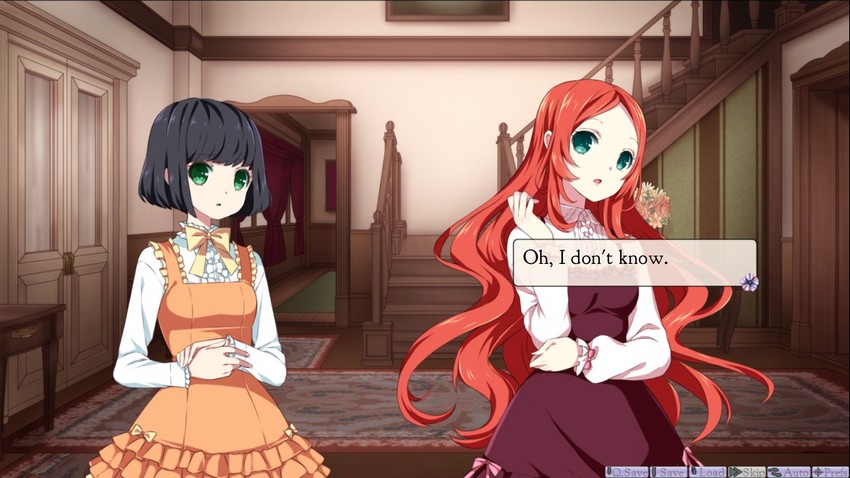 She looked at the solid wooden shape she held, then up at Miss Minchin's painted ceiling. Perhaps I ought not to try that. Where did you get it from? Lavinia gave it to me. For a moment, she cradled the club in her arms as if it were a doll. She wouldn’t tell me anything about it, though. She told me to take it, if I was so interested, and she would say nothing more.
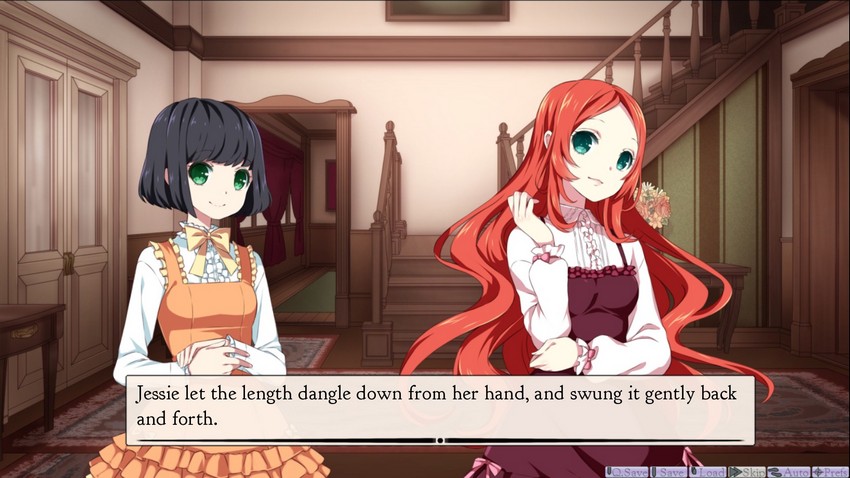 It doesn’t seem like such hard work. Her eyes glinted for a moment with strange emotion. Imagine the blow, if you struck a man with this. What? Why?
 You uh, you okay there, Jessie?
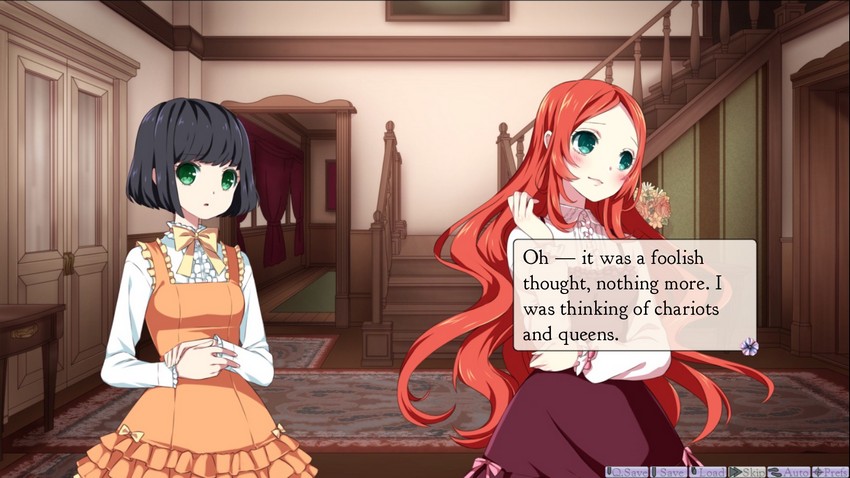 We are not soldiers, and have no need to defend ourselves. There are brave men for that job. Like my papa.
 Yes. You are lucky, to have such a father. Sara smiled, pleased to accept any compliments for her beloved papa, and thought no more of it.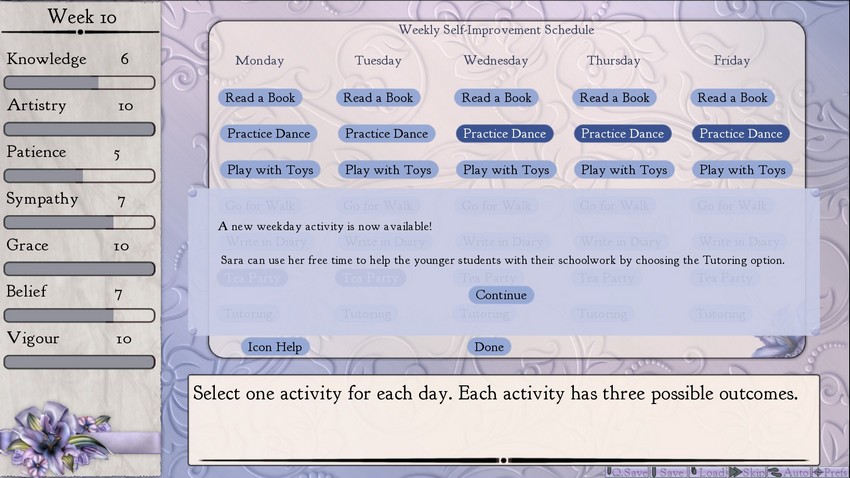
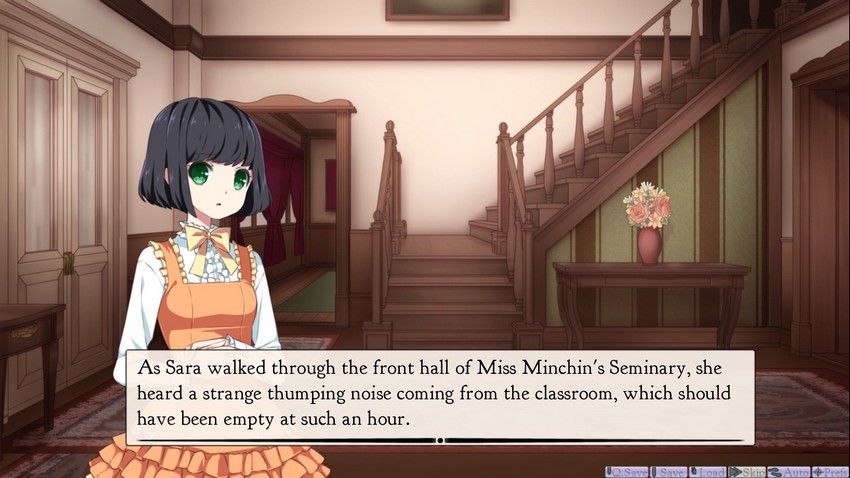 (Has something fallen?) Opening the door, she found Jessie in mid-leap, practicing dance moves in the unused space.
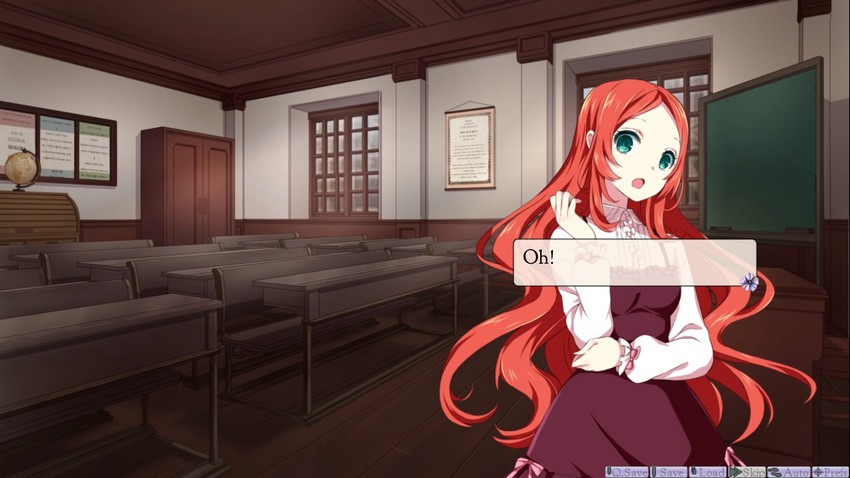 I'm sorry, I didn't mean to startle you. That's all right. Come in — and close the door. Sara took a seat on one of the form-benches. You like dancing, don't you? All young ladies dance. She pressed a palm to her chest and sighed dramatically. In the ballroom, the beautiful but impoverished daughter of faded nobility can catch the eye of a landed gentleman, and a perfect match will be made. If you you have two left feet, then beware! You might be sent home in disgrace! Sara laughed, swinging up her feet to demonstrate their clumsiness, even though she was privately sceptical.
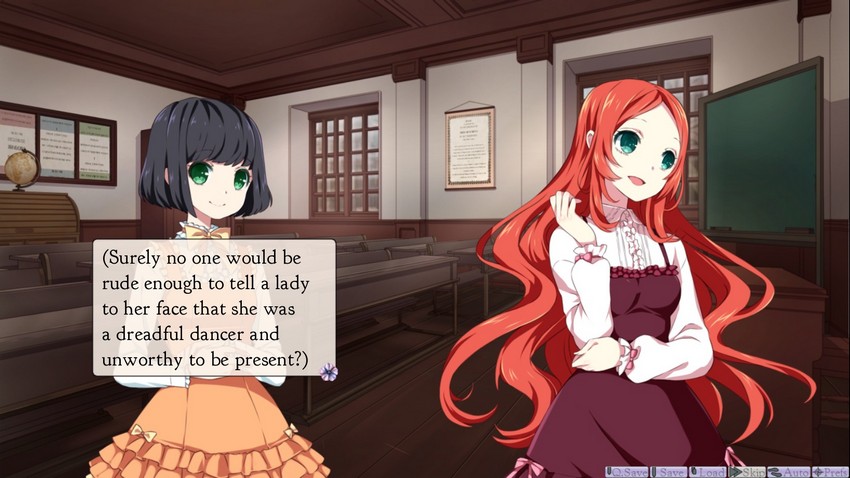 (Well... Perhaps Lavinia would.) (And Jessie might agree with her. She usually agrees with whatever Lavinia says.)
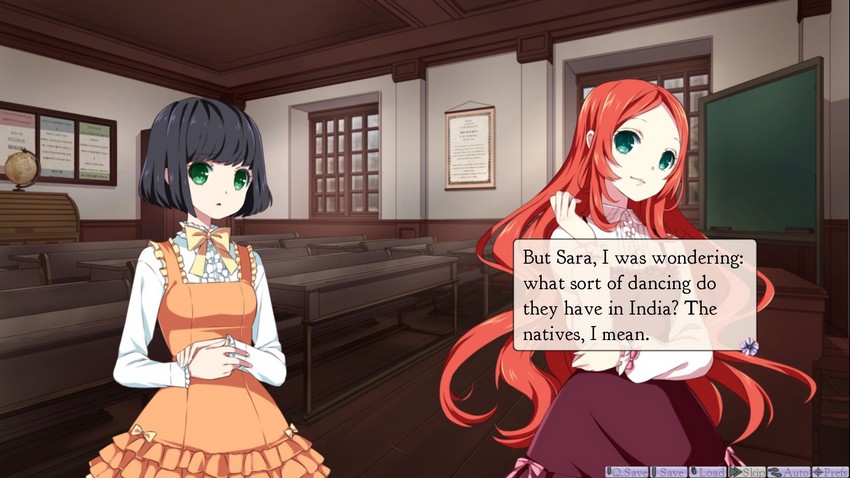 I'm sure people like that don't have ballrooms, but there must be something. Everyone likes to dance sometimes, even servants. I don't know very much about it. My Papa’s friends said that the dances the natives do are called nautch, and that they are impolite, and therefore the British are trying to make them stop. I have never seen such a dance. I am not sure what makes a dance impolite. Being danced by a girl who’s too pretty. In the opéra-ballet, the patrons demand pretty girls for the stage, but then because they are pretty and performing for the eyes of men, they sometimes call them... not-very-nice things. I suppose India is not so different after all.
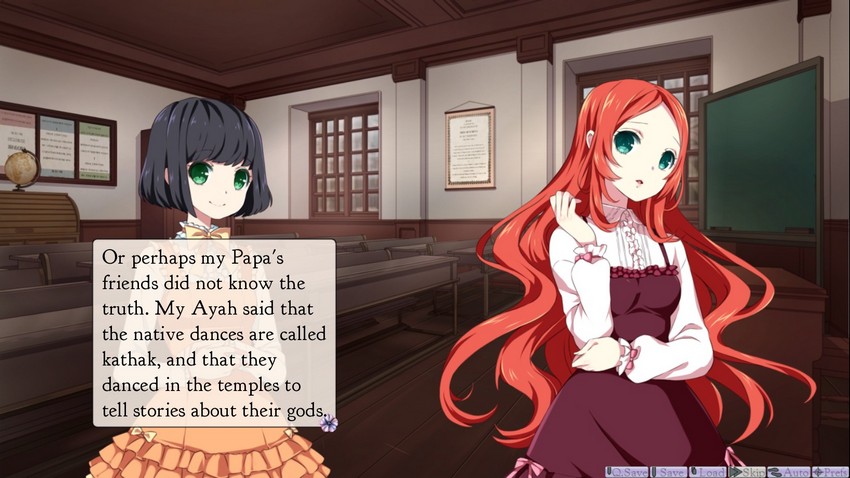 I would have liked to see a story told in dance, but my Ayah said it took many years of training and she could not show me. The ballet tells stories, too. But I can't imagine that Indian dance is anything like ballet. With a sigh, Jessie swept her long hair away so that she could sit beside Sara.
 But no English girl could ever be a great ballerina. Everyone knows that it is the French and Italians who make the best dancers.
 I don't think so. Maybe you don't know all of your talents yet. I'm sure I don’t! I believe that we all have talents and strengths that we don't know, that we will discover when we need them the most. That's the way that stories work. It's magic. But I don't think that dancing is going to be one of my talents.
 Sara thought for a while, then walked to the centre of the room and raised her arms over her head in a graceful curve, like the ballet fifth position. Once upon a time, there was a prince who was also the sun...
 Keep together now, girls! Form a line and wait here. Lavinia, dear, I am counting on you to maintain order. I will be only a few minutes. Yes, Miss Minchin! As Miss Minchin walked away, Lavinia raised her chin with pride. She did not notice the conversations going on around her.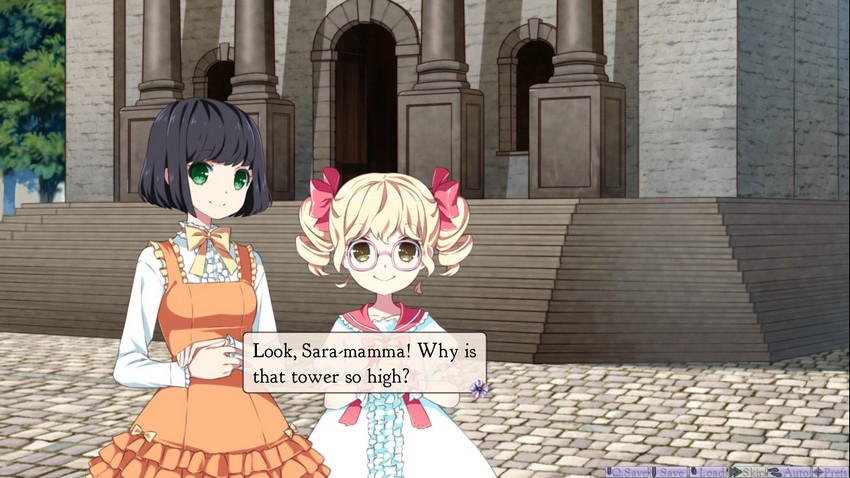
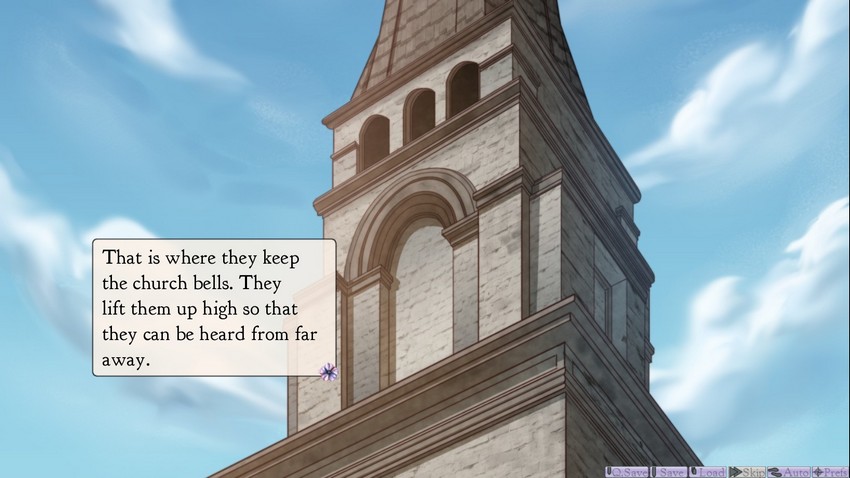 There is a man who lives up there. The Tower Keeper. It is his job to watch over the bells and keep them clean and ready to ring. He lives there? He never comes down? Sara did not know how the tower keeper spent his days, but she had heard of wise men in India who kept vigils, and of Christian stylites who lived atop pillars. No, never. The priests bring him food and water, so that he never has to look down. He tends the bells, and he thinks about God. Because he’s so high up in the sky, sometimes, if he is very lucky, the clouds part and he can almost catch a glimpse of the land beyond. The shining city, and the fields of lilies? At this point, Lavinia noticed the two of them standing with their necks craned back.
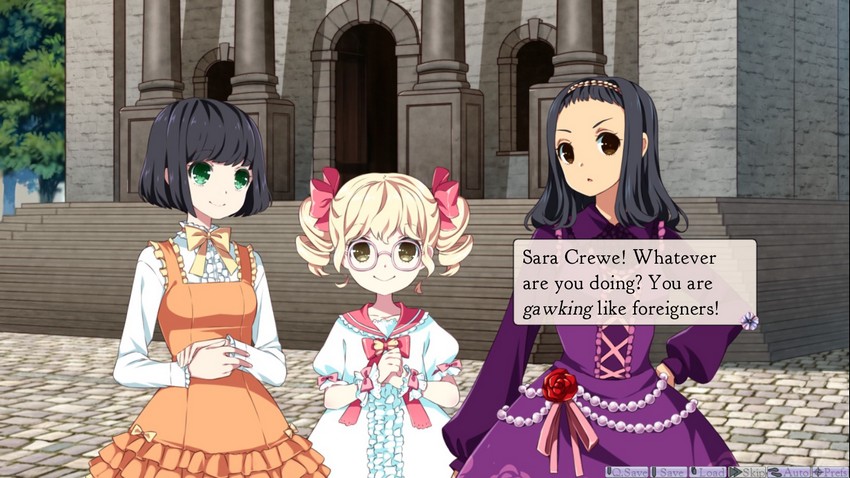 Sara and Lottie lowered their heads — though not, in Lottie's case, without protest. We are looking up at heaven, where our mammas are. They live in a city with golden streets and fields of lilies that everyone gathers. And they watch over us and whisper to us, and they visit the man in the bell tower. Sara told me. You wicked thing, making up fairy stories about heaven!
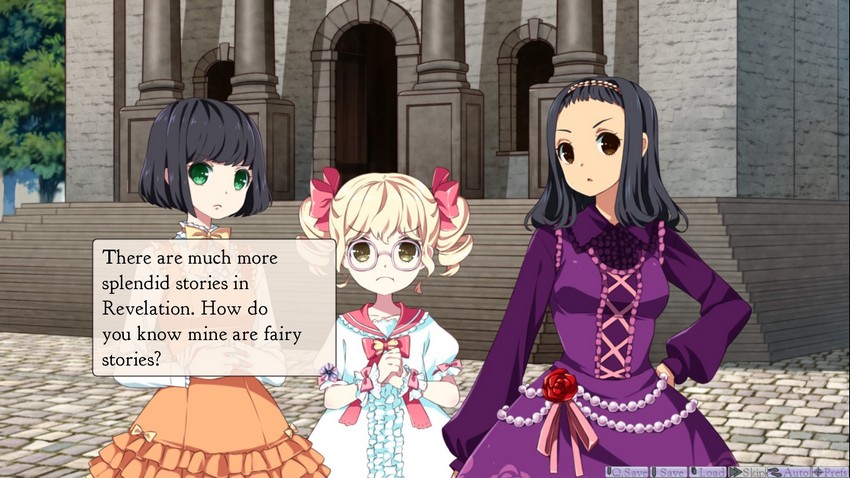 You — you're lying. You didn't get that story from the Bible. Read it for yourself! Streets of gold and gates of pearl, and many more things besides. Perhaps the lilies are my own invention and perhaps they aren't. But I can tell you — you will never find out whether they are or not if you're not kinder to people than you are now.
 What?! But Sara, perhaps feeling a bit ashamed of her burst of unheavenly temper, turned her head and refused to respond.
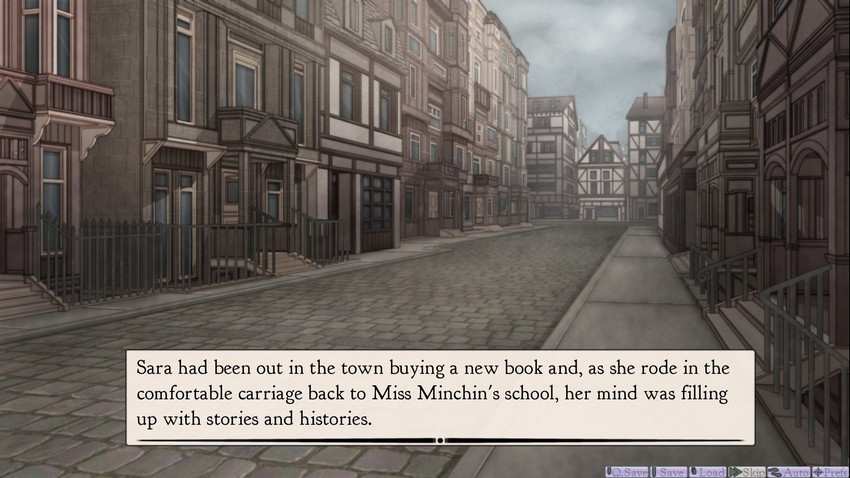 Quite unconsciously, she descended the carriage steps with the grace of a queen, looking much grander than she might have imagined — if she were the sort of girl to think in great detail about how she looked. As Sara crossed the pavement, she caught sight of a dingy little figure down on the servant's area steps: a girl with a soot-smudged face, peering up at her with wide eyes.
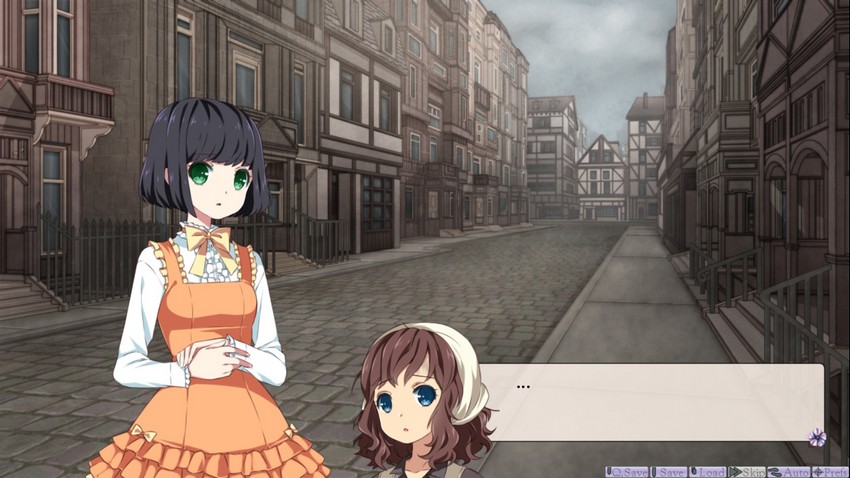 Something in the eagerness and timidity of that smudgy face made Sara look back, and when she looked, she smiled, because it was her way to smile at people.
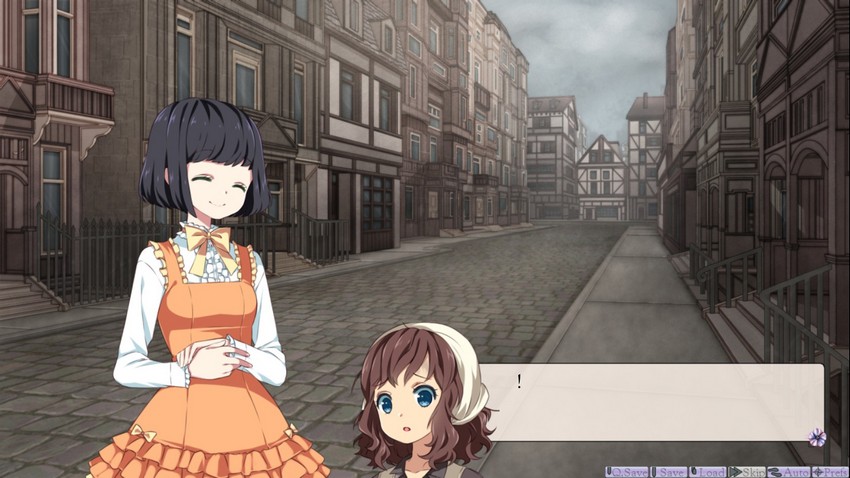 The eyes went even wider, as if afraid that she ought not to have been caught looking at a pupil of importance. The maid, if that was what she was, turned and scurried back into the kitchen, vanishing as quickly as a reverse jack-in-the-box. (Poor little forlorn thing... I wonder who she is?)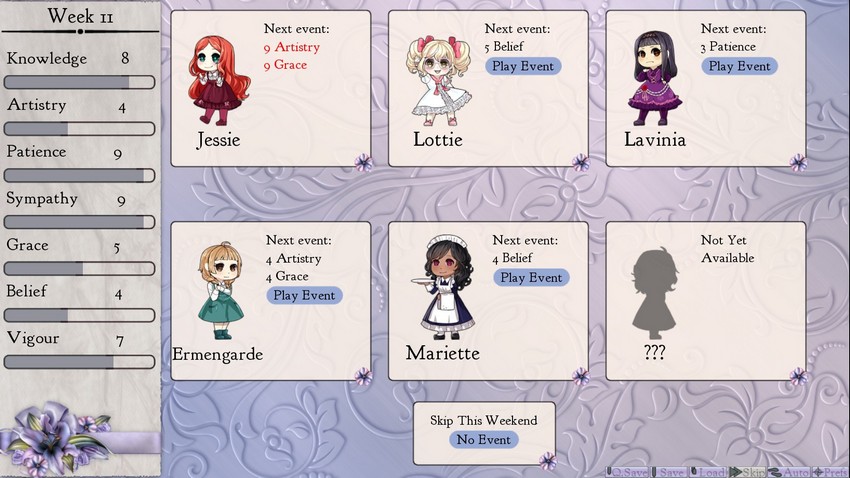
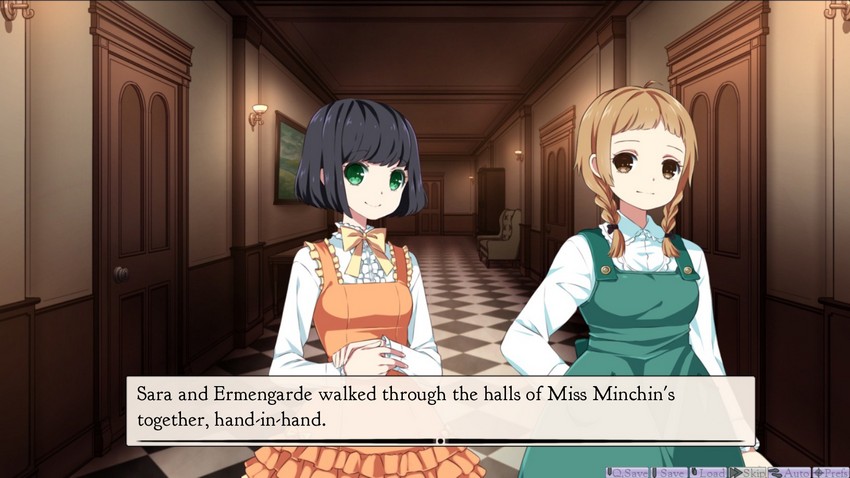
 Dancing lessons... She sighed noisily, her shoulders rising and falling. I wish that being hopeless at books meant that I was good at something else instead. My father wouldn't be happy if I were only good at dancing, but at least Miss Minchin wouldn't look at me so disapprovingly. But it is only something else for me to fail at. I feel so heavy and graceless compared to the other girls. (She is heavier than the other girls, but she isn't graceless.)
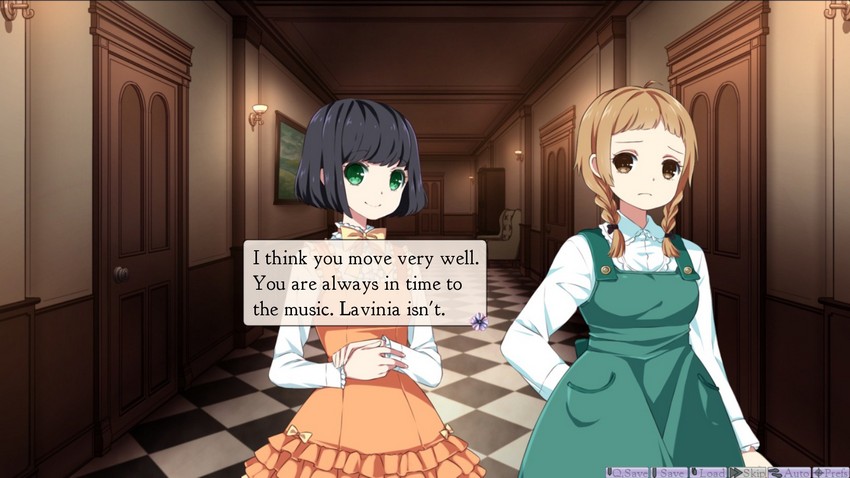 But I don't look right when I move my arms, and the dance masters always frown at me. Jessie is the best of us. She looks like a flower in the breeze — like a gloriosa lily. Because its petals are long and red and wavy, like her hair. They tell us we should try to move like a field of celandines. I never feel like a celandine. I know what a celandine looks like, and I am not one. They reached Sara’s room, and took seats upon the bed.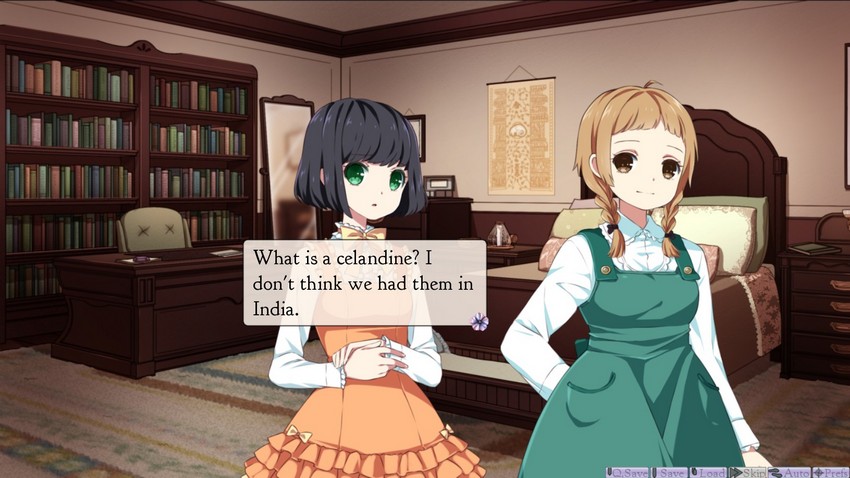
 Oh! A little yellow flower. That's the lesser celandine. They're not very tall, but the flowers are very bright, with lots of yellow petals, like this. She held up her hands, curling her fingers around. They come up early in the spring. They grow in great bunches in the woods, all over the ground. Mostly the leaves, but with little bright dots of flowers. The other kind is taller. Their flowers are yellow, too, bright yellow, but they only have four petals.
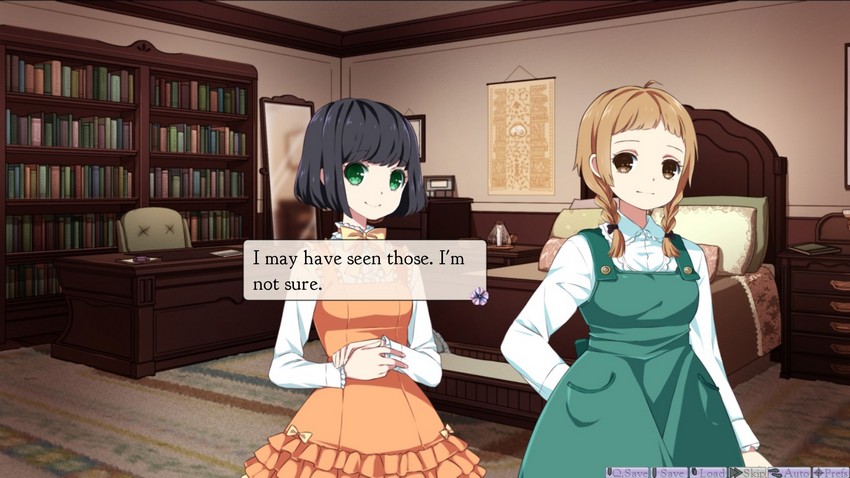 What flowers grow wild in India? Oh — many kinds. Tall spikes covered with purple orchids that nod down. Flowers with petals pink as lips that grow straight up from the ground with no stems. I don't know all their names. I wish you could have brought some with you. If I had picked flowers in India before I left, they would have died and fallen apart on the ship. Ermengarde hung her head. I'm sorry. It was a stupid idea. No! I wish I could have brought you flowers to see as well.
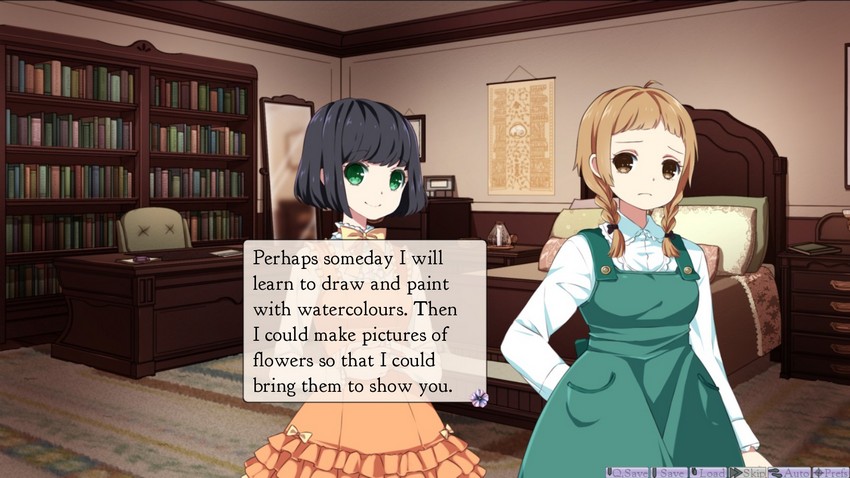 Can you draw? I — I don't know. She held out her hands in front of her, examining the stubby fingers and their short, blunt nails. I wouldn't expect that I can. Your hands are so delicate, Sara. That's the way a lady's hands should be. Sara pressed her palm against Ermengarde's. Her fingers seemed almost the same length, but more narrow. Well, Emily's fingers are much rounder and shorter than yours, and she is still a lady. Your hands are stronger than mine. I am sure there are many things your hands can do that mine can't.
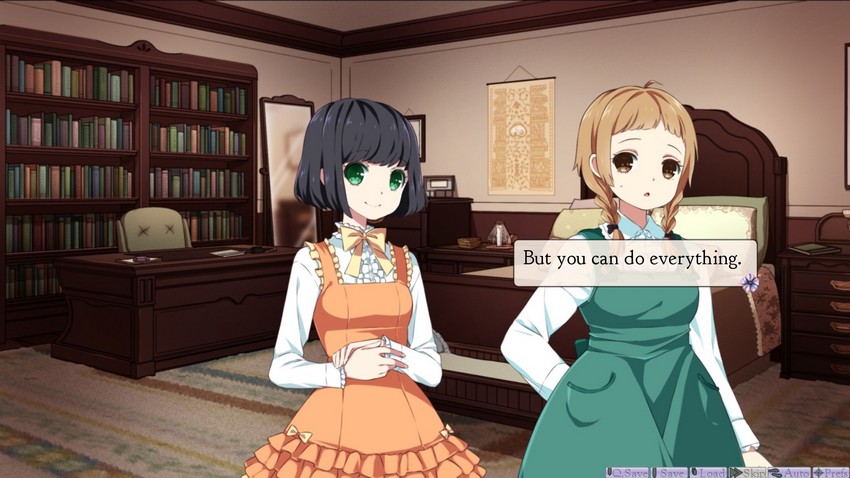 Sara's eyes took on a mischievous glint. Only magic can do everything. (Imagine whatI could do with this school, if I really could do everything!)
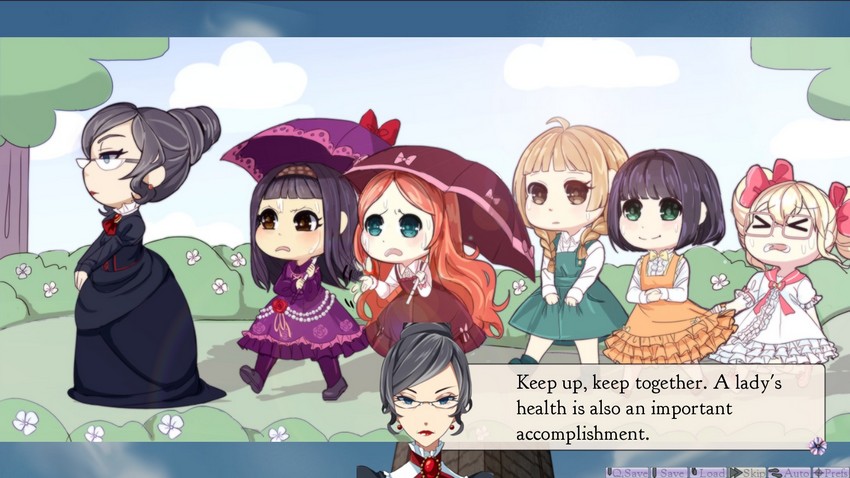 While the temperature outside was not so great in itself, the ceaseless beating of sunlight upon little heads slowly made their Sunday dresses a difficult burden to bear. This is abominable. My complexion will be ruined. I may have to write to my father and complain! She adjusted the position of the parasol on her shoulder and sighed. No proper young lady should be forced to drudge about on foot like this. Is that not why we have horses? Miss Minchin said that horses should have a day of rest on Sundays. As if a horse would know or care what day it is! I deserve a carriage. It is the due of my rank. While it's true that horses are horses and therefore uninterested in observing the Sabbath, they still breaks to keep them from becoming overworked, Lavina.
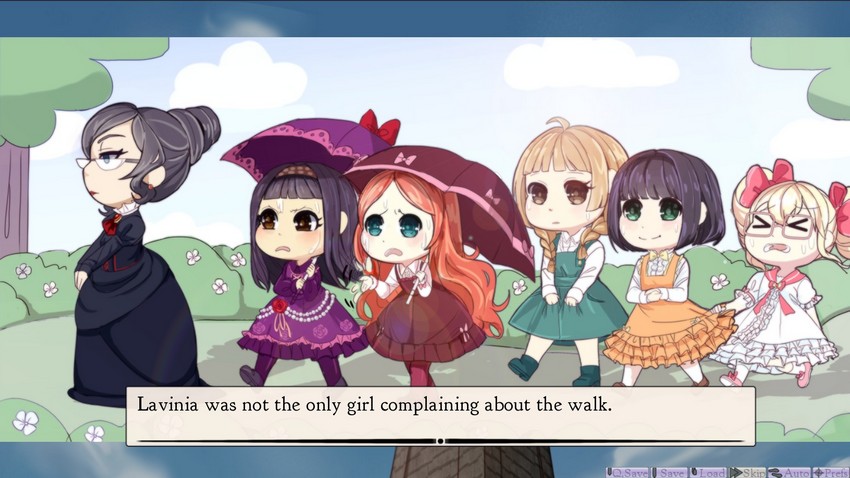 Sara-mamma, I'm ti-red. Everyone is tired. Sara-mamma, won't you carry me? You have to walk for yourself. You're too big for me to carry for long. Besides, it would be undignified. Our Sara may be many things, but she is not a horse. Perhaps you should ask Ermengarde.
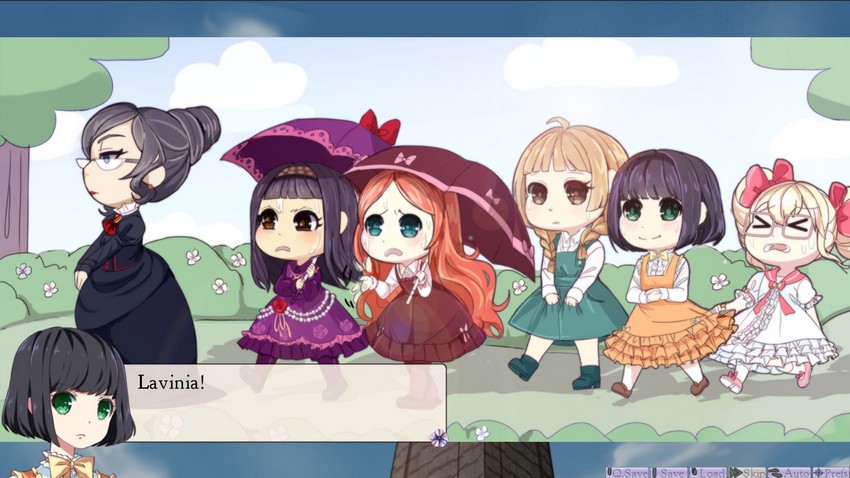 What did I say? I was only pointing out that she seems to be handling this walk better than Lottie is. Sara looked at her friend. True enough, though Ermengarde's cheeks were as flushed as anyone else’s, she appeared to be walking steadily along without slowing or complaining.
 Aren't you tired, and hot? Yes. I always feel tired and hot when we walk back from church, so I'm used to it. But this walk is so much longer... It all seems the same to me.
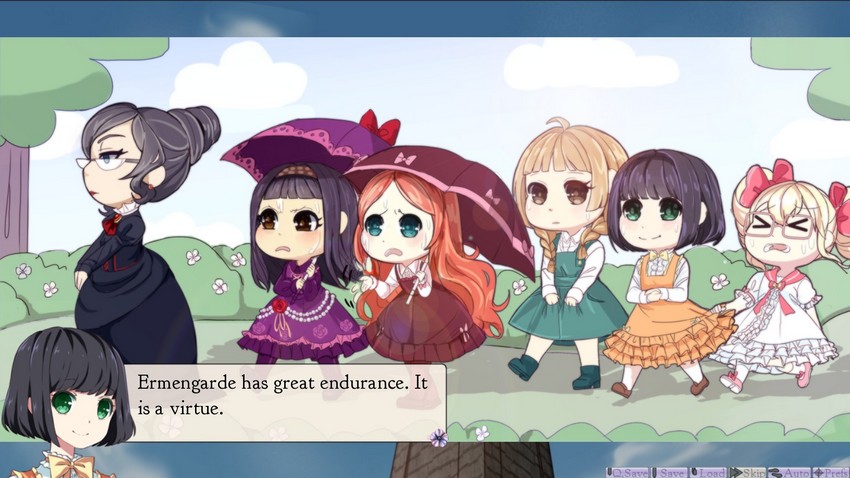 (A soldier must have great endurance, and be able to carry on through much more difficult circumstances than this. A soldier might have to walk miles in the sun, in uniform, and carry a heavy pack besides, and be ready to fight when he arrived. Our lives are so much easier, but we must be good soldiers as best as we can.) If Ermengarde can bear it, then I can bear it. If Jessie can bear it, then I shall have to bear it. What's that supposed to mean? What did you mean? ... Nothing.
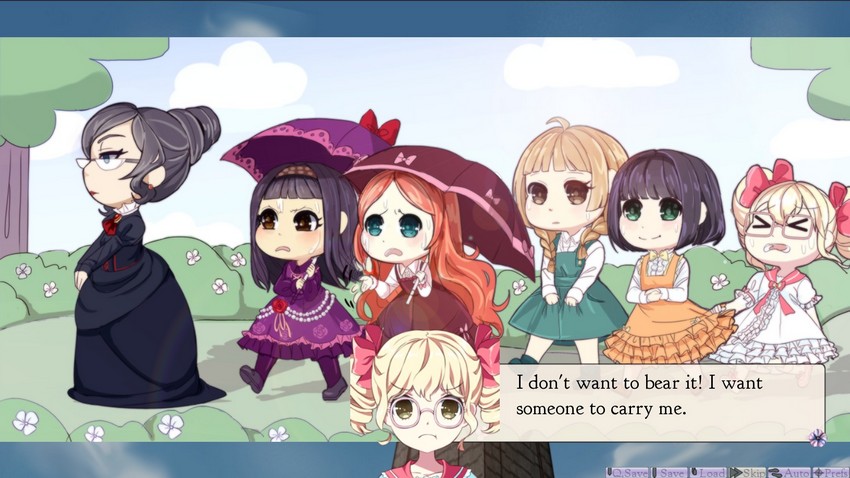 You have legs. Use them, the same as we are. I don't want to. No one is going to carry you, so if you don't walk, you’ll be left here all alone. And then it will get dark, and the tigers will come out and eat you up. !!!
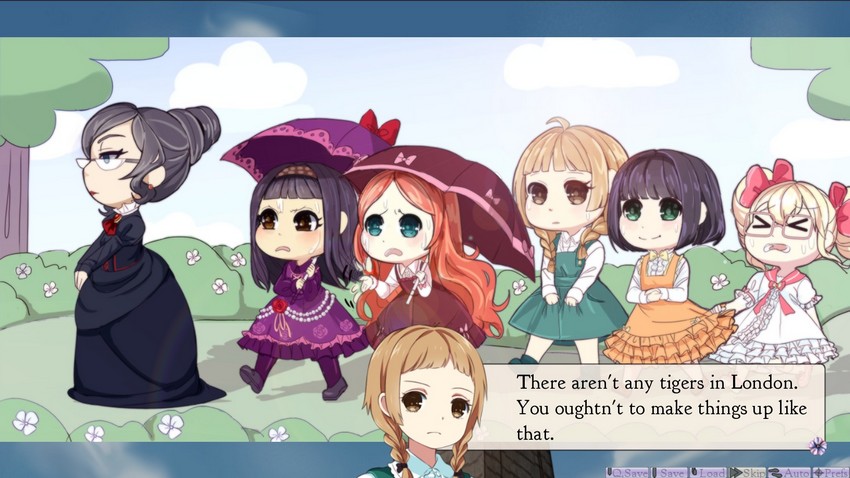 Well, she likes it when Sara makes things up. Sara spoke quickly, to hed off the threat of Lottie deciding to cry and fuss. We will all have tea later in my rooms, and I will tell you stories. But first, we must return to the school — which means, we must walk. Lottie sighed, and carried on.
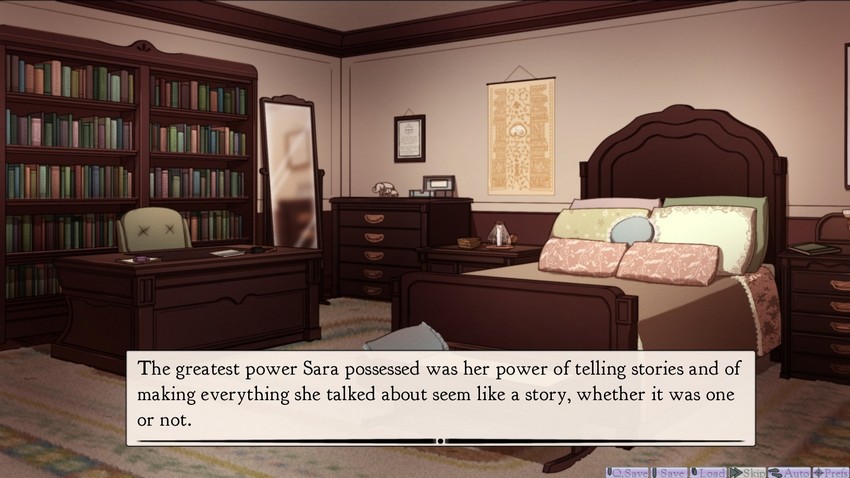 It was that power which Lavinia and certain other girls were most envious of, and at the same time most fascinated by, in spite of themselves. And it was in service of that power that so many of Miss Minchin's students had gathered in Sara's jewel-box rooms, seating themselves on chairs or cushions or rugs to listen. The Princess sat on the white rocks beside the lagoon, with a shining white lily in her hands. And as she turned it this way and that, she watched its reflection dance across the water below. The waters of the lagoon lay still, crystal-clear and green as glass, but the Princess could only see her flower in the reflection, and never herself. So she looked, and she looked, until at last she saw a face in the waters — not her face, but the face of a merman. Sara went on to tell of the courtship between the Princess and the Merman Prince, and the girls who listened sighed sweetly and leaned their cheeks against their hands, or each other.
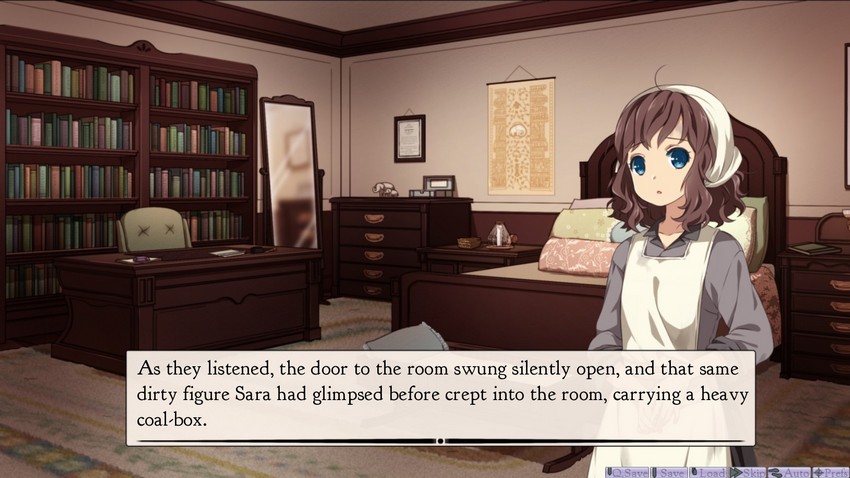 The maid was cleaner than she had been on that other day, but seemed just as frightened. She hunched by the fire, afraid even to look at the other children or appear to be listening. She put on pieces of coal cautiously with her fingers so that she might make no disturbing noise, and she swept about the fire irons very softly. But Sara saw that she was doing her work slowly in the hope of catching a word here and there. And realizing this, she raised her voice and spoke more clearly. The Princess took her seat in the great clear bubble-carriage, and a team of six sea-horses pulled her into the ocean, their harnesses woven with pearls. Down into the sea they dove. At first, the water grew dark, and the Princess was afraid, but then! Far below, fluttering and rippling through the depths, there shone a light... The small drudge before the grate swept the hearth once, and then swept it again, and finally forgot to play at sweeping at all. The brush hung idly from her fingers as Sara described winding grottos beneath the sea, paved with silver sand and lit by glowing sea-stars. It was the choirs of mermaids singing that proved her undoing. The forgotten brush slipped from her fingers to clatter against the hearth, and drew Lavinia's attention. What? That girl has been listening!
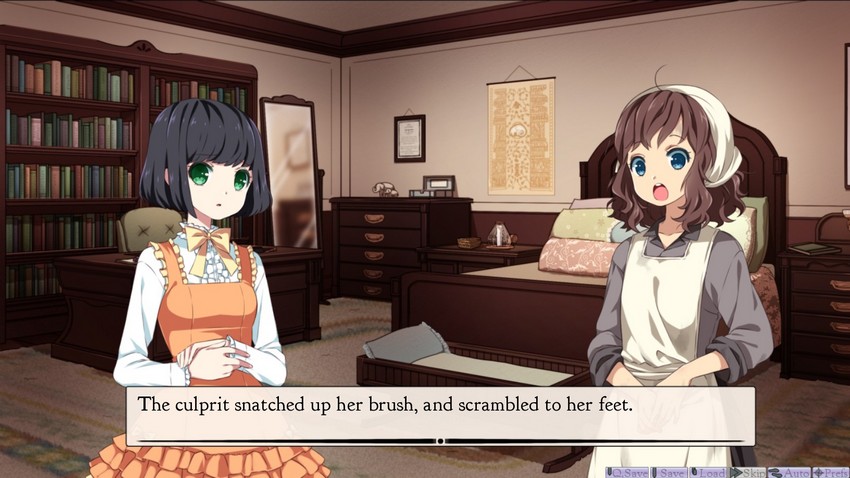 She grabbed the coal box and simply scuttled out of the room like a frightened insect fleeing for cover. I knew she was listening. Why shouldn’t she? She isn't one of us, Sara. It isn't proper to talk with servants. Unless they are upper servants, like your Mariette. That’s all right. right there. God I hate Victorians sometimes.
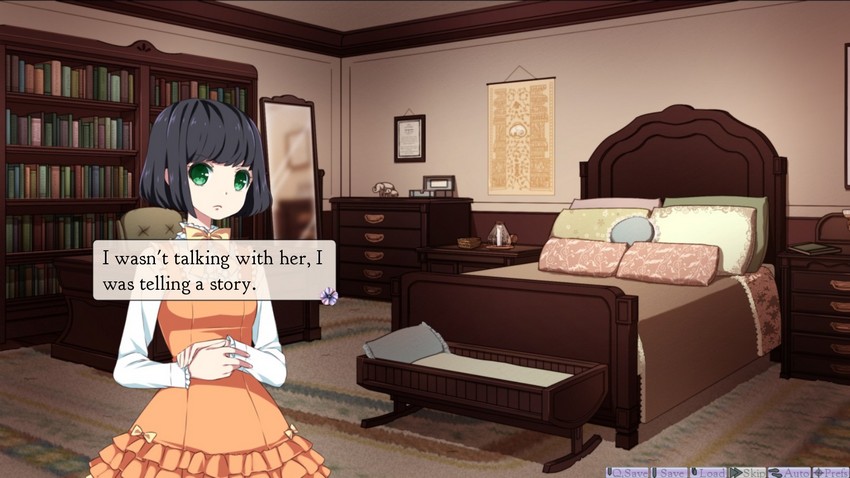 I do not know whether your papa would like you to tell stories to servant girls, but I know my papa wouldn't like me to do it. My Papa! I don't believe he would mind in the least. He knows that stories belong to everybody. Nothing belongs to everybody. If it did, they'd all have to fight over it.
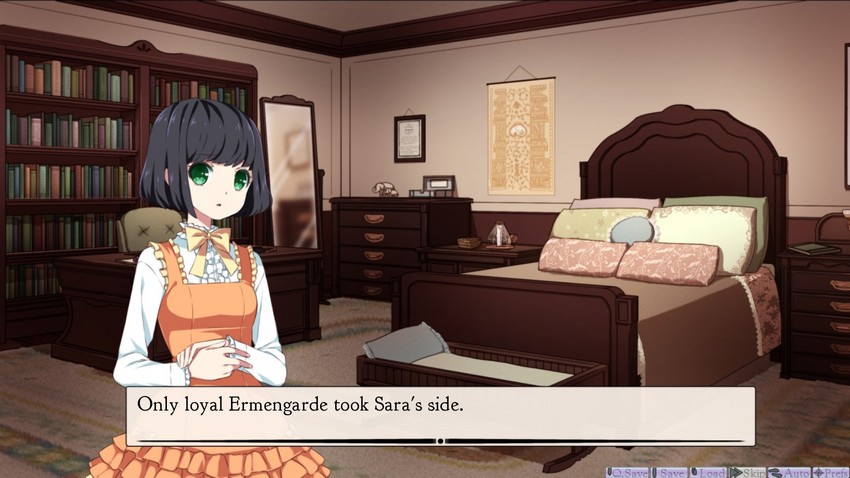 I think Sara should tell stories to whomever she wants to tell them. You — you wouldn’t think it wrong if she told stories to Tybalt, would you?
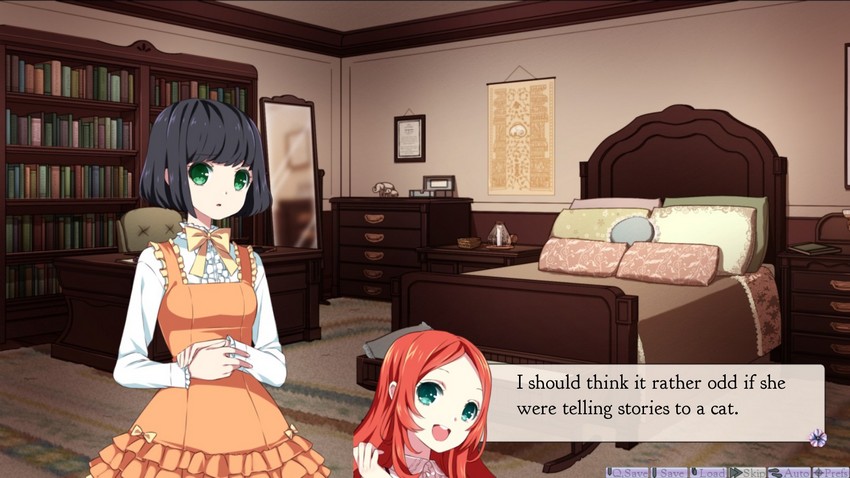 Oh, please, Sara-mamma, finish the story! Sara looked at the room full of eager, upturned faces. No one wished to follow and harass the fleeing maid, but no one wished to go and invite her back again, either. She would continue her fairy story, but she would not forget.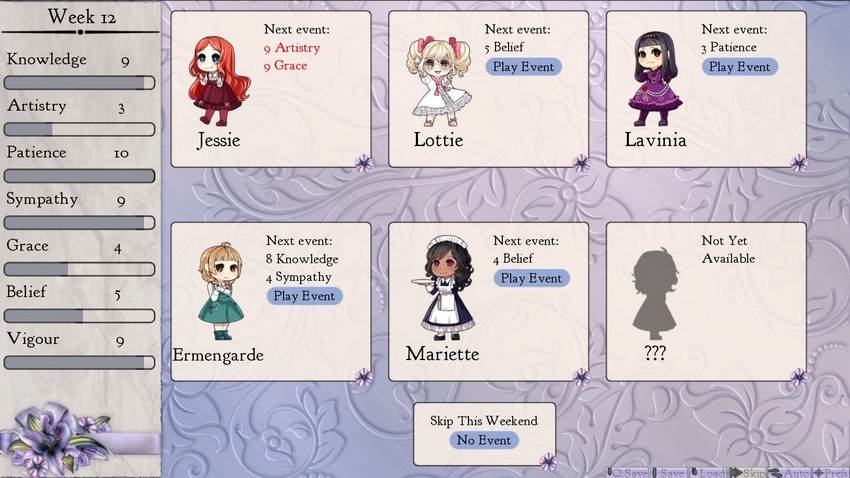
 No need to feel bad about taking breaks, though; I've read engaging LPs with way looser update schedules (still need to get around to reading that one LP of Planescape: Torment that apparently took like 10 years to finish).
Well, Minchin is hardly a Miss Temple, but she's at the very least no Brocklehurst either. The girls seem to get enough to eat and aren't forced to wear light cotton dresses through the winter, and walk around outside through the snow without boots. As for the coal, according to the data table I'm working off of it made up 80% of the fuel cost in the average household-- I'm assuming it was much cheaper than wood.The Flying Twybil wrote: ↑Sat Sep 26, 2020 9:37 pmAlso, I can definitely see why the early portion of Jane Eyre would inspire some motivation for this. This is a similar, though perhaps happier, seminary setting. Heck, now you've got me wanting to read it again.
(Personally, as a metalworker, I can't really understand how anyone dealt with using coal for fires indoors. I really can't stand the stuff even outside- I've always preferred wood over it, but I suppose that may be a bit of bias because I've always had a fire stove around.)
As mentioned, I have a hard time with that. I need to keep momentum in a thing, because taking a break makes it very hard to pick back up. I do my best, though!Carpator Diei wrote: ↑Sat Sep 26, 2020 11:20 pmNice to see this going again
Yeah, perhaps I might have been better served to say "much happier" in regards to this school.yamiaainferno wrote: ↑Sun Sep 27, 2020 5:56 amWell, Minchin is hardly a Miss Temple, but she's at the very least no Brocklehurst either. The girls seem to get enough to eat and aren't forced to wear light cotton dresses through the winter, and walk around outside through the snow without boots. As for the coal, according to the data table I'm working off of it made up 80% of the fuel cost in the average household-- I'm assuming it was much cheaper than wood.
It's fascinating stuff, honestly. I really enjoy looking things up for this LP.The Flying Twybil wrote: ↑Sun Sep 27, 2020 2:00 pmYeah, perhaps I might have been better served to say "much happier" in regards to this school.
That estimation on coal price sounds about right. Charcoal was the primary fuel for metalsmithing up until a certain time in the 1800's when Britain pursued coal mining because the deforestation issues were becoming severe enough to notice (that, and they were probably stealing off the royal hunting lands or something). Given that Britain had an immense amount of coal easily available thanks to having even exposed cliffsides of it, and their supply of wood was fast disappearing, coal eventually took over. After all, the coking process isn't really any different than the charcoal process to start with.
I was mostly just pondering how they put up with the smell and quality, but with your data the answer here is pretty much "they had no other affordable options". My knowledge on the subject of daily life is somewhat swayed towards Colonial America, which still had lumber, and didn't pick up on the trend of coal usage for metalwork for quite some time. Perhaps this is a reminder I might as well get to studying Victorian Britain some more.

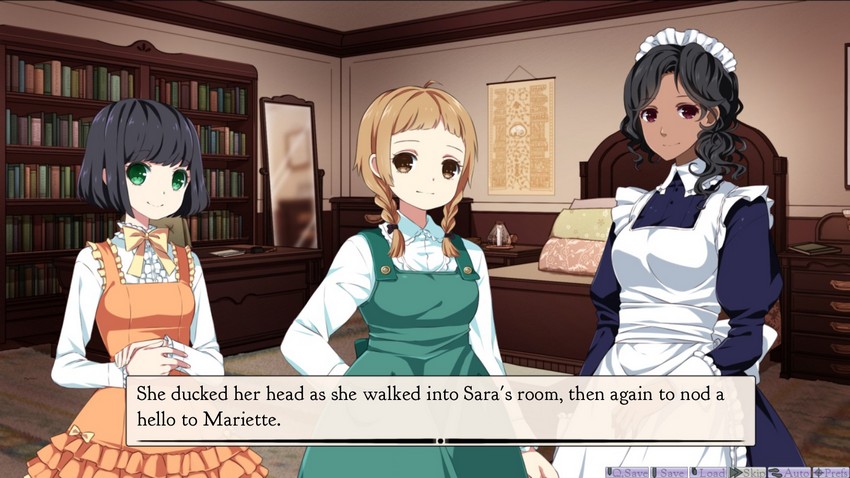
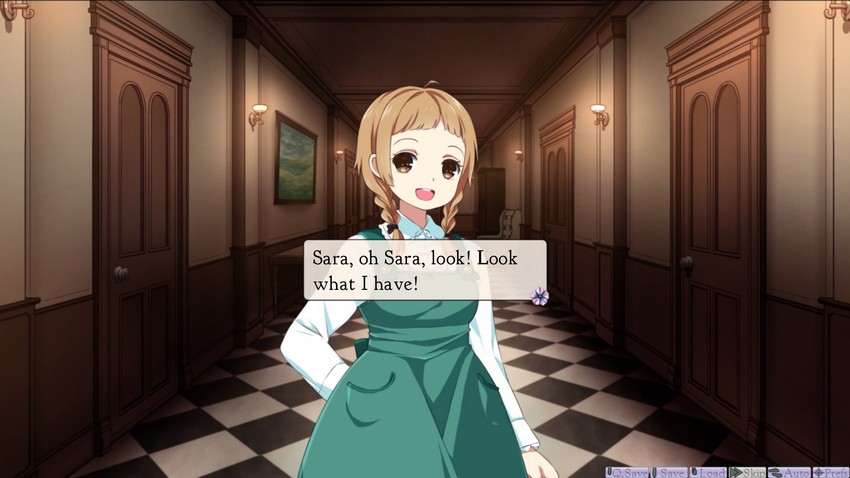 Ermengarde knocked rapidly on Sara’s door with one hand, While the other pinned her treasures against her chest. When Sara opened the door, she was surprised to see her friend clinging with such enthusiasm to what appeared to be a pair of books. Certainly, books would be worthy of Sara's excitement, but in Ermengarde's hands they seemed more commonly to be useless weights tying her down. Your father sent you something else? Oh, no! These aren’t from my father. May I come in? Of course. She held out her arm in elegant invitation, a hostess in miniature. I'll have Mariette fetch us some tea and cakes. Oh — no cake for me, please.
 It's just that my mother is always sending me hampers of sweets, even if I don't want them. I would rather have bread and butter... if that's all right? Of course it is. I will return shortly, mademoiselle. Sara pulled out a chair for Ermengarde, who was still cradling her burden. Are those books something your mother sent, then? No, no. These are from my mother’s sister. My Aunt Eliza. She lives in the countryside. She never married, so she inherited my mother’s parents' property, and she lives there alone, except when she visits my mother. My father doesn't like her very much, because she doesn't agree with him about Irish Home Rule, and she wasn't very clever at school either. He thinks she is a bad influence.
 When I go home, my father is always asking me things like 'When did Edward the Third ascend the throne?’ and 'Who died of a surfeit of lampreys?’ And then my mother says, ’Dear me, Ermengarde! You are very fat,’ and sighs. Aunt Eliza takes me riding, and talks about the hunt and Rover and Skipper — her dogs — and her gardens. She sent me these.
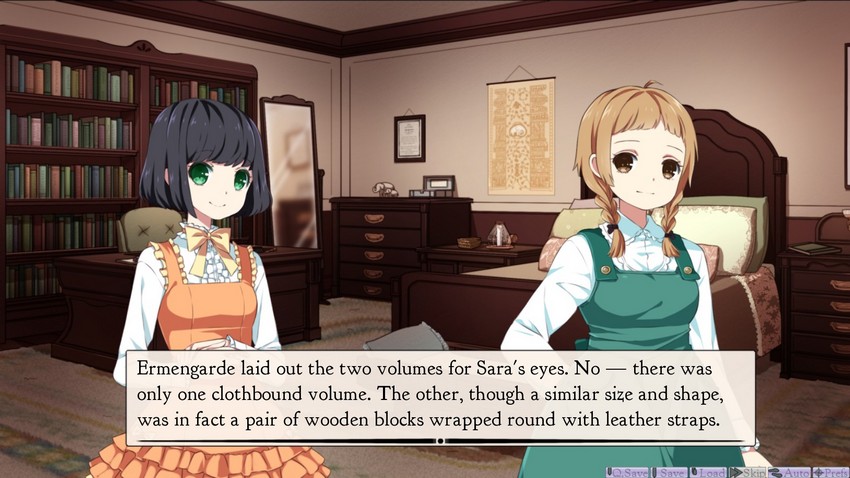 It is for flower-pressing. You press the flowers tight between the wood blocks and squeeze out all the water inside them. If you put a sheet of paper inside, sometimes the petals will colour it, like a print. When the flowers are dry and flat, then you can frame them, or stick them to the pages of a book with some egg-white. See, she's sent some pansies for a start. Ermengarde spread open the pages of her book, and Sara bent her dark head to take a closer look. Oh — you can still see all the little veins in the petals! If you dry them when you press them, they don't shrivel up. What a charming hobby. Your aunt is very wise. (It is good to know that Ermengarde does have a relative she is fond of.)
 When I go back there, after I finish school, I will have to press flowers and mail them to you. Go — go back? It had not occurred to Ermengarde until this moment that Sara saw her life in England as nothing but a temporary sojourn. Yes. I must return to my papa. I miss him dreadfully. Then... I will never see you again? Oh.
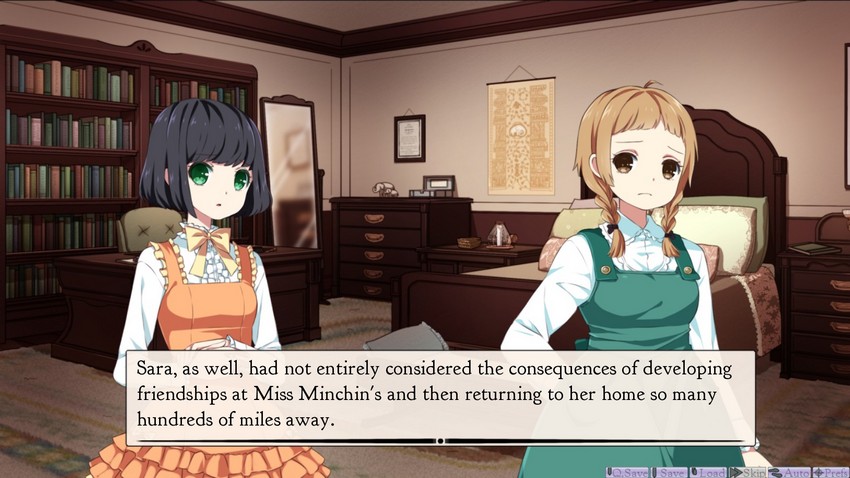 It was one thing to think of those whom she loved and missed, but another to consider that she herself would be missed. Missed quite strongly, if the look in Ermengarde's eyes was anything to judge by. Well... once I am an adult, I will be able to travel, if I please. I see no reason why I couldn't come back to England, once in a while. She reached over and touched Ermengarde's hand.
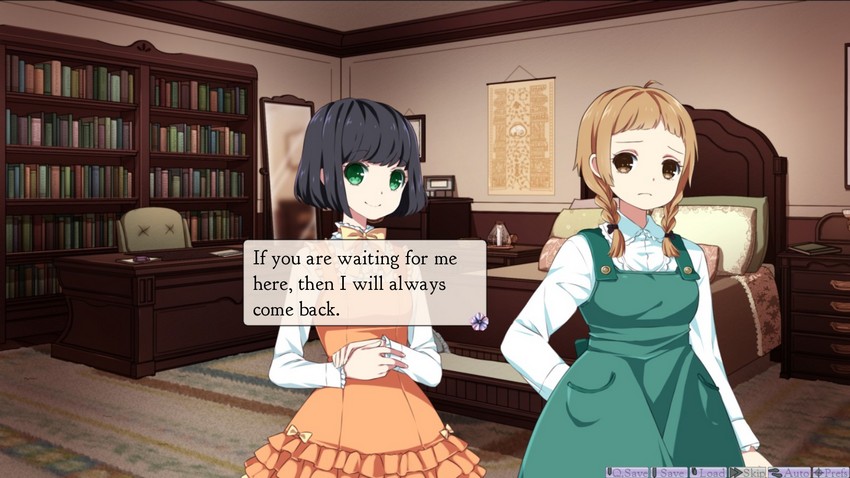 Ermengarde breathed out a sigh of relief. It would be dreadful if you were gone forever. At that moment, Mariette arrived at last with the tea, and Ermengarde's flower/book had to be carefully set aside.
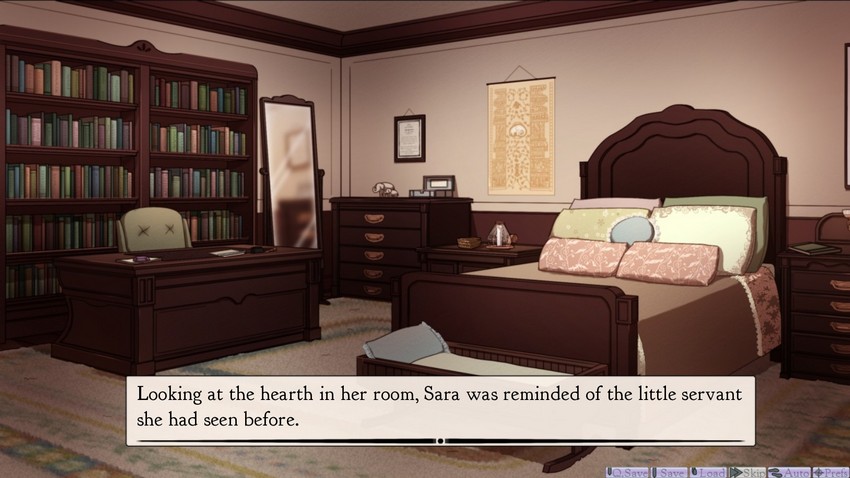 In truth, she had looked for the girl earlier, but had been unable to spot such a person anywhere in the school. If not for the disagreement with her listeners, Sara might have thought she had imagined her. Sara understood that it would cause disruption if she barged into the kitchens to ask questions. She had only one bridge to rely on. Mariette? Who is that little girl who makes the fires?
 Ah, Mademoiselle Sara! You might well ask, that poor little one.
 She has just recently been taken on as a scullery maid, though scullery is the least of it. She is sent to do every task that no one else wants. She blacks the boots and grates, she carries the coal scuttles up and down stairs, she scrubs the floors and the windows.
 I think she has not had enough to eat for years; she is older than her height would tell. And so timid. If I try to speak to her, her little eyes look to pop right out of her head.
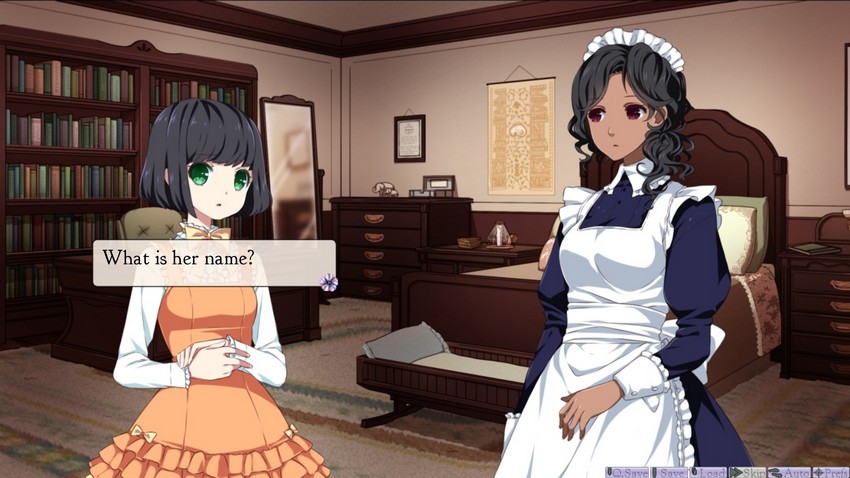 I hear that called often enough. ’Becky, do this.’ 'Becky, do that.’ Everyone below-stairs orders her about. Becky... (If life were a story, Becky might be the ill-used heroine. And perhaps a fairy godmother might come to her rescue.) You have a kind heart, mademoiselle. Your papa would be proud.
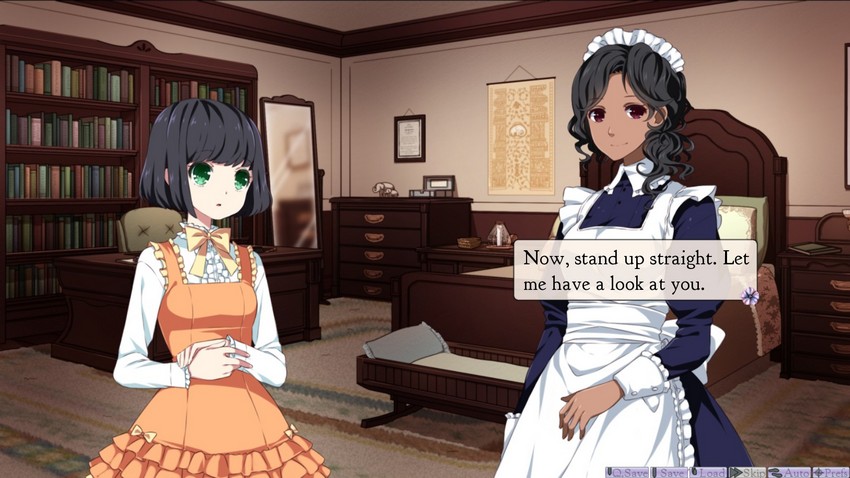 All right? Just as I thought. You are growing taller. I am? Sara looked down at herself. (I don’t feel any different... How much have I changed since I've been here?) You are at that age, after all. I will have to alter a few things. (How tall I will grow before I see my Papa again?)
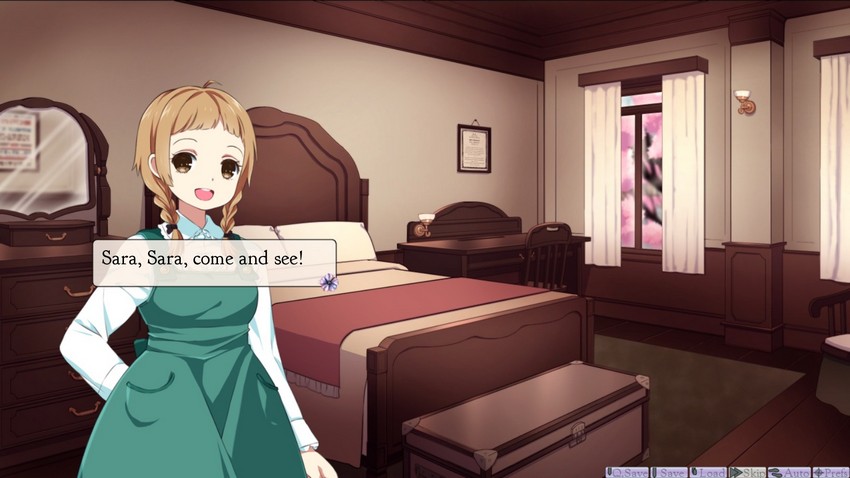 A number of students were drawn to the sound of Ermengarde's excitement. It was not often that a girl would call for such attention in her bedroom. Particularly not quiet Miss St. John. What is it? Look, through the window there. That tree outside. Can you see it? From the door to the room, Lavinia smirked. I should hope that she can see the tree outside, or else she needs eyeglasses. Hush! No one invited you, Lavinia. Buzz off if you're just going to be a killjoy.
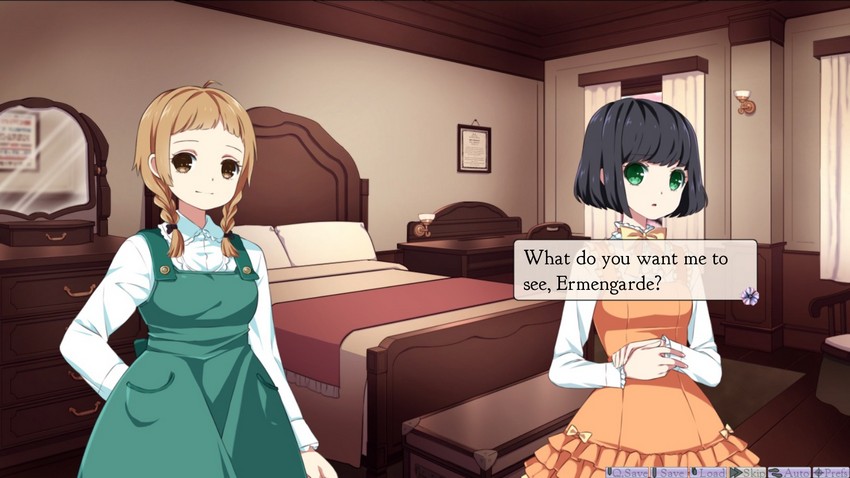 There’s a nest in the branches, there. And there are eggs in it. Soon there will be baby birds. That's darling, isn’t it? Babies?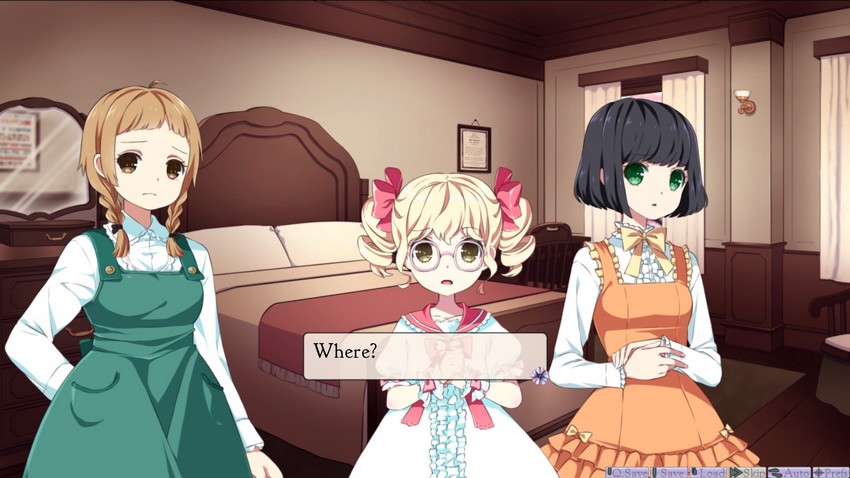
 If you do not wish to attract attention in the future, do not bellow. Where are there babies? They're still inside the eggs, Lottie. There will be baby birds sometime in the future. Can baby birds see inside eggs? I don't know. No — I think they're asleep. Wouldn't it be wonderful to have a bird for a pet? You could feed it from your hand, and it would sing to you... Baby birds are not wonderful. They're horrible pink-skinned monsters with no eyes. Disgusting.
 No, they aren't very pretty when they're born, but they change as they grow up. A lot of things do. Soon, little birds are covered with fuzz all over. Fluffy chicks are adorable.
 There were people in India who kept parrots as pets. Not even in cages. They can be trained to ride on someone's shoulder. My Papa knew a man who gave his bride-to-be a parrot that he taught to recite love poetry to her. How romantic... I don't think a bird is a very romantic gift. What if she didn’t want a pet? What if it pulled her hair? Lavinia reached out and tugged at a strand of Jessie's long red hair. Kwaaaak! My beloved is mine and I am hers, she feedeth among the lilies, kwaaaak! S-stop that! She swatted Lavinia's hand away.
 Oh, no. That wouldn't be right. Little birds need their parents, to survive. Jessie combed her hair back into place with her fingers. At least until their parents shove them out of the nest — birds do that, don't they? Do they, Sara-mamma? Only when it's time for the young ones to learn to fly. After all, they can't stay eggs forever.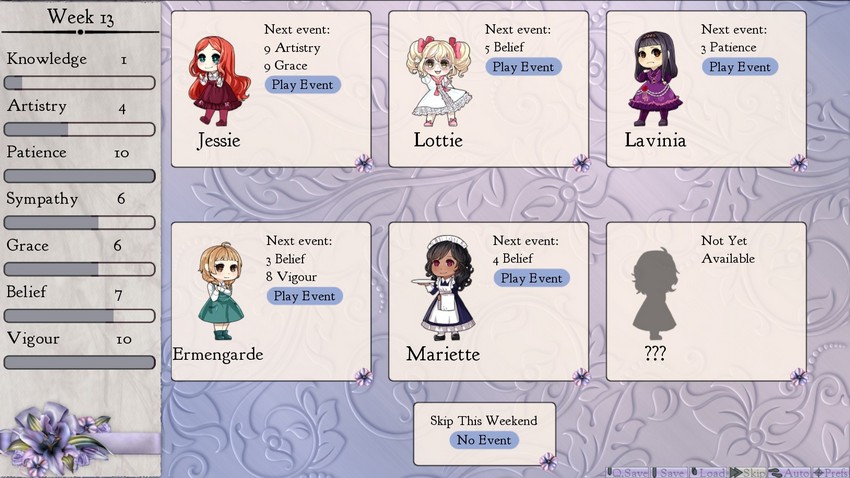
Death By Cold FishThe History Girls wrote: Elderly people were seen as having cold humours and as such needed to eat foods with warming properties. [...] Lampreys, on a scale of 1-10 scored a 10 for being cold and moist and one of the most chilling foodstuffs in existence, guaranteed to put out anyone's fire. To an elderly person, already cold to begin with, they could be deadly. The best way to render them less of a threat was to kill them in red wine and then cook them in the same liquor in the hopes that it would neutralise their properties. Everyone knew this. A chronicler wouldn't have had to spell out the details.
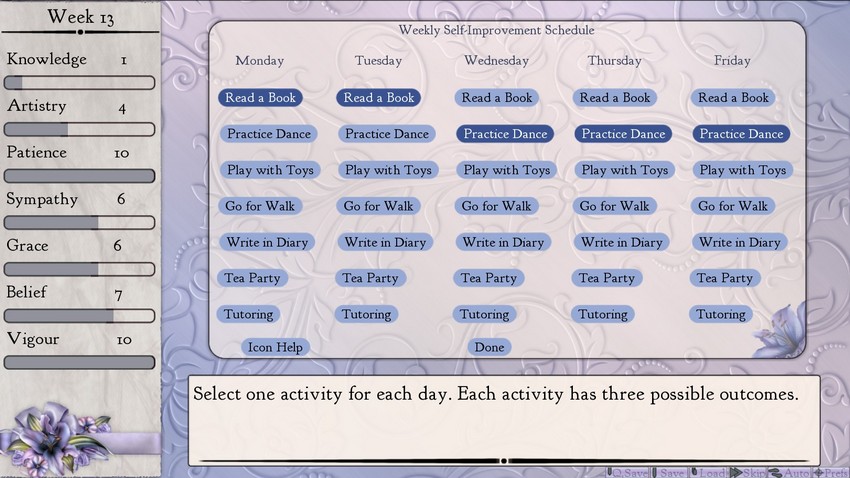
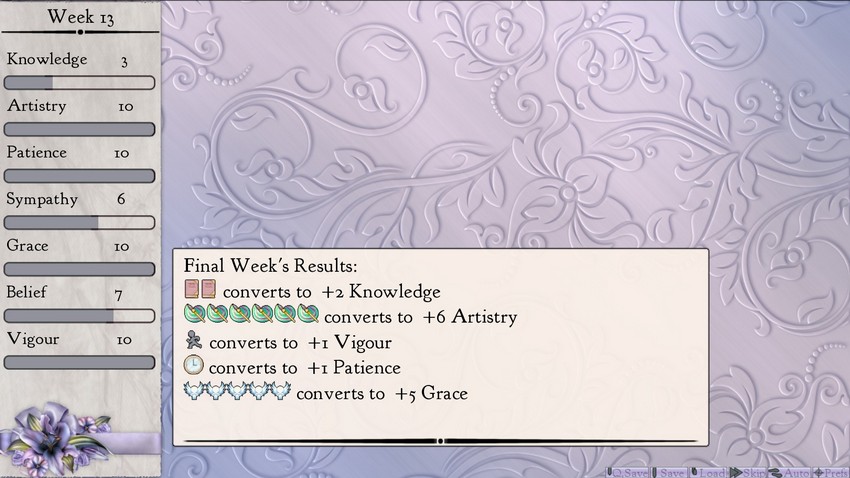 All you Jessie fans can finally get a break from the non-stop Ermengarde parade. Speaking of...
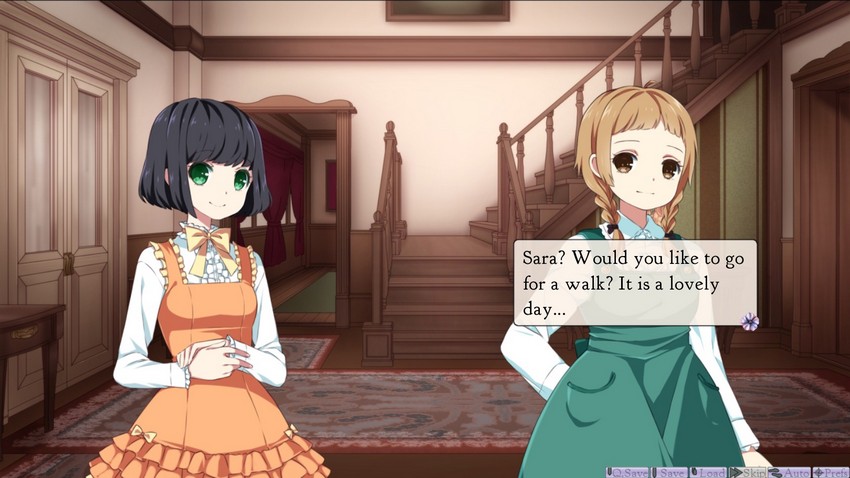 ... well, no, it is not a lovely day, but it is as close to a pleasant day as we are likely to have in London, and nice girls always say it is 'lovely' if they wish to go out. And I wished to go out. With you. If— if that's all right. Folks, I do believe Sara has just been asked on a date. This update starts the gay off strong, and it continues for the rest of the scene.
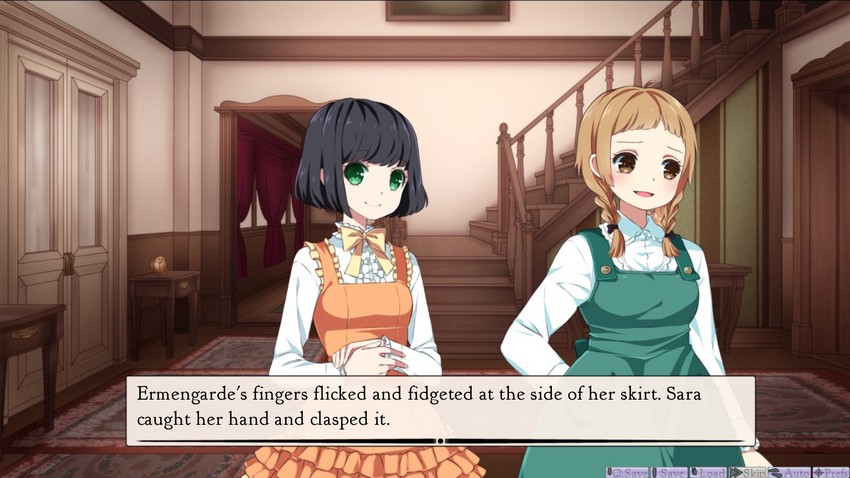 We will make it a lovely day, then, because you and I will be part of it. It was a pleasant day, for London. Clouded enough not to be overly warm, but without the blanket of fog and foul air that sometimes developed in the city streets. If — if we are fortunate, perhaps we might see some Dragoons on patrol in the park.
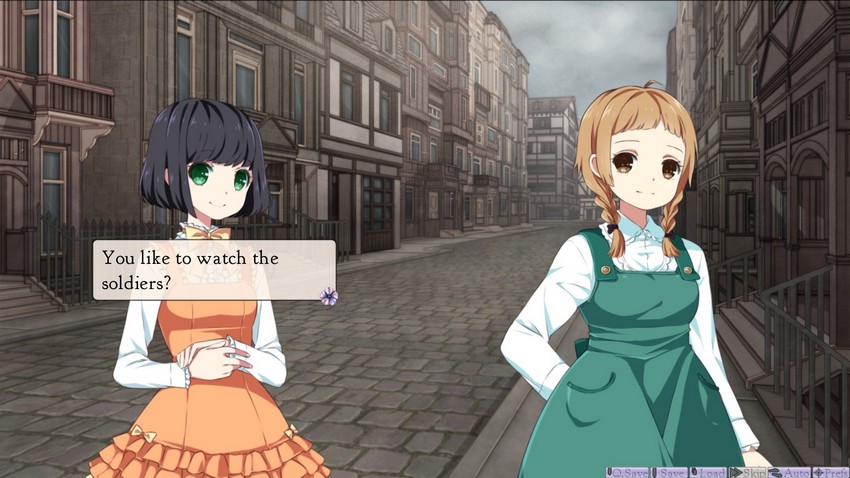 Her eyes warmed with remembrance. Their uniforms are so bright. The red and gold makes any man look handsome, even if he has whiskers like a walrus. And the horses have high necks and beautiful, glossy coats. They're full of energy. I... it makes me feel good, somehow, to see them — to think that they, and I, are in the same world and owe our loyalty to the same Queen. Yes, that is how I felt sometimes when I saw Papa drill with his regiment. That I am proud to be a part of the British Empire. Oh!
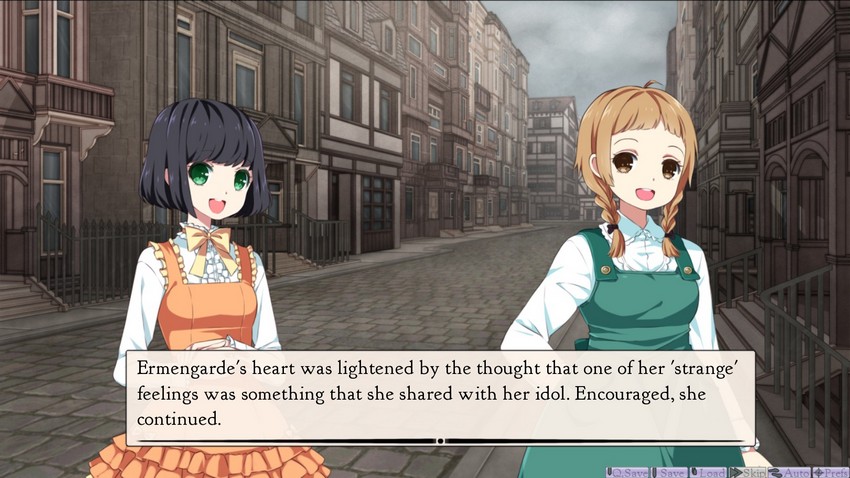 Sometimes, I think that... well, that if I were a boy, I might like to be a soldier. Then I could go on adventures in faraway places, like your papa. India, or even Africa. If I were in the cavalry, I would have a fine red uniform and a shining helmet and a sword, and I would get to ride all the time on a black charger. I wouldn't feel so big and awkward all the time, then. I could feel strong. I think it might be nice, to protect people — to protect my country. Sara was caught up in the vision.
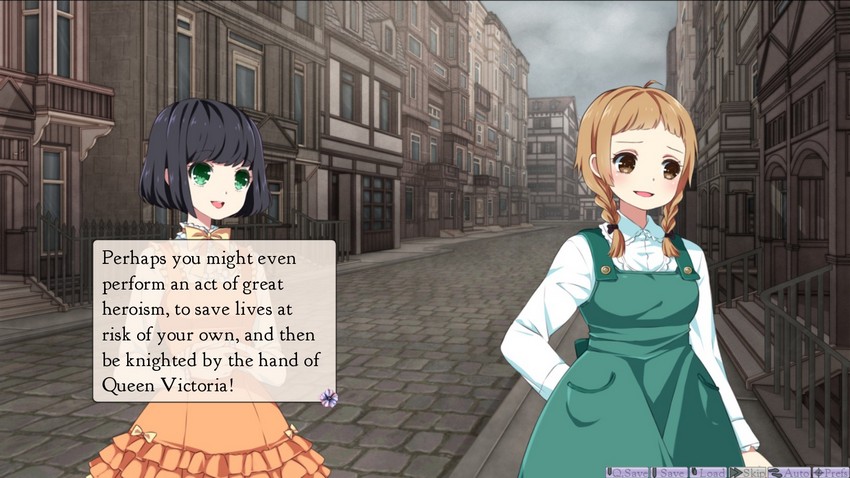 Ermengarde hid her face behind her hands. No, no, I don’t think that! That would never happen. Don't tease. I am not teasing you. I think you would make a very good hero. You are kind, and that is the most important trait that a hero needs. But —— do you really wish that you were a boy? Oh... I don't know. Not really. Besides, if I were a boy and a soldier, my father would still be disappointed in me. (How sad it is, to forever feel that your father is not proud of you!)
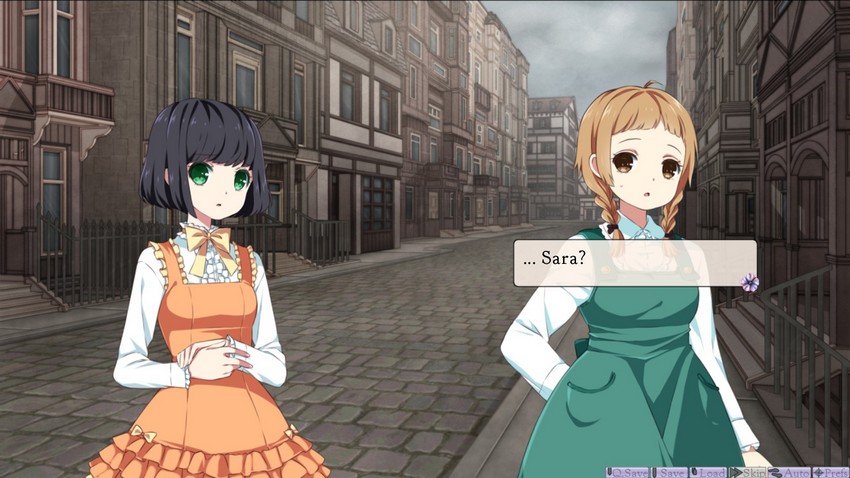 Yes? The next time... The next time that I go to visit my family, will you come with me? I'd like to be able to show you parts of England that aren't London. Maybe we could even go and see my Aunt Eliza. The countryside is so much nicer than even the parks here. We could go through the woods and look for berries and mushrooms and... She reined herself in. I — you don't have to. Only if you wanted.
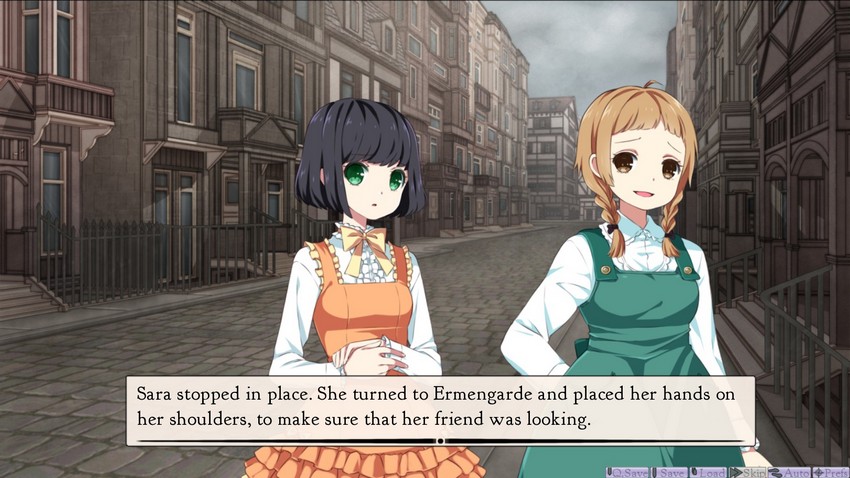 I would love to go the countryside with you. She let go of Ermengarde then, and laughed, a gay bright sound that made the other girl smile to hear it. To come all this way to England and then to see nothing but Miss Minchin's school! Surely that would not be right. Oh, Sara! It will be lovely. Truly lovely, not lovely because it is the polite thing to say.
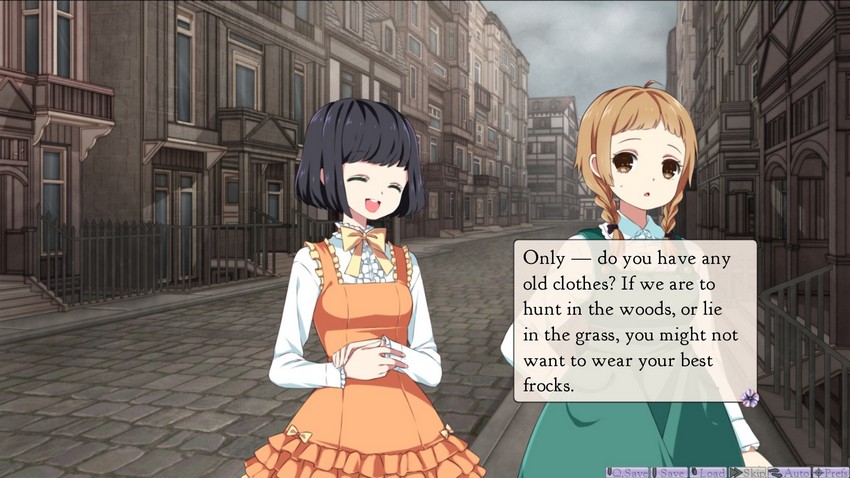 I am not sure. I have some dresses that are nicer than others, but nothing that is truly old. I could buy more clothes, but then they would be new. Mariette says that I am growing a great deal right now, though, and that soon I will not fit into some of my frocks, so I suppose that I will have old clothes then. You... you could borrow mine. If you wanted. If you outgrow something, then it might not fit you at all, but if I outgrow something, then for you it might be fine. Thank you.
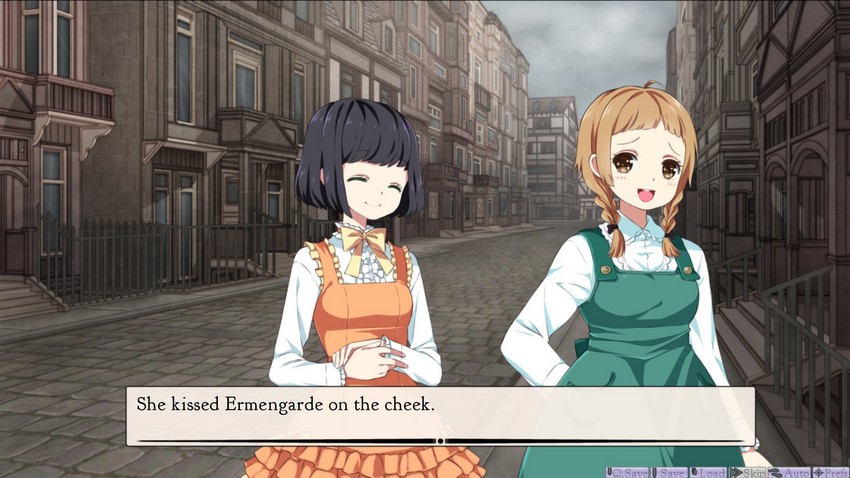 You see? You are very kind. Ermengarde put her fingers against the soft curve of her cheek, where Sara's lips had touched, and smiled.
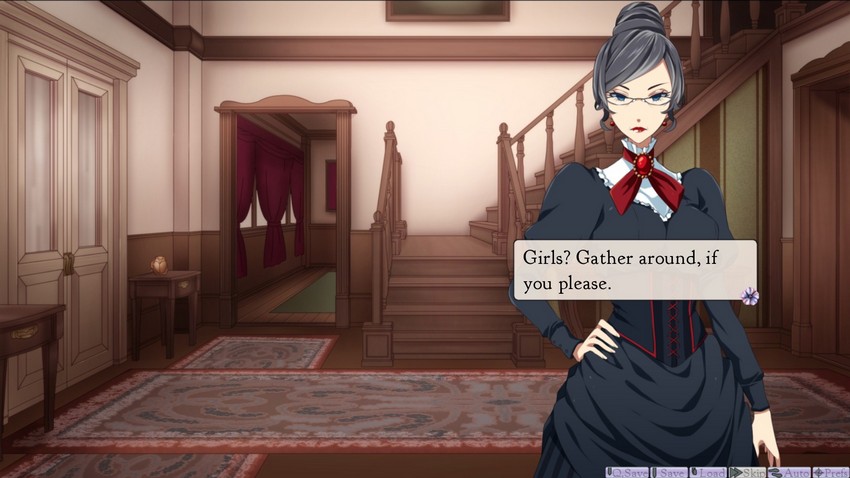 Today I have arranged a special outing for your edification. We will be attending the British Museum of Natural History.
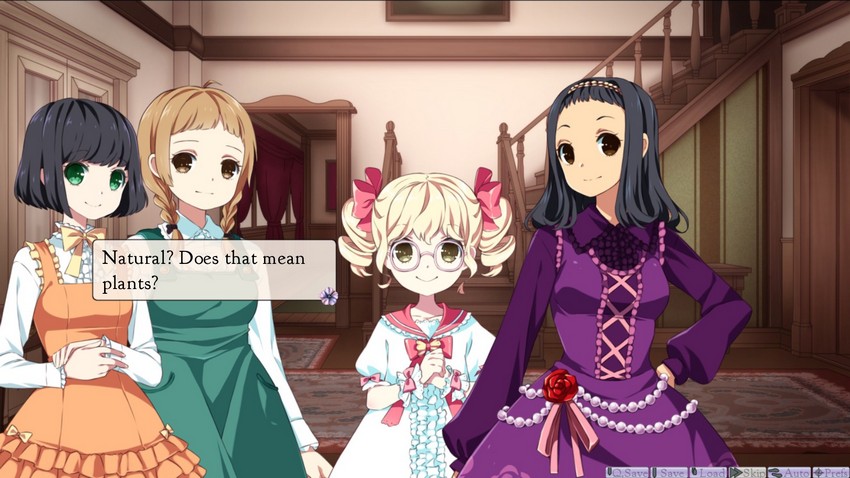 Ugh, I hope not. There's nothing edifying about plants. It could be interesting to attend a museum of plants, with people who know all about them and can tell their stories... You mean, gardeners? Maybe we'll get to play in a garden? Quiet now. Form up. Let's go.
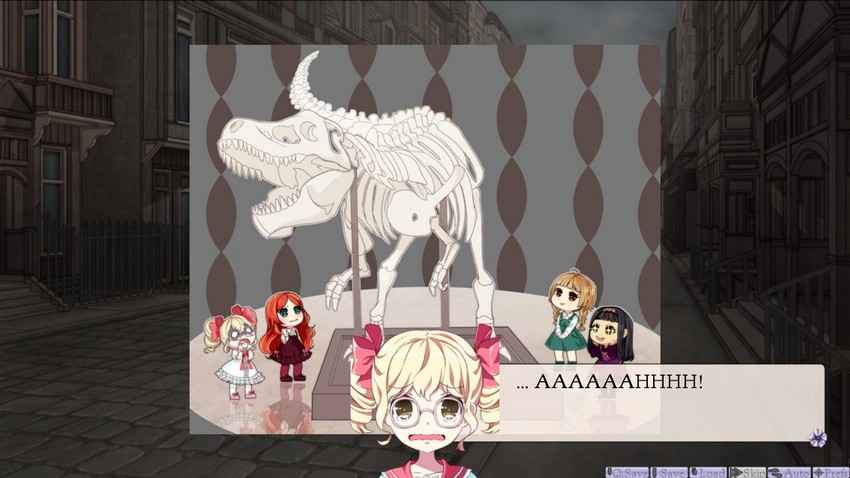 It's going to eat me! It can't eat you, Lottie, it's d- It's not a real dinosaur. It's a former dinosaur. It's dead. It's going to fall on me! I don't think it will fall... It's really rather interesting.
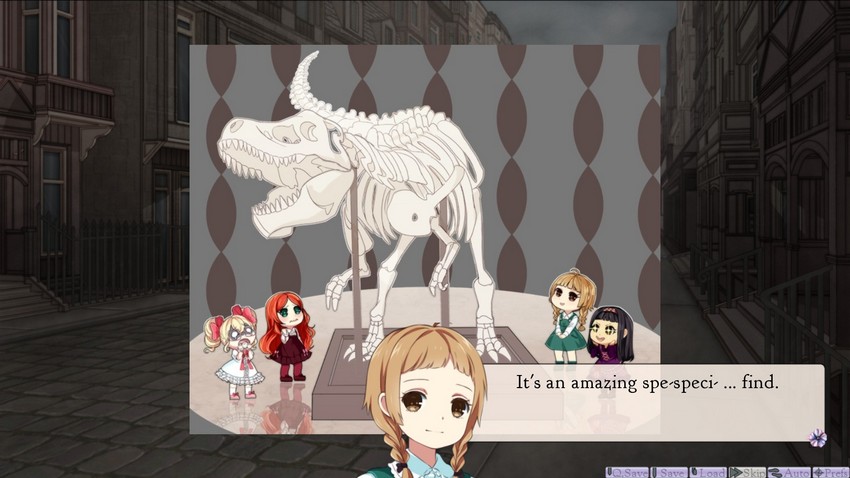 It's disturbing — it's a monster. It's marvellous. Jessie shivered, and took Lottie's hand in hers. Come on. Let's go find something to look at that isn't dead. Um — I think that — everything in the museum may be... Then we will look at the walls!
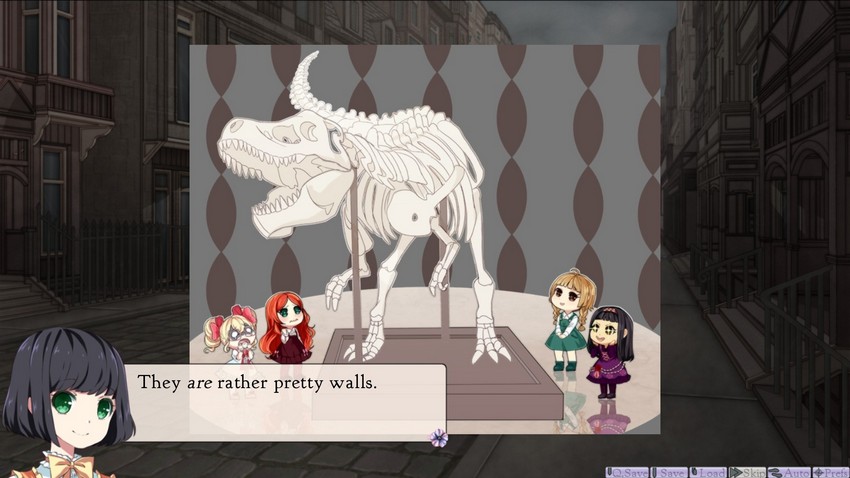 You'll look at the exhibits with me, won't you, Sara? Yes, of course. Are you coming, Lavinia? No — I want to look at this one a while longer. I'll catch up with the two of you in a few minutes. T-two? You are here, aren't you? Right. Sara wondered if this was the first time that Lavinia had ever preferred Ermengarde's company to Jessie’s.
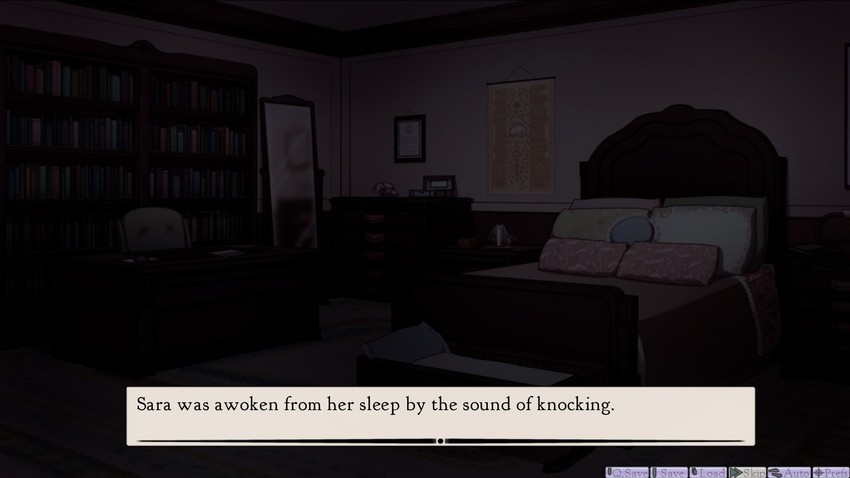 Ah? Que se passe-t-il? What's going on? It's all right. I'll get the door. ...Lottie? Sara-mamma! The younger girl clung to Sara. I had a bad dream and the monster was going to eat me and then I woke up and it was dark and — I thought I saw something! Bones, there were bones in my room, monster bones...
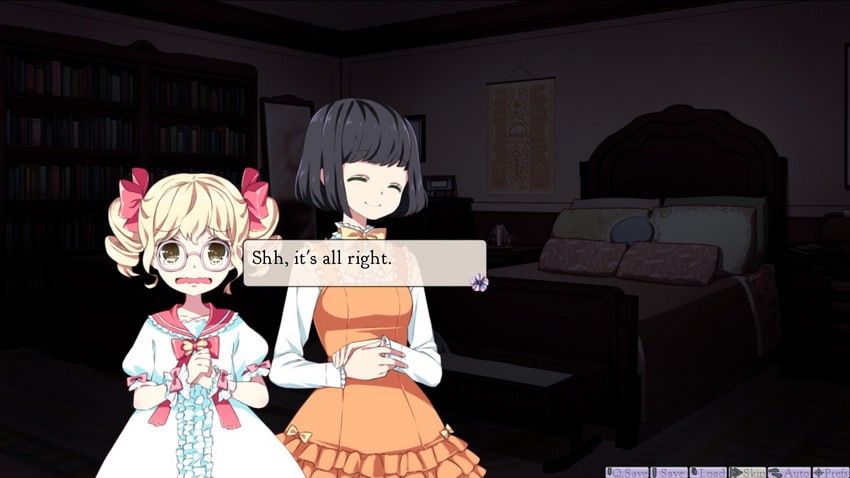 Mariette, where are my slippers? The maid brought the fluffy white shoes for Sara to slip her feet into. I will walk you back to your room and show you that it's safe.
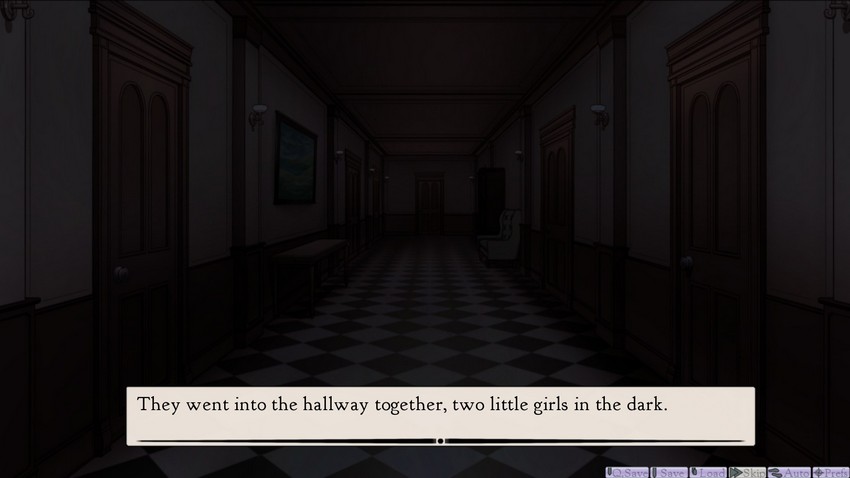 You're not mad? I woke you up... Well, I want to sleep, but you want to sleep too. And if you're too afraid, you can't sleep — but if I help you, then we both can. Lottie blinked her eyes a few times, but said nothing. I wonder how many times Lottie has been scared at night and needed comfort, but wasn't able to get it. Poor thing.
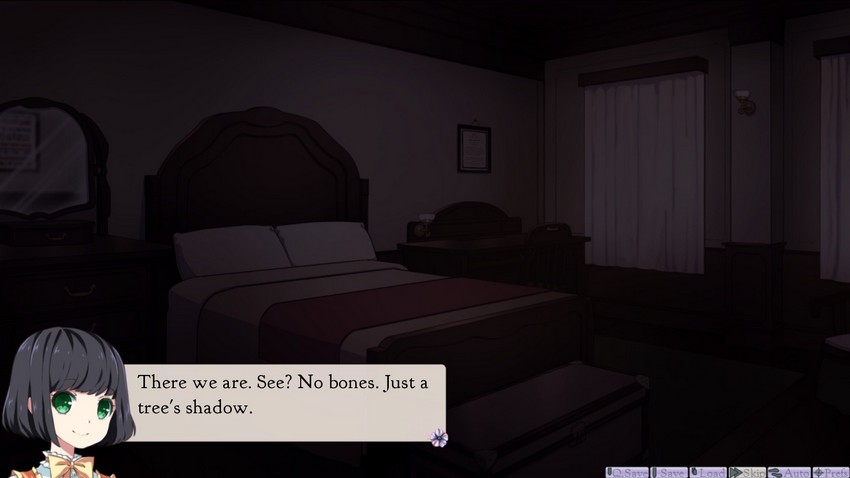 Right. She paused at the door. Sara-mamma? I didn't really think there were bones in my room. I mean, I thought it, but I didn't really believe it was true... I knew that it wasn't... I just wanted to feel better.
 I'm sorry.
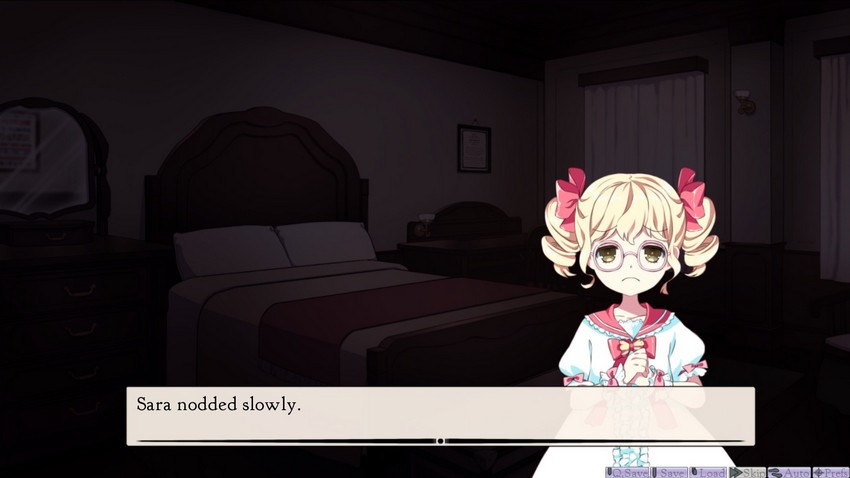 Sometimes when you pretend things, even if you know behind the doors in your mind that they're not quite real, they still feel as if they were. It isn’t wrong to believe in what you pretend. Lottie smiled. I will pretend that I'm going to have good dreams. That is a very nice thing to pretend I believe I will, too. And with that, she returned to her bed.
 Well, maybe not the part where they were gushing about the British Empire, but I suppose that's realistic for upper-class girls of that time.